
Alexander’s Choice
Being a collector at heart, KADER DESIGN’s founder Alexander sets aside our most highly collectible items, rare one-offs, and unique pieces, often designed by architects.
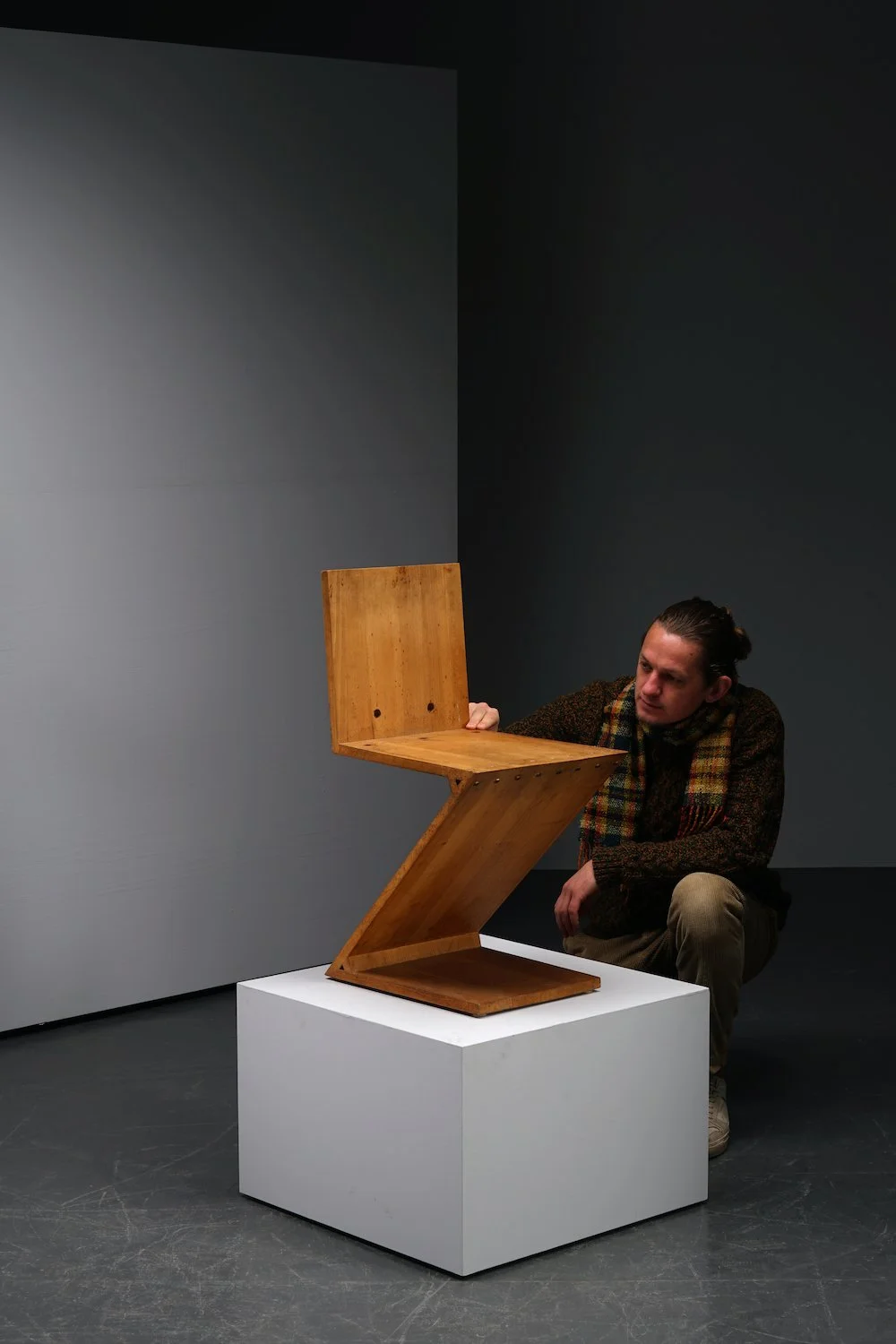
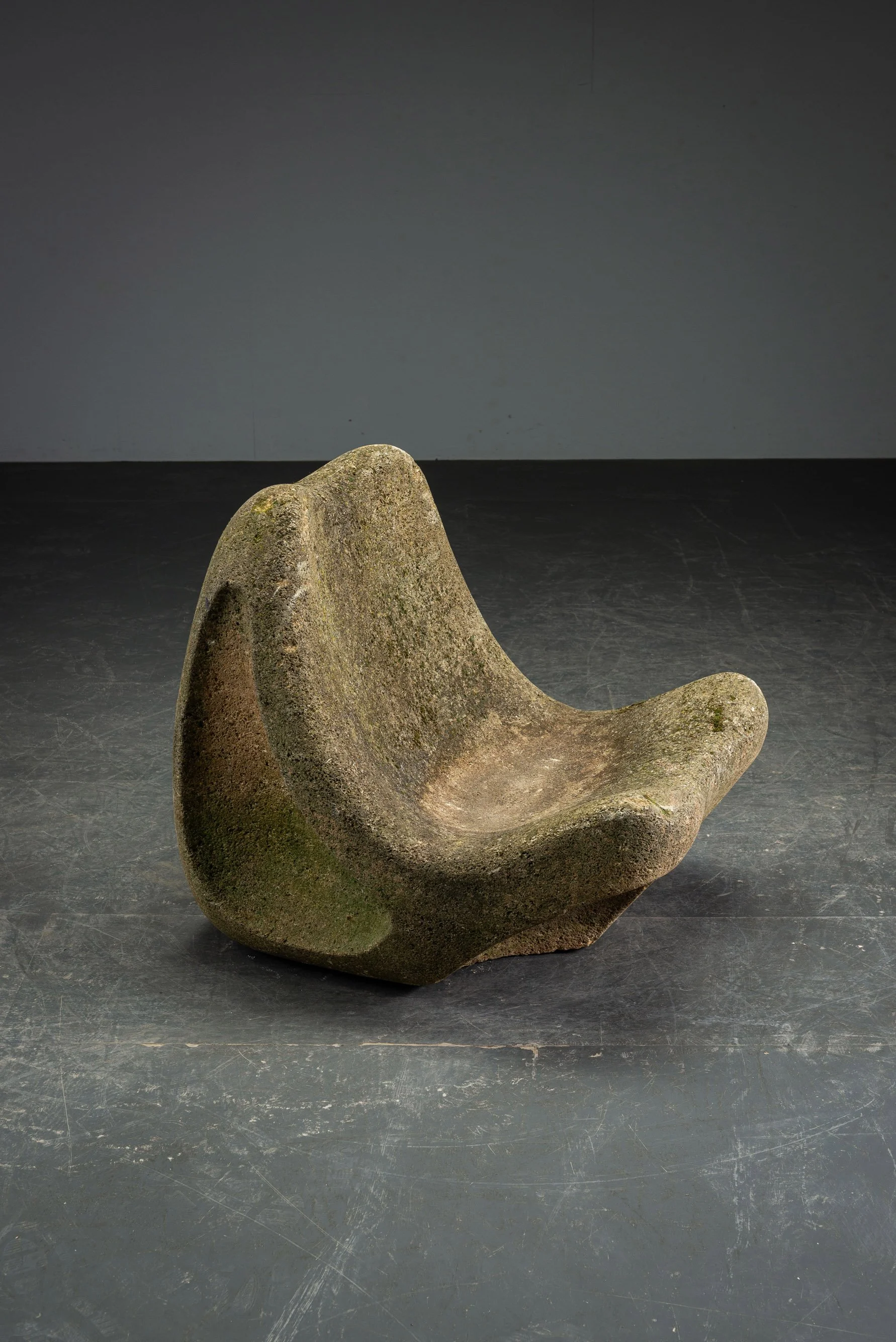
Anonymous Artist
period: 1960s
origin: France
dimensions (cm): h71 x w71 x d75 cm (sh32 cm)
dimensions (inch): h27,95 x w27,95 x d29,53 in (sh12,60 in)
material: Hewn out of solid Gard Stone
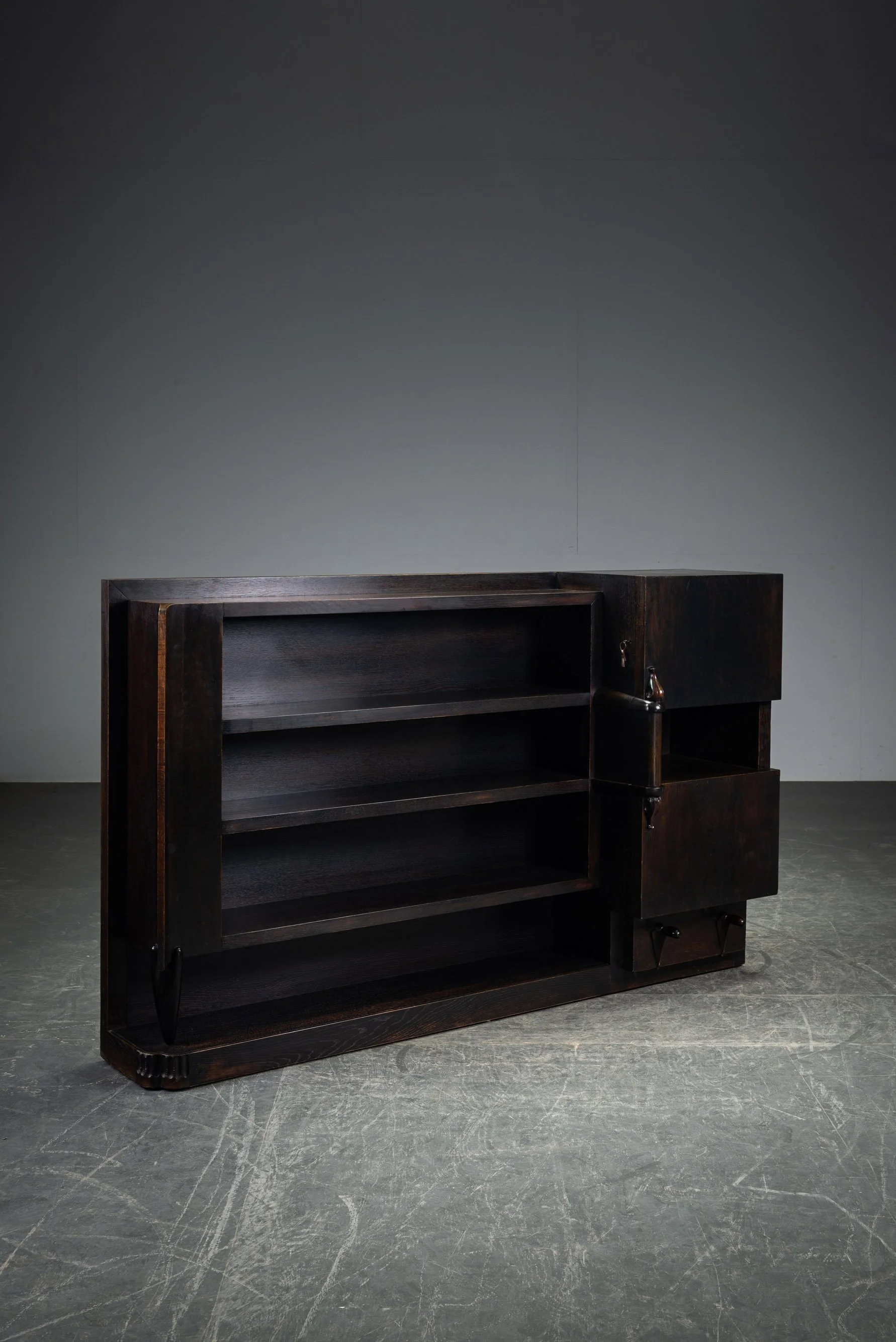
Architect Piet Kramer (1881-1961)
period: 1920s
origin: The Netherlands
dimensions (cm): h116 x w189 x d44 cm
dimensions (inch): h45,67 x w74,41 x d17,32 in
material: wood
A bespoke sideboard designed by Piet Kramer, one of the leading figures of the Amsterdam School, the influential Expressionist movement that emerged in the Netherlands in the early 20th century. Renowned for its sculptural forms, dynamic lines, and exceptional craftsmanship, the Amsterdam School occupies a unique place in international design history.
Kramer's work extended beyond furniture to architecture, bridges, and interiors, all characterized by a highly expressive and artistic approach. This sideboard exemplifies the movement's distinctive language, combining architectural presence with meticulous attention to detail. As a bespoke piece, it stands as a rare and important example of Dutch design from a period that continues to be celebrated for its originality and cultural significance.
An exceptional collector's piece, embodying the craftsmanship, individuality, and expressive spirit that define the Amsterdam School.
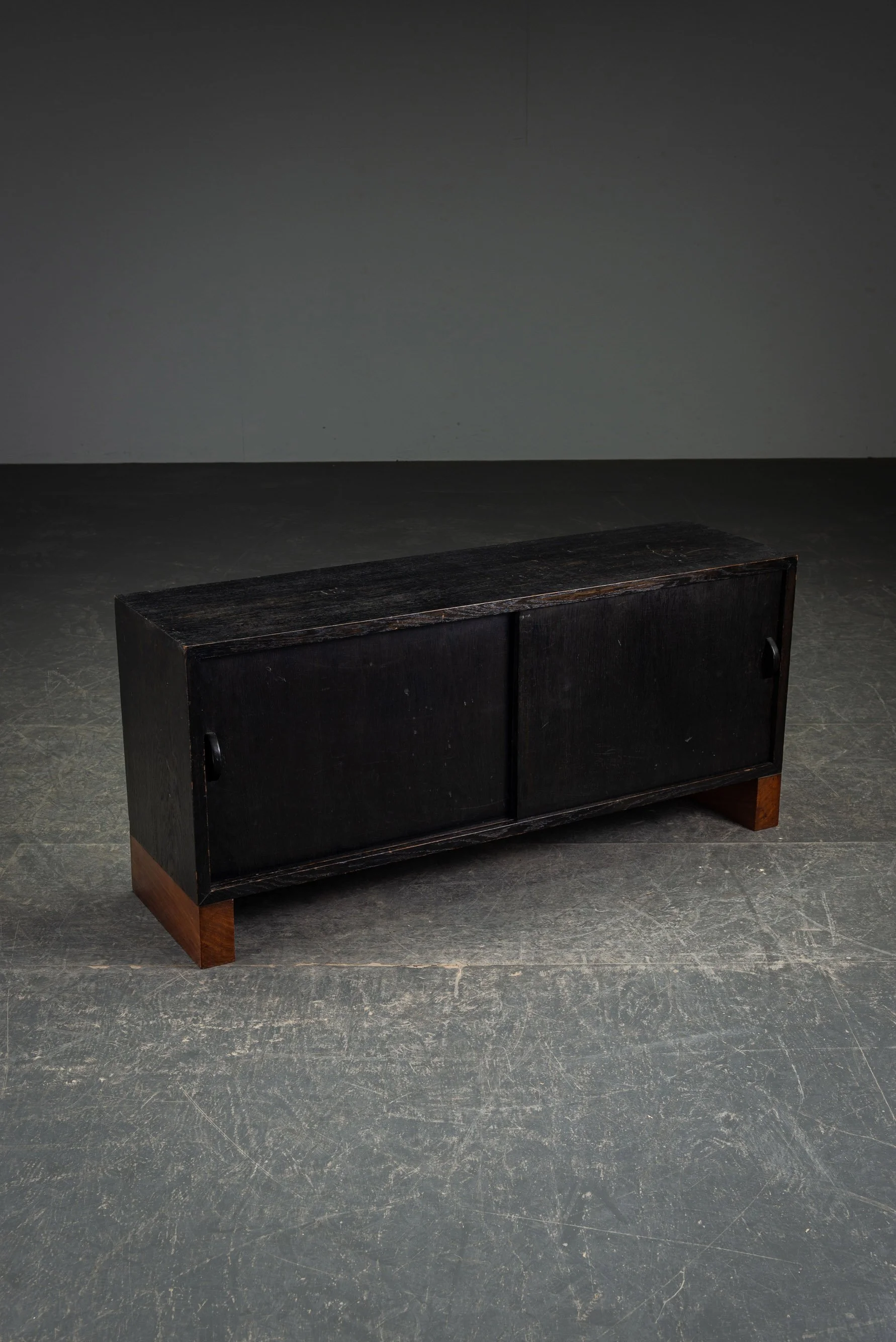
Willem Penaat (1875-1954)
Metz & Co.
period: 1920s
origin: The Netherlands
dimensions (cm): h48 x w106 x d30 cm
dimensions (inch): h18,9 x w41,73 x d11,81 in
material: wood
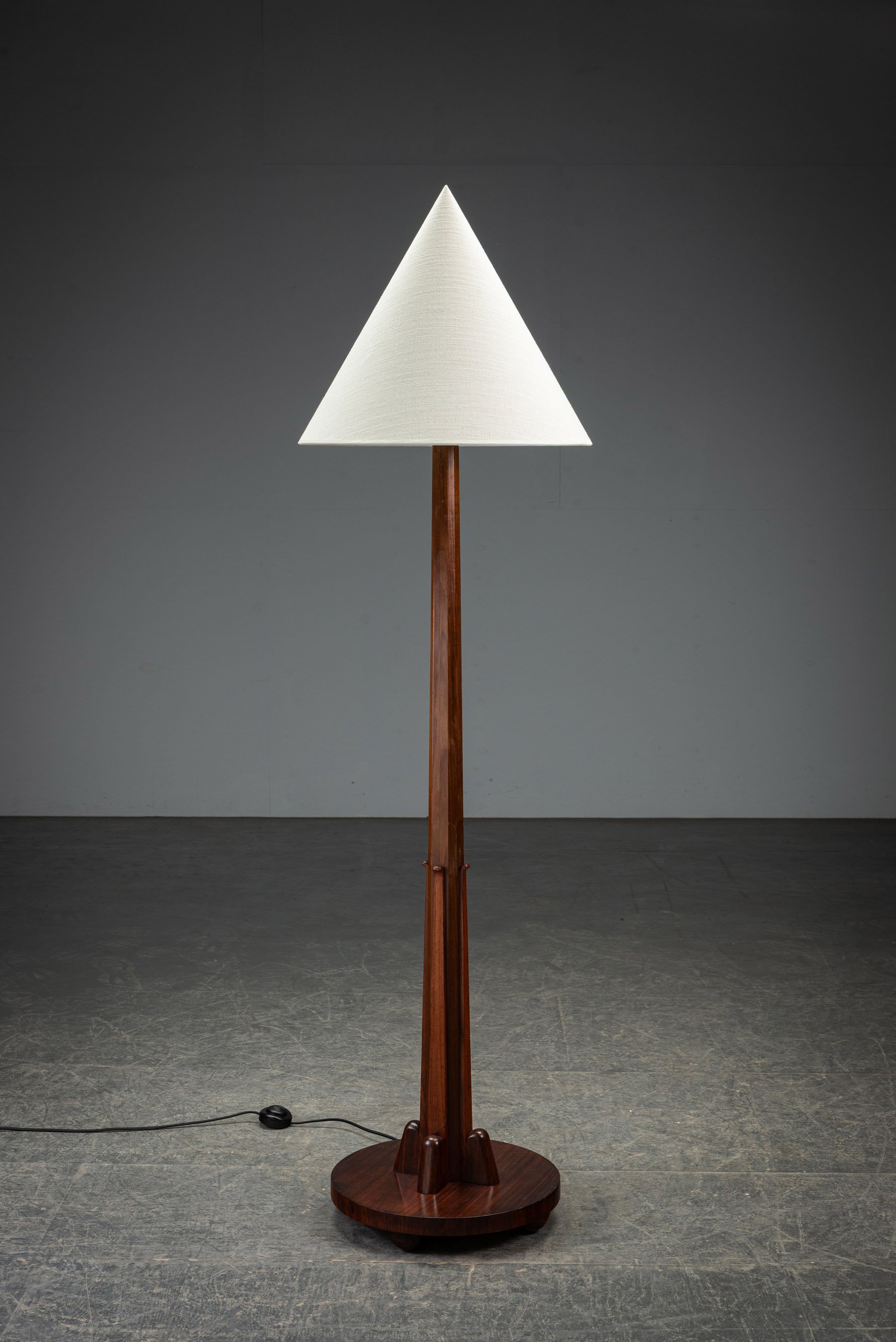
Willem Penaat (1875-1957)
period: 1920s
origin: The Netherlands
dimensions (cm): h178 x w49 x d49 cm
dimensions (inch): h70,08 x w19,29 x d19,29 in
material: wood, new linen shade
Rewired with a new socket and plug, according to European standards. If you would prefer the shade to be a different shape or colour, please contact us for our services.
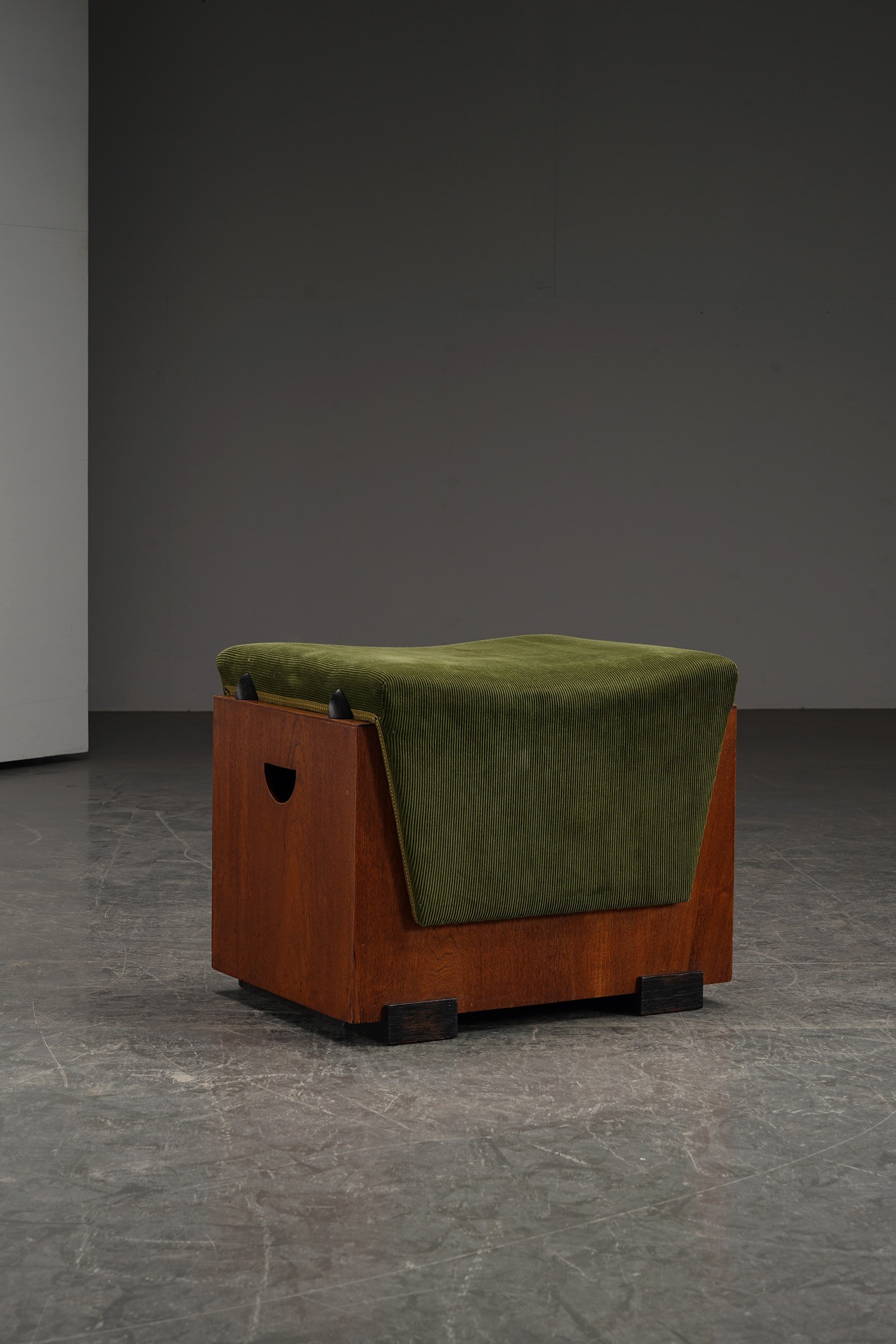
Van der Pol
period: 1930s
origin: The Netherlands
dimensions (cm): h46,5 x w58 x d47 cm (sh46,5 cm)
dimensions (inch): h18,31 x w22,83 x d18,5 in (sh18,31 in)
material: vintage upholstery, wood
If you would prefer this piece to be upholstered in a different fabric or colour, please contact us for our upholstery services.
One of a kind piece in Haagse School style with cross over Amsterdam School details. Both Architectural movements existed paralel to each other in the 1920s and 1930s. To find a design which actually embraces both movements into one object is very rare.
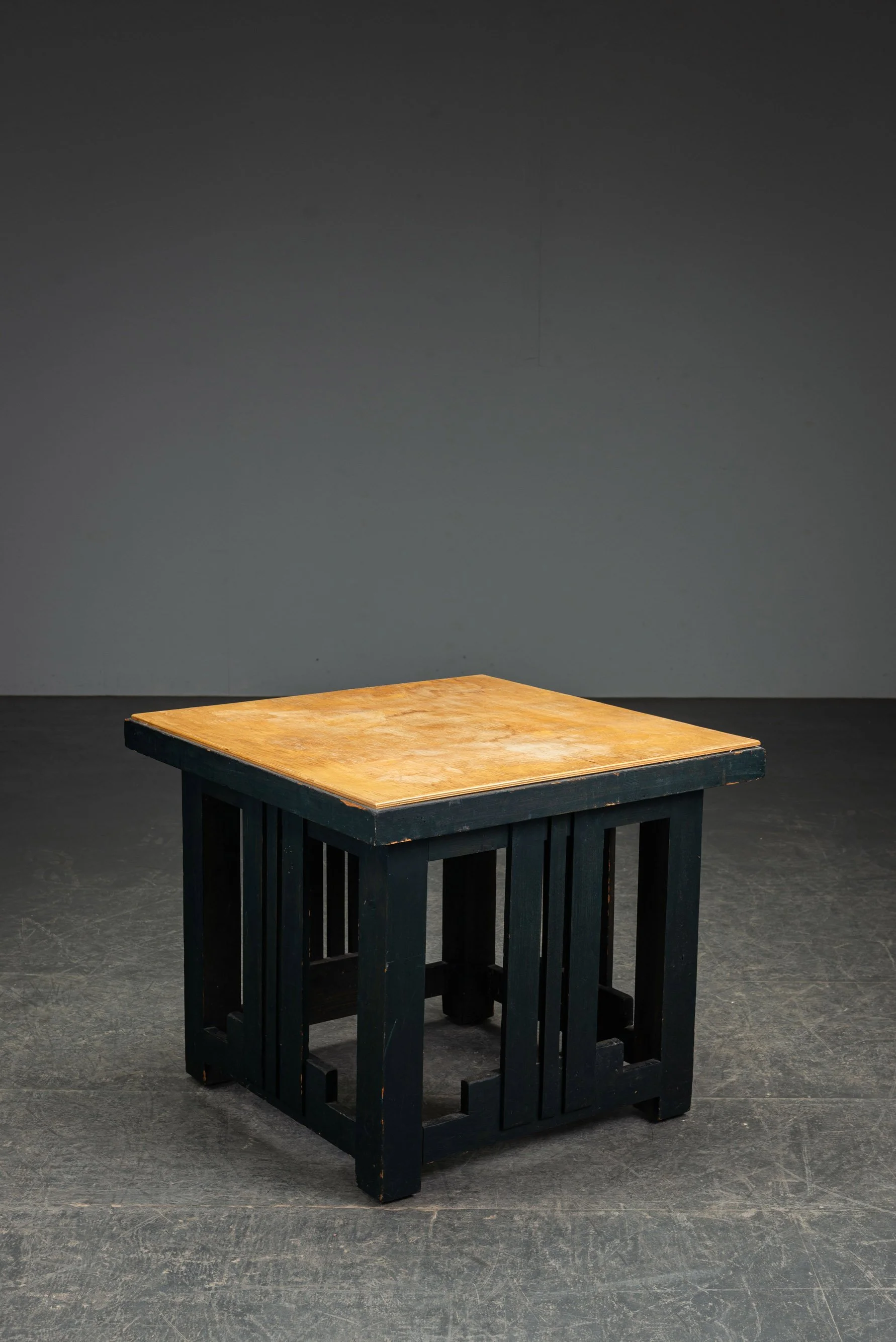
J.P.D. van Gelder (1902-1984)
period: 1926
origin: The Netherlands
dimensions (cm): h62 x w74 x d74 cm
dimensions (inch): h24,41 x w29,13 x d29,13 in
material: wood
Table originating from the interior of the small and exclusive Vrije Haarlemse Schilderschool (Free Haarlem Painting School).
Please note that the color is a very dark green.
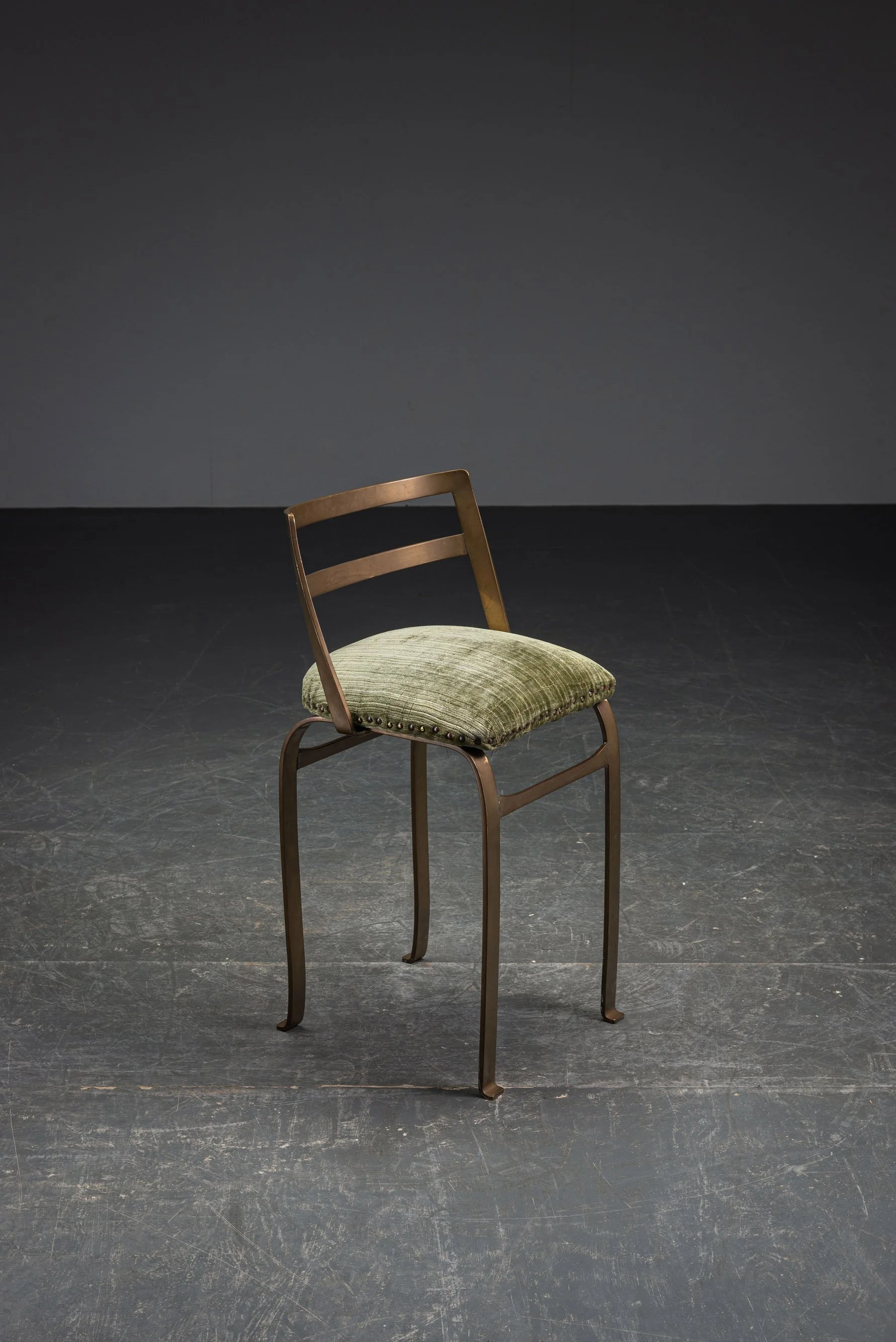
period: 1930s
origin: The Netherlands
dimensions (cm): h75 x w39 x d37 cm (sh55 cm)
dimensions (inch): h29,53 x w15,35 x d14,57 in (sh21,65 in)
material: newly upholstered, solid brass
From the interior of Meddens fashion store in Amsterdam.
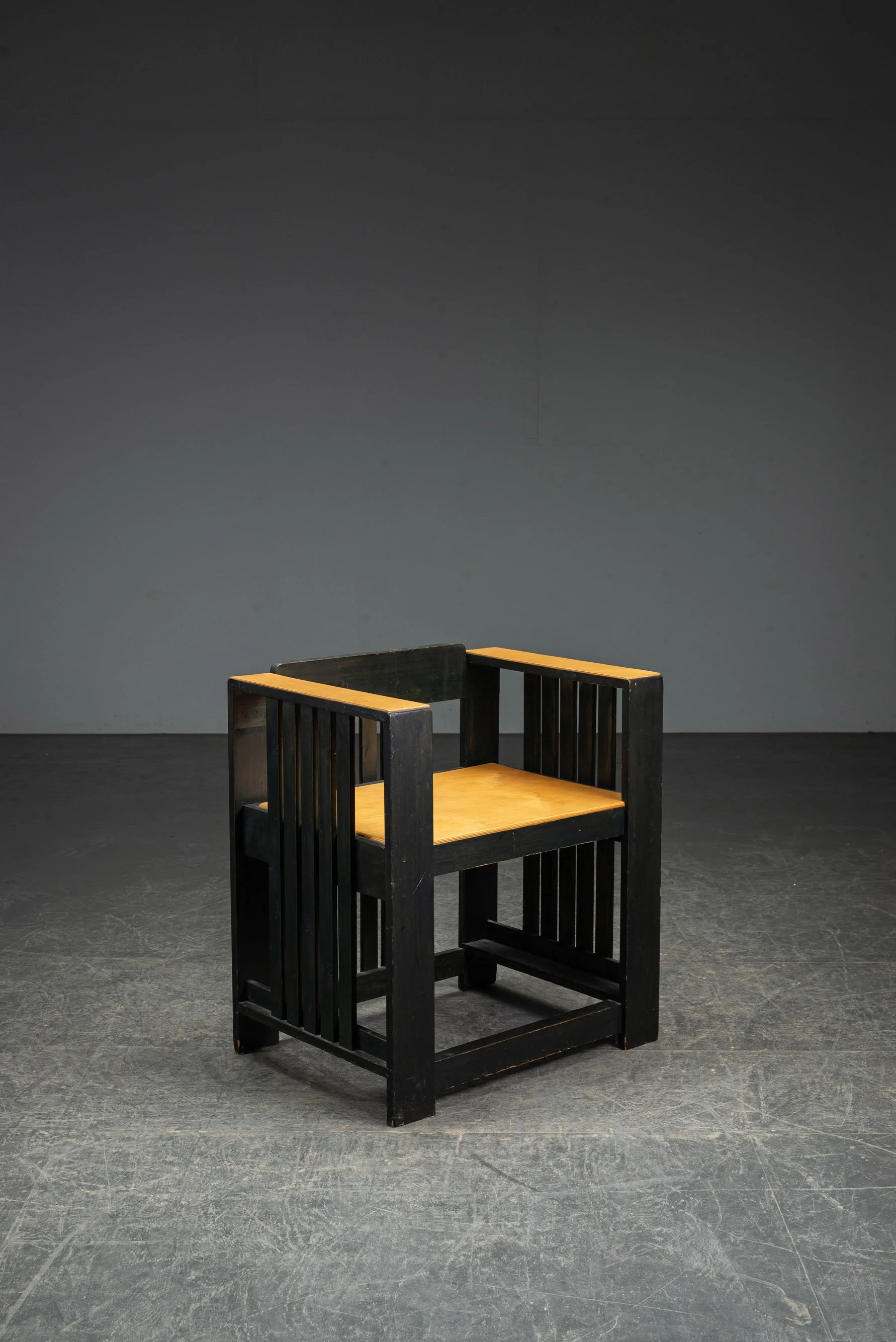
J.P.D. van Gelder (1902-1984)
period: 1926
origin: The Netherlands
dimensions (cm): h78 x w70 x d50 cm (sh51 / ar76 cm)
dimensions (inch): h30,71 x w27,56 x d19,69 in (sh20,08 / ar29,92 in)
material: wood
The head teacher's chair from the interior of the rather small and exclusive 'Vrije Haarlemse Schilderschool' ( The Free Haarlem Painting school).
Please note that the color is a very dark green.
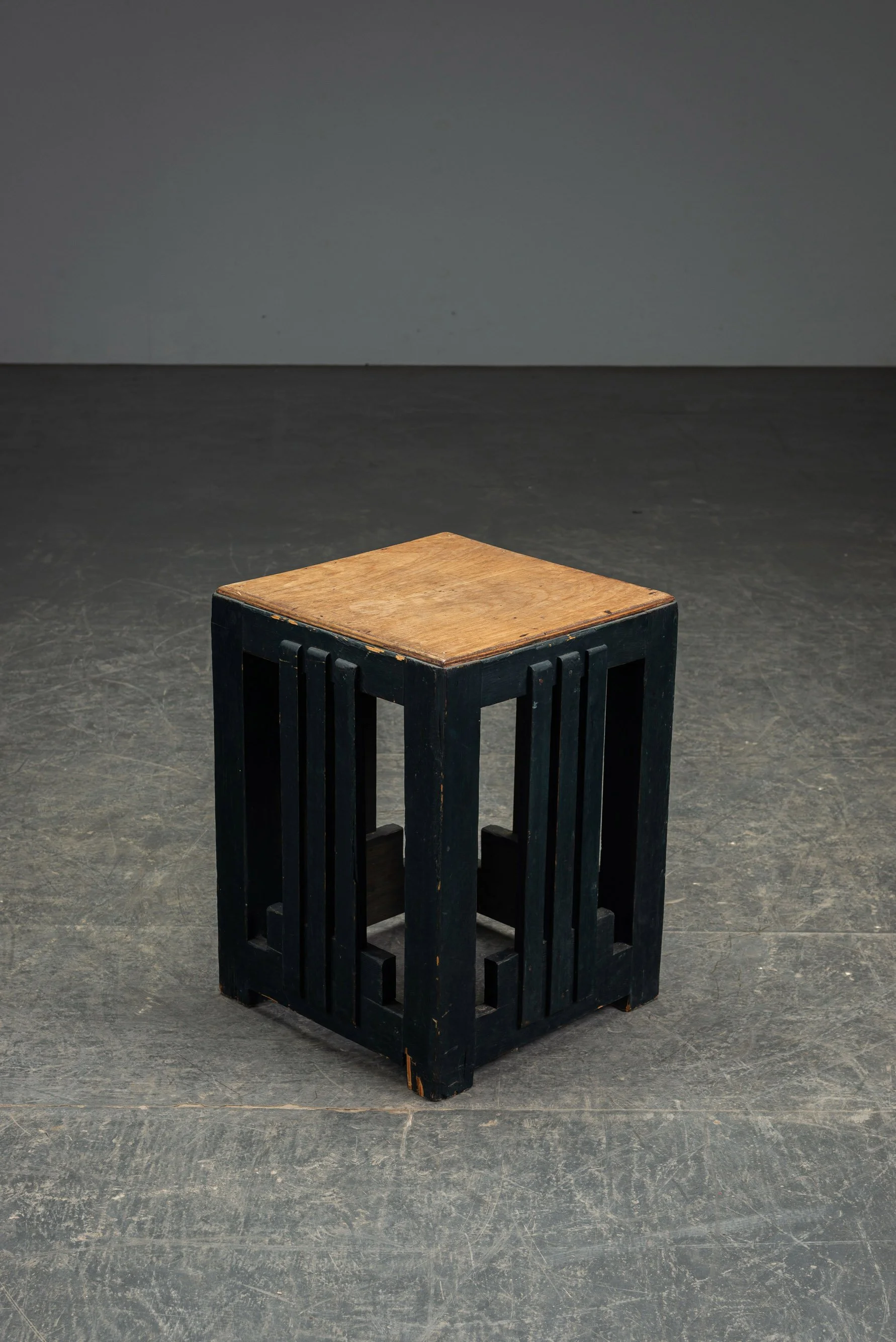
J.P.D. van Gelder (1902-1984)
period: 1926
origin: The Netherlands
dimensions (cm): h47 x w36 x d36 cm
dimensions (inch): h18,5 x w14,17 x d14,17 in
material: wood
Student stool originating from the interior of the small and exclusive Vrije Haarlemse Schilderschool (Free Haarlem Painting School).
Please note that the color is a very dark green.
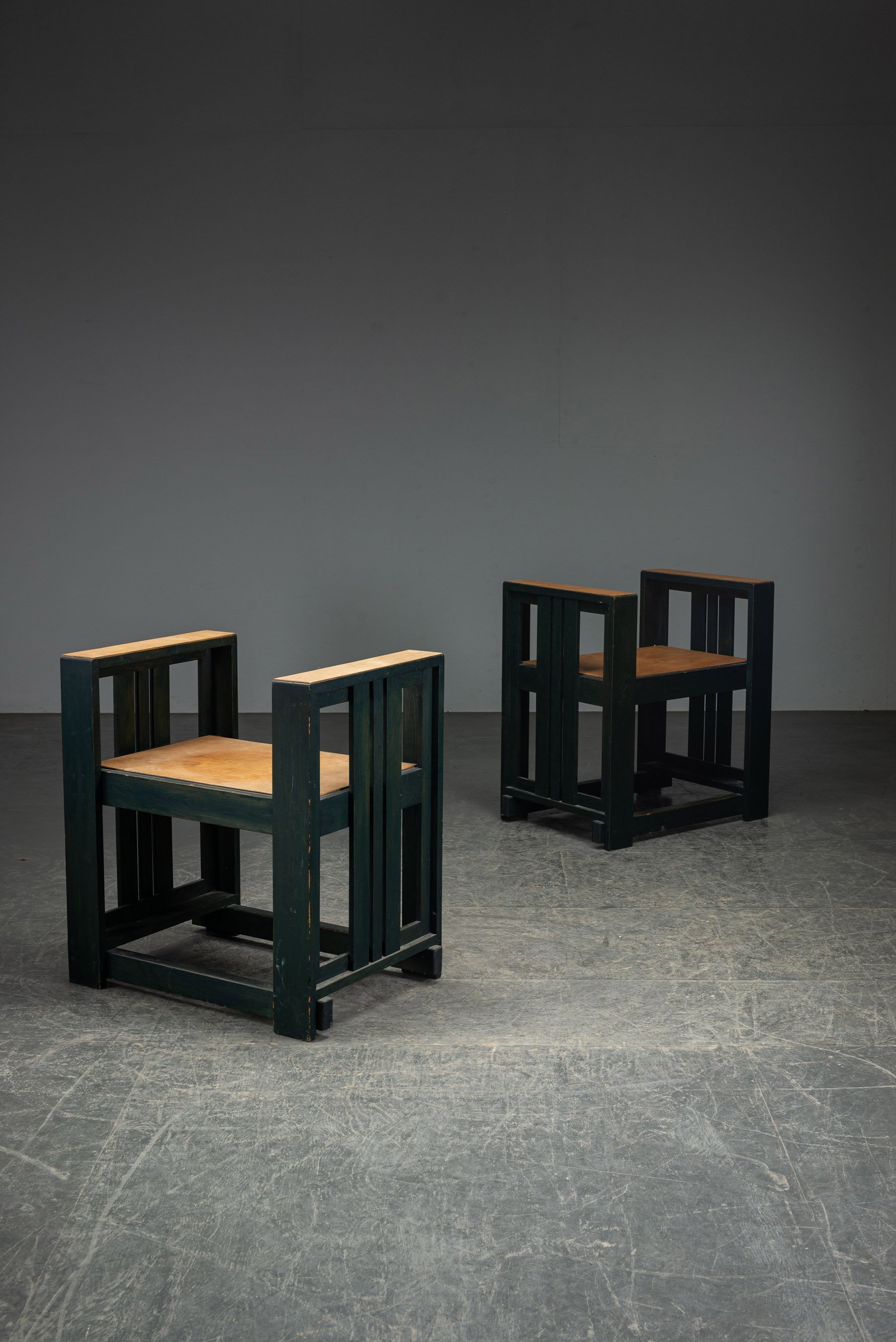
J.P.D. van Gelder (1902-1984)
period: 1926
origin: The Netherlands
dimensions (cm): h76 x w70 x d50 cm (sh52 / ar76 cm)
dimensions (inch): h29,92 x w27,56 x d19,69 in (sh20,47 / ar29,92 in)
material: wood
Two armchairs available. Price per piece.
Student chairs originating from the interior of the small and exclusive Vrije Haarlemse Schilderschool (Free Haarlem Painting School).
Please note that the color is a very dark green.
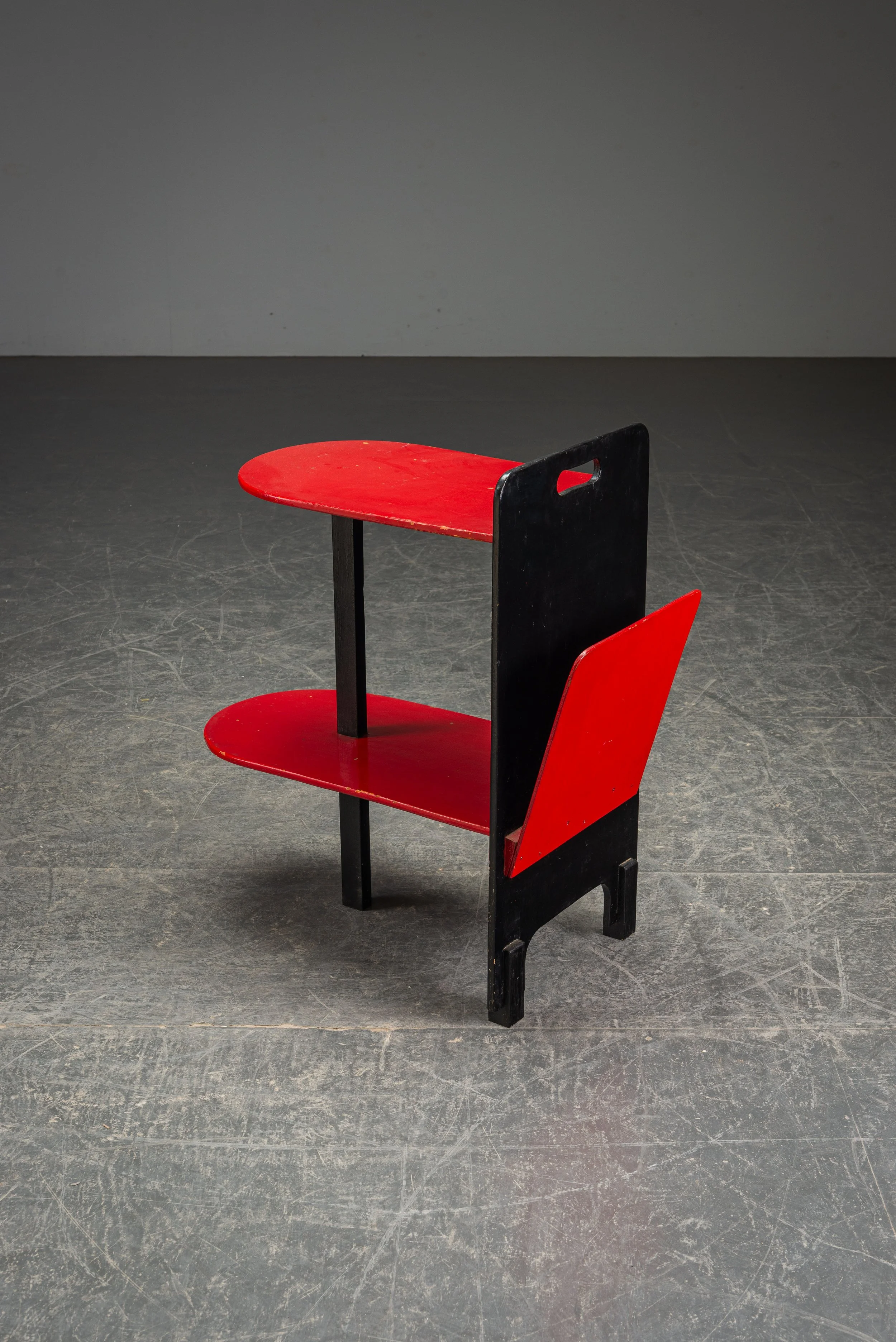
Metz & Co.
period: 1930s
origin: The Netherlands
dimensions (cm): h67 x w35 x d54 cm
dimensions (inch): h26,38 x w13,78 x d21,26 in
material: wood
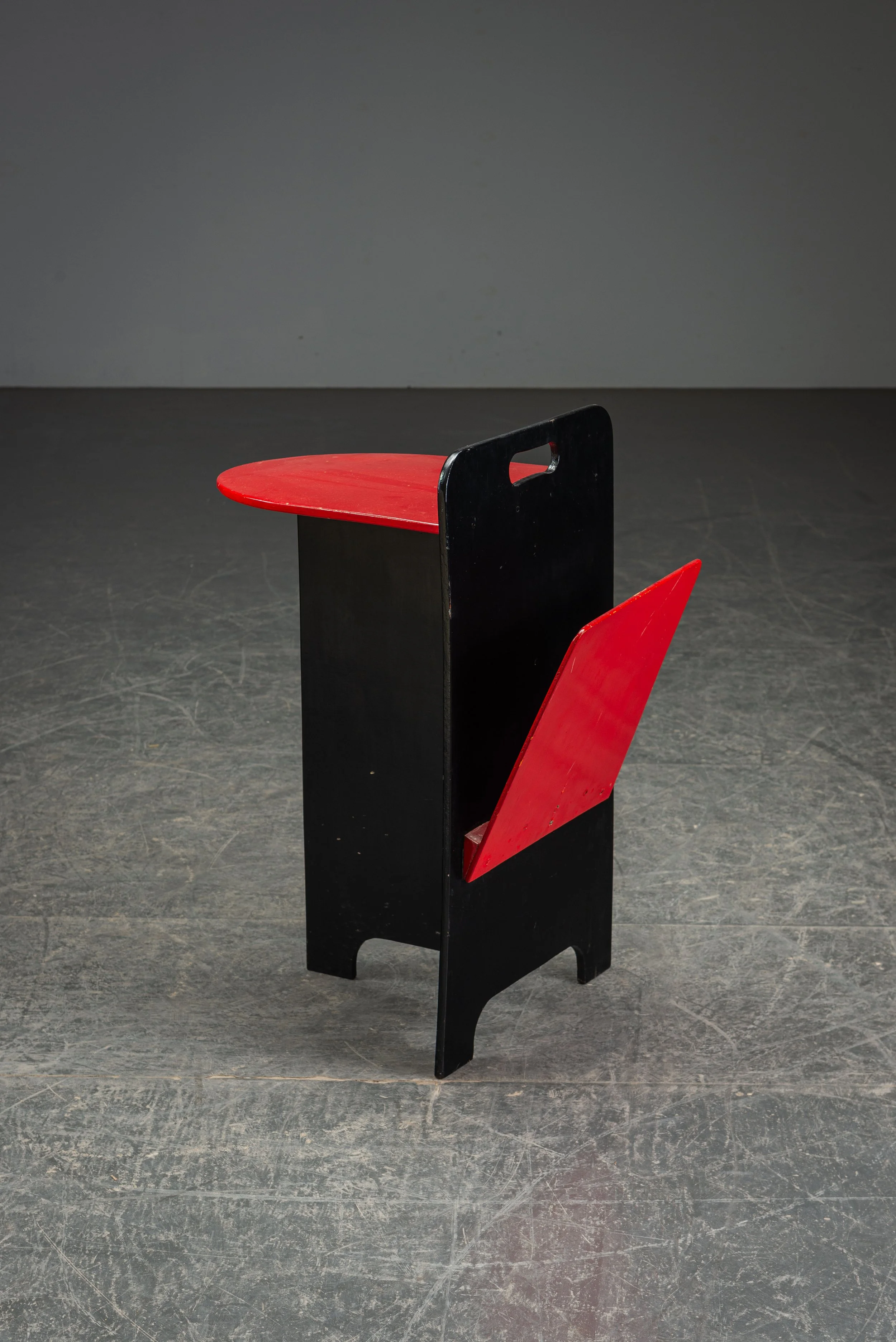
Metz & Co.
period: 1930s
origin: The Netherlands
dimensions (cm): h65 x w35 x d50 cm
dimensions (inch): h25,59 x w13,78 x d19,69 in
material: wood
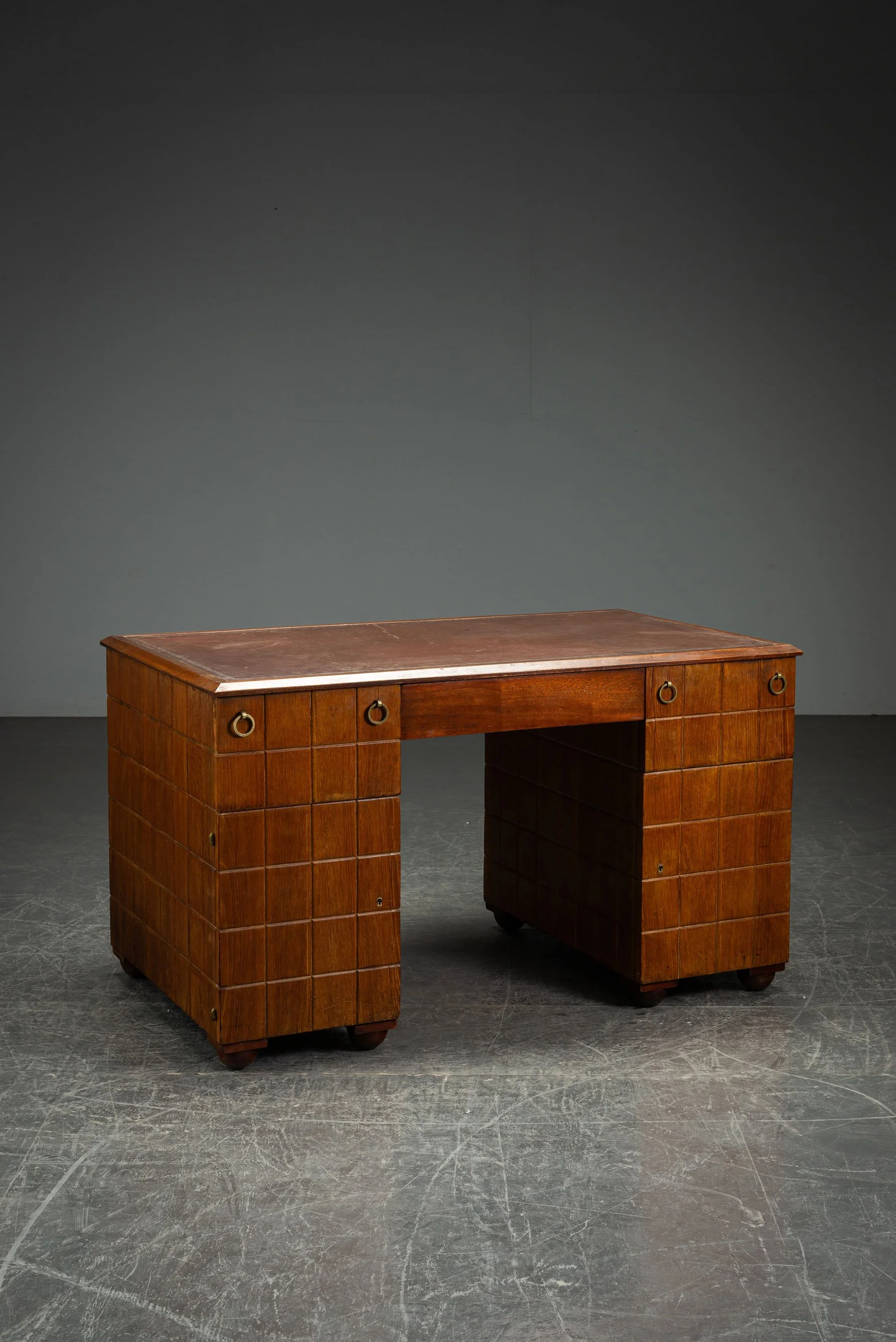
Georges Chevalier (1894-1987)
model: Pascal
period: 1930s
origin: France
dimensions (cm): h75 x w130 x d75 cm
dimensions (inch): h29,53 x w51,18 x d29,53 in
material: leather, wood
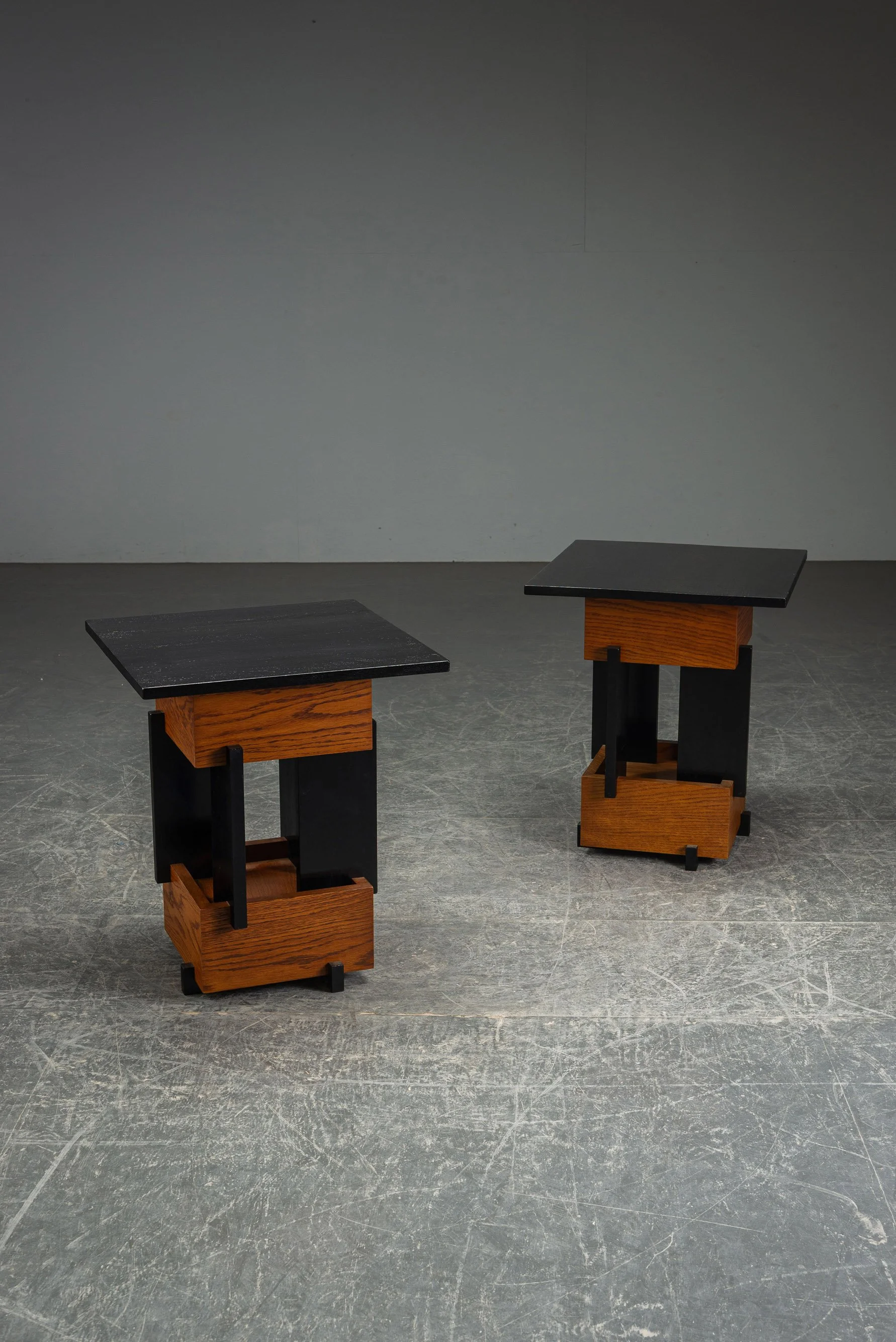
Cor Alons (1892-1967)
period: 1920s
origin: The Netherlands
dimensions (cm): h58 x w50 x d50 cm
dimensions (inch): h22,83 x w19,69 x d19,69 in
material: wood
Two side tables available. Price per piece.
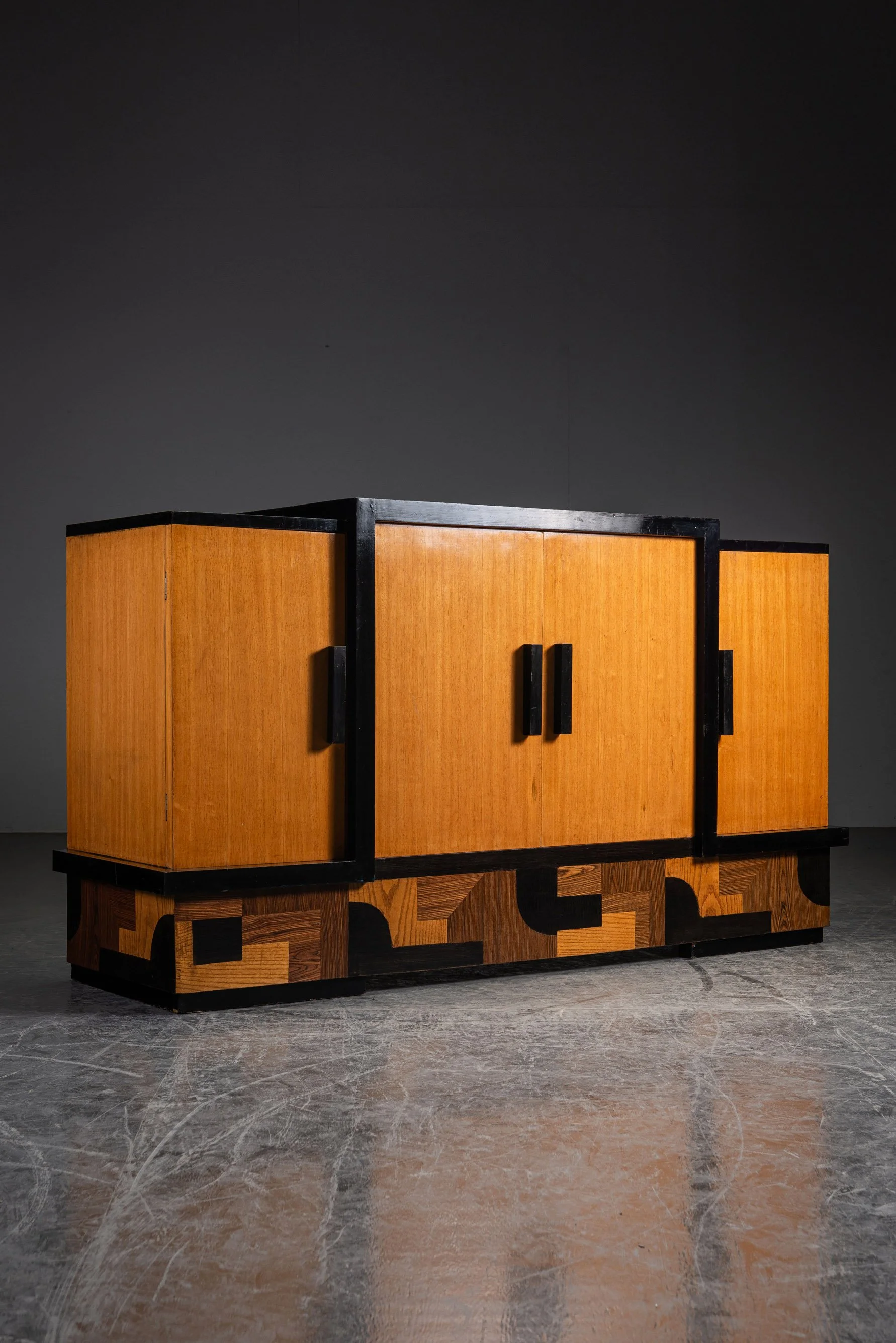
Michel Dufet (1888-1985)
period: 1930s
origin: France
dimensions (cm): h103 x w187 x d53 cm
dimensions (inch): h40,55 x w73,62 x d20,87 in
material: wood
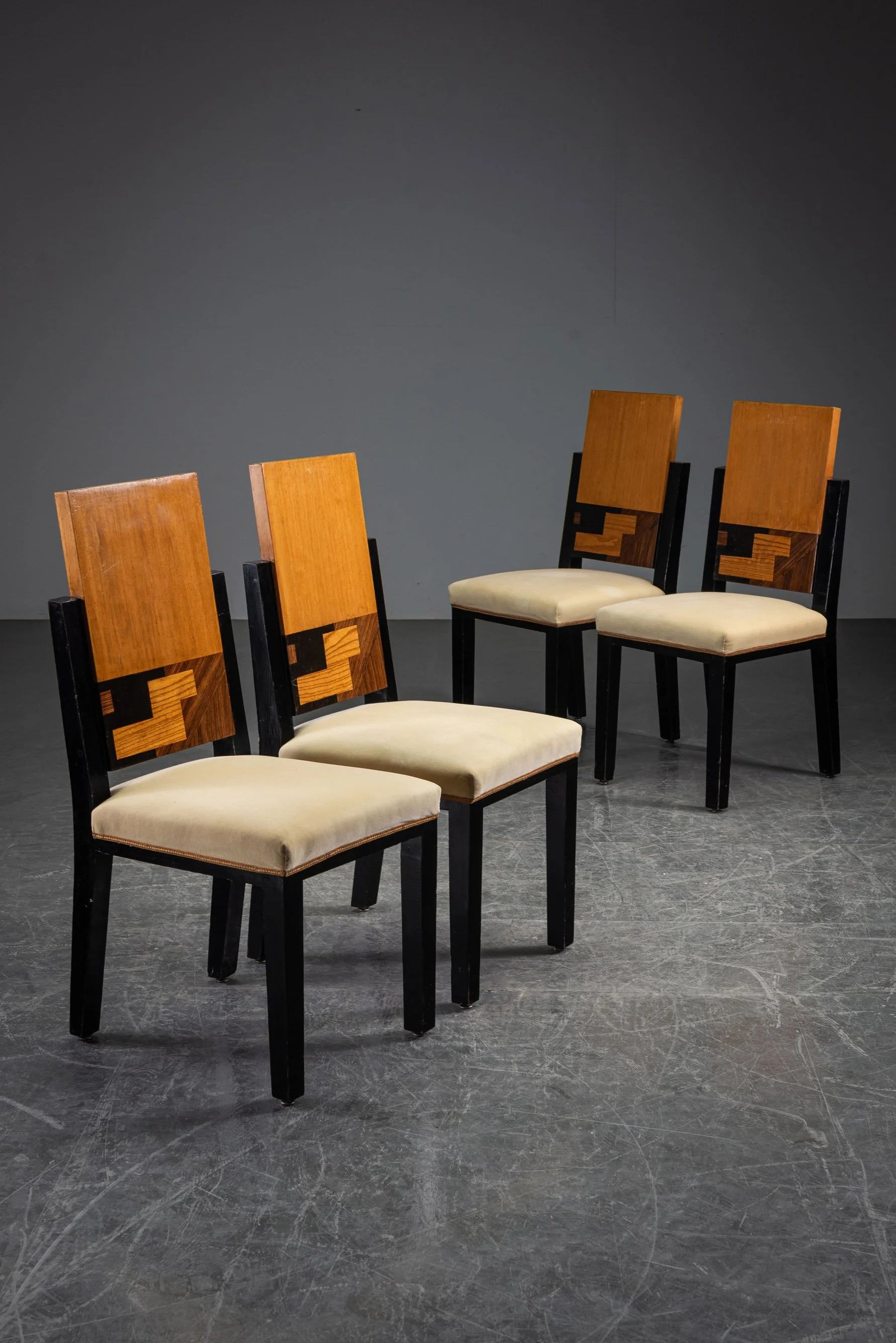
Michel Dufet (1888-1985)
period: 1930s
origin: France
dimensions (cm): h100 x w46 x d52 cm (sh50 cm)
dimensions (inch): h39,37 x w18,11 x d20,47 in (sh19,69 in)
material: wood, vintage upholstery (needs to be reupholstered)
Price for the set.
If you would prefer this piece to be upholstered in a different fabric or colour, please contact us for our upholstery services.

Willem Rädecker (1883-1971)
period: 1920s
origin: The Netherlands
dimensions (cm): h122 x w46,5 x d56,5 cm (sh44 cm)
dimensions (inch): h48,03 x w18,31 x d22,24 in (sh17,32 in)
material: solid wood with woodcarving
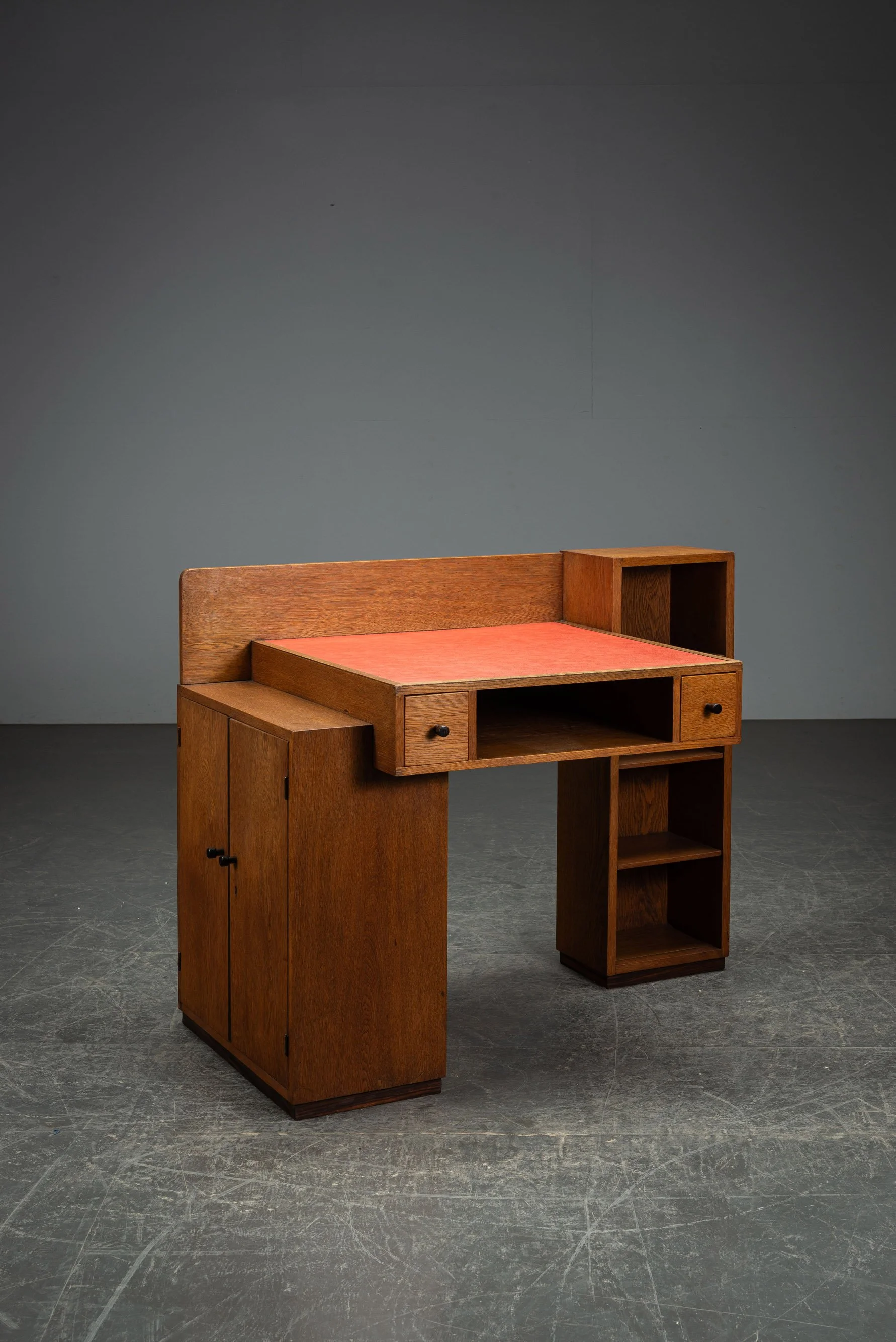
P.E.L. Izeren (1886-1943)
Genneper Molen
period: 1930s
origin: The Netherlands
dimensions (cm): h74/89 x w70/115 x d63 cm
dimensions (inch): h29,13/35,04 x w27,56/45,28 x d24,8 in
material: wood, new leather top
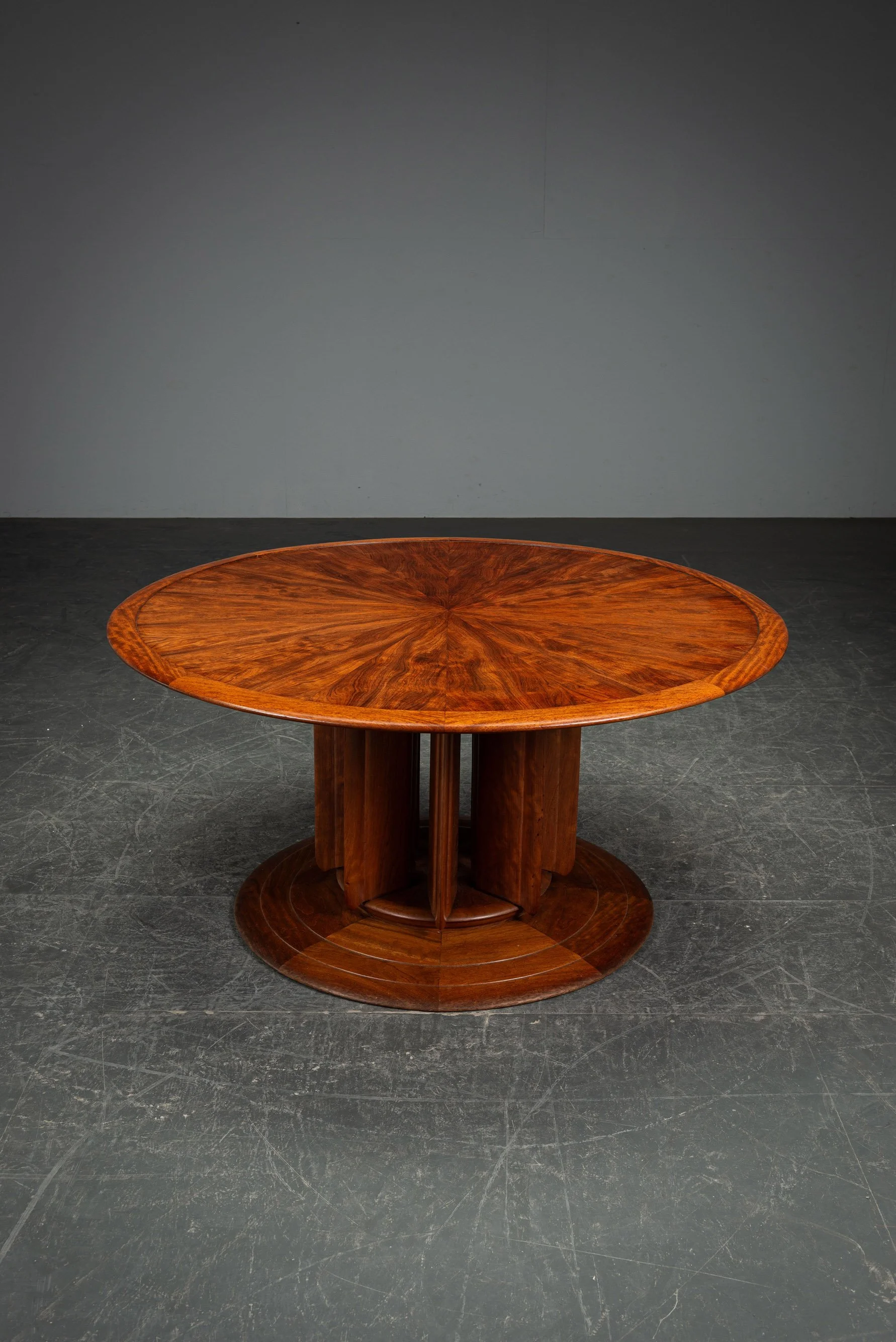
Architect D. Smit jr. (1898-1953) - attr.
Gebroeders Reens
period: 1910s
origin: The Netherlands
dimensions (cm): h59 x w122 x d122 cm
dimensions (inch): h23,23 x w48,03 x d48,03 in
material: wood
An exceptionally rare piece of the highest quality, likely made for a specific project. The manufacturer, Gebroeders Reens, was primarily known for creating luxury interiors for cruise ships and yachts.

Genneper Molen
period: 1920s
origin: The Netherlands
dimensions (cm): h75 x w82 x d48 cm
dimensions (inch): h29,53 x w32,28 x d18,9 in
material: glass, wood
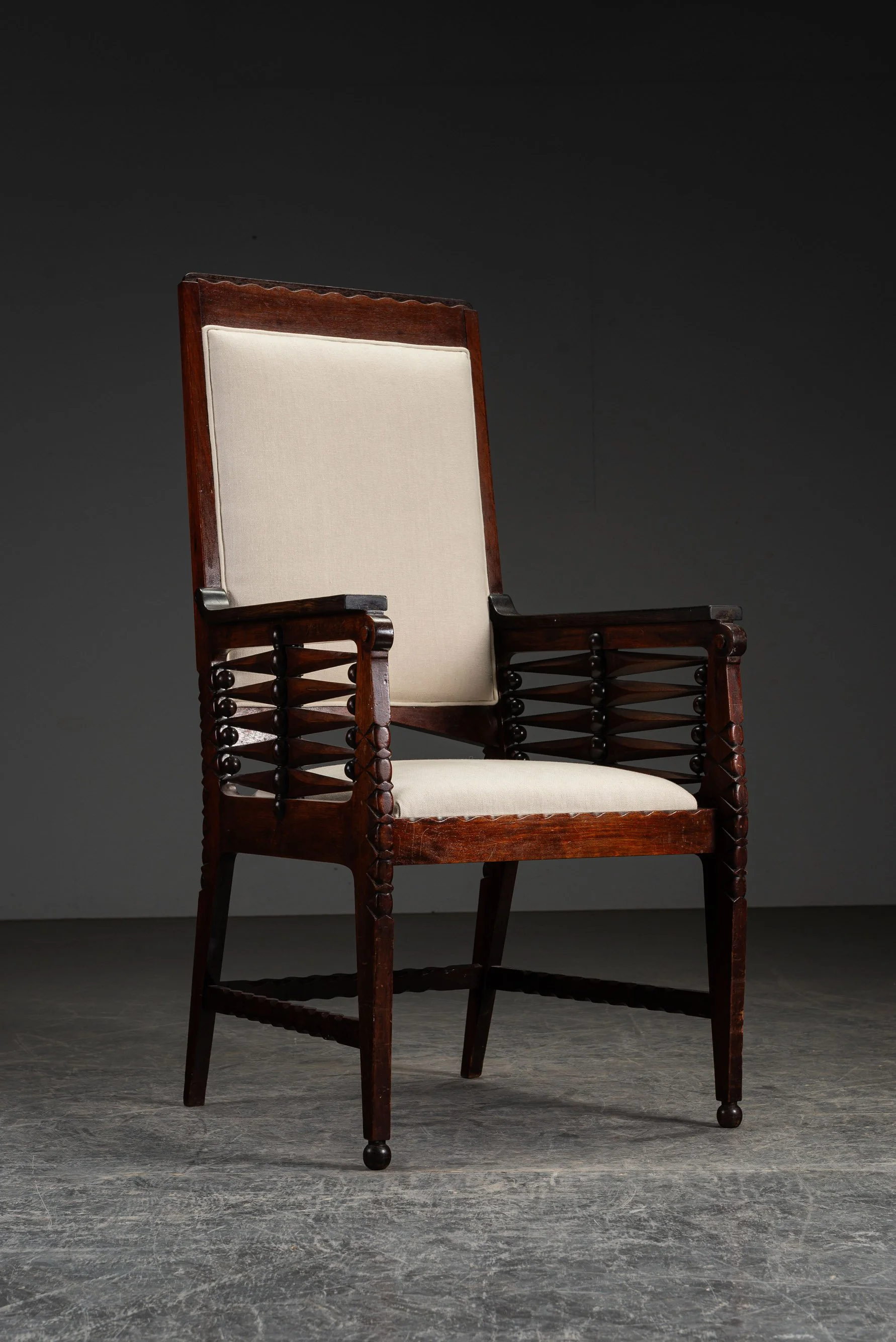
period: 1920s
origin: The Netherlands
dimensions (cm): h121 x w63 x d59 cm (sh48 / ar71 cm)
dimensions (inch): h47,64 x w24,8 x d23,23 in (sh18,90 / ar27,95)
material: newly upholstered, wood
If you would prefer this piece to be upholstered in a different fabric or colour, please contact us for our upholstery services.
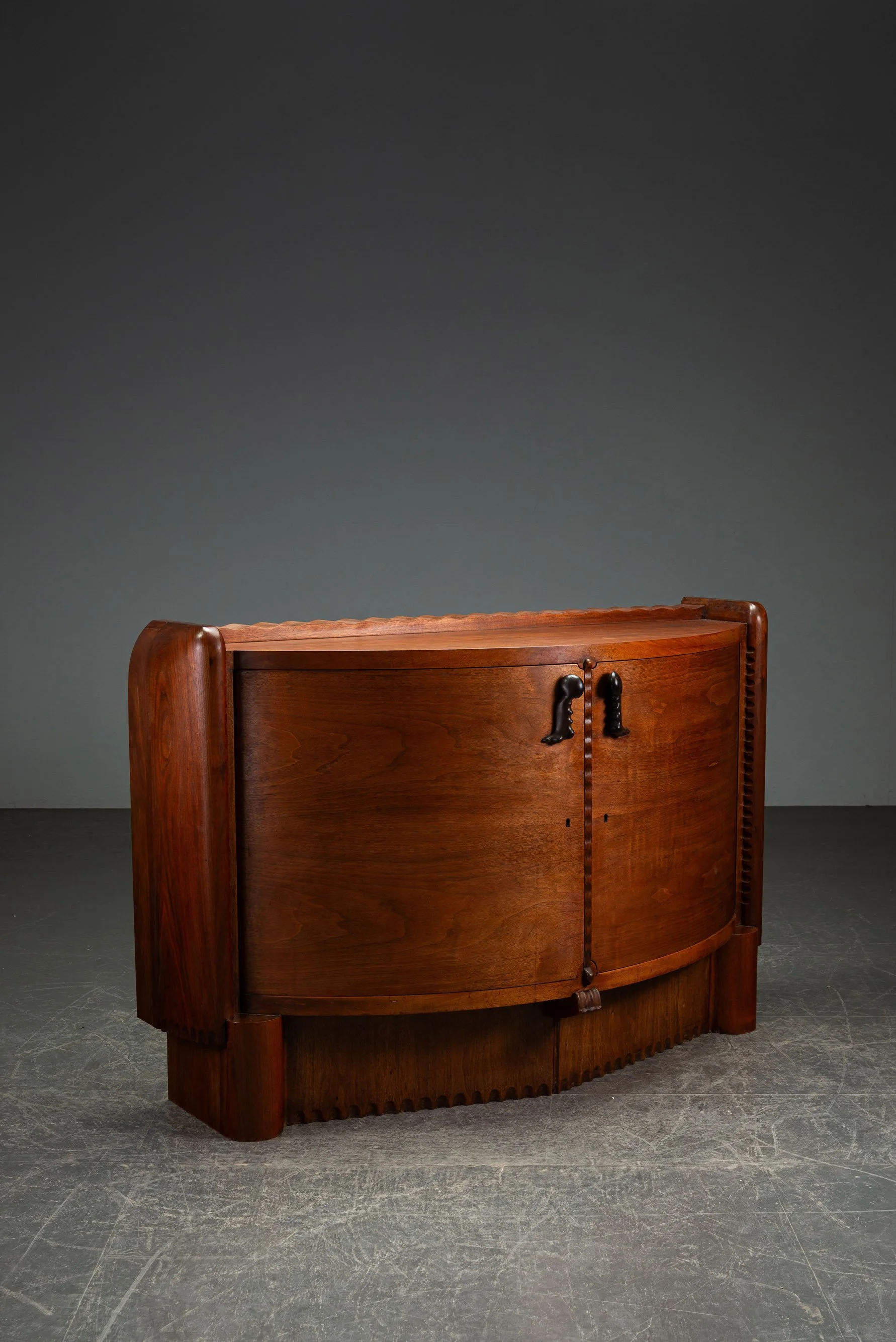
Architect G.A. Roobol (1899-1981)
period: 1927
origin: The Netherlands
dimensions (cm): h105 x w162 x d56 cm
dimensions (inch): h41,34 x w63,78 x d22,05 in
material: wood
A unique piece by architect Gustaaf A. Roobol, a significant figure in early 20th-century Amsterdam. His designs for schools, shops, and café’s remain scattered throughout the city. He began his career at the bureau of Berlage and later worked with Amsterdam’s Public Works, before establishing himself as an independent architect alongside his role as a municipal councillor.

Cor Alons (1892-1967)
L.O.V (Labor Omnia Vincit)
period: 1920s
origin: The Netherlands
dimensions (cm): h109 x w45 x d45 cm (sh43 cm)
dimensions (inch): h42,91 x w17,72 x d17,72 in (sh16,93 in)
material: rush, wood
Two pieces available. Price per piece.
Rare and collectible pieces, of which only four are known to exist. One is held by Kunstmuseum Den Haag, and the pair offered here is documented in De Haagse Stijl: Art Deco in Nederland by Timo de Rijk (Uitgeverij 010, p. 41).

Cor Alons (1892-1967)
L.O.V (Labor Omnia Vincit)
period: 1920s
origin: The Netherlands
dimensions (cm): h72 x w81 x d51 cm
dimensions (inch): h28,35 x w31,89 x d20,08 in
material: glass, wood
Paired here with the L.O.V. Haagse School Sideboard by Cor Alons.
Very rare model with fully restored exterior. The interior remains in its original blue paint — an ingenious detail where the color becomes an integral part of the design, highlighted by two distinctive blue lines.

Cor Alons (1892-1967)
L.O.V (Labor Omnia Vincit)
period: 1920s
origin: The Netherlands
dimensions (cm): h82 x w176 x d44 cm
dimensions (inch): h32,28 x w69,29 x d17,32 in
material: glass, wood
Paired here with the L.O.V. Haagse School Cabinet by Cor Alons.
Very rare model with fully restored exterior. The interior remains in its original blue paint — an ingenious detail where the color becomes an integral part of the design, highlighted by two distinctive blue lines.

Architect Gunnar Daan (1939-2016)
Gunnar Daan
period: 1970s
origin: The Netherlands
dimensions (cm): h76 x w139 x d89 cm (sh42 / ar69 cm)
dimensions (inch): h29,92 x w54,72 x d35,04 in (sh16,54 / ar27,17 in)
material: newly upholstered, wood
If you would prefer this piece to be upholstered in a different fabric or colour, please contact us for our upholstery services.
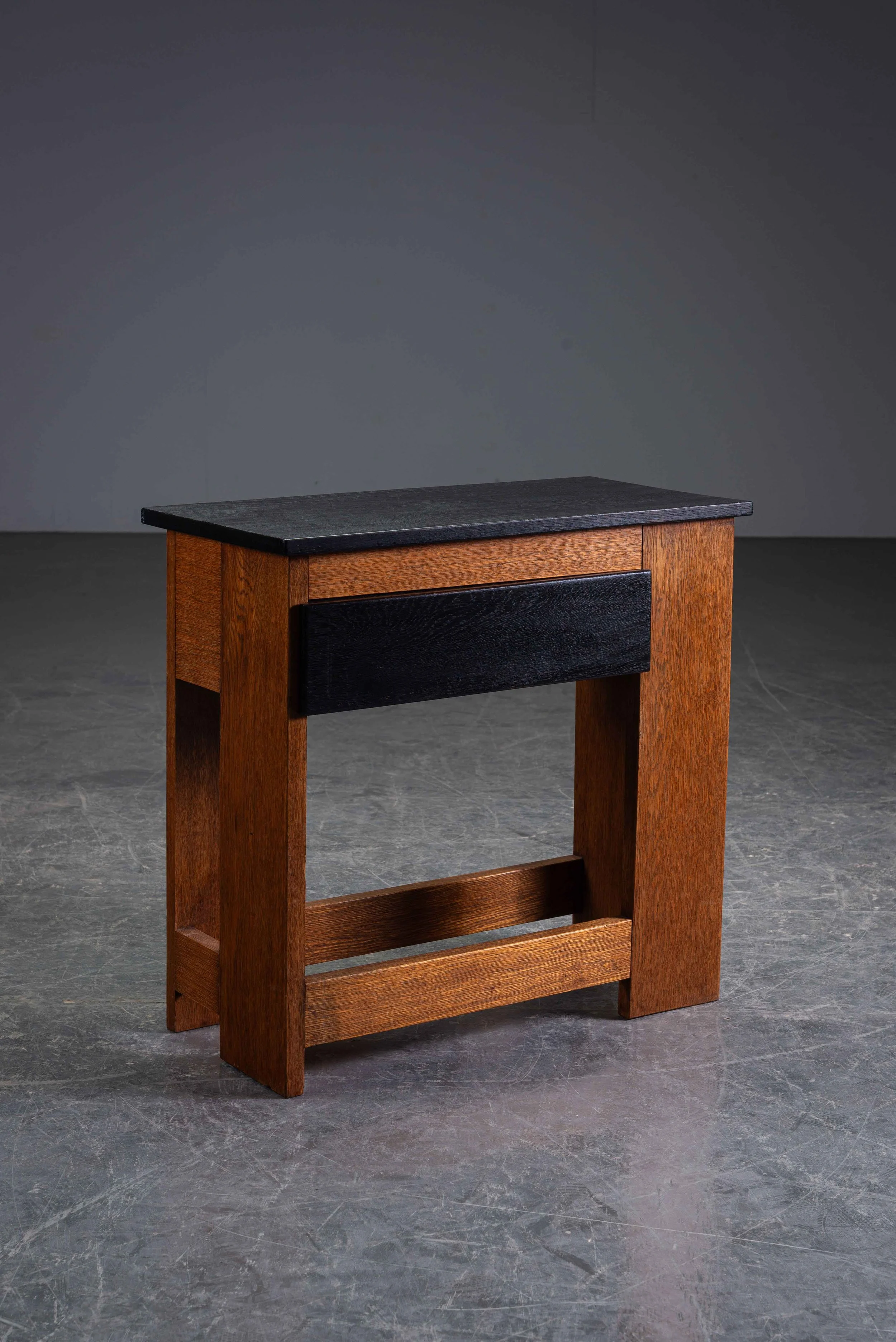
Cor Alons (1892-1967)
period: 1920s
origin: The Netherlands
dimensions (cm): h60 x w64 x d30 cm
dimensions (inch): h23,62 x w25,2 x d11,81 in
material: wood

Maurice Dufrêne (1876-1955)
period: 1925
origin: France
dimensions (cm): h73 x w142 x d75 cm
dimensions (inch): h28,74 x w55,91 x d29,53 in
material: wood
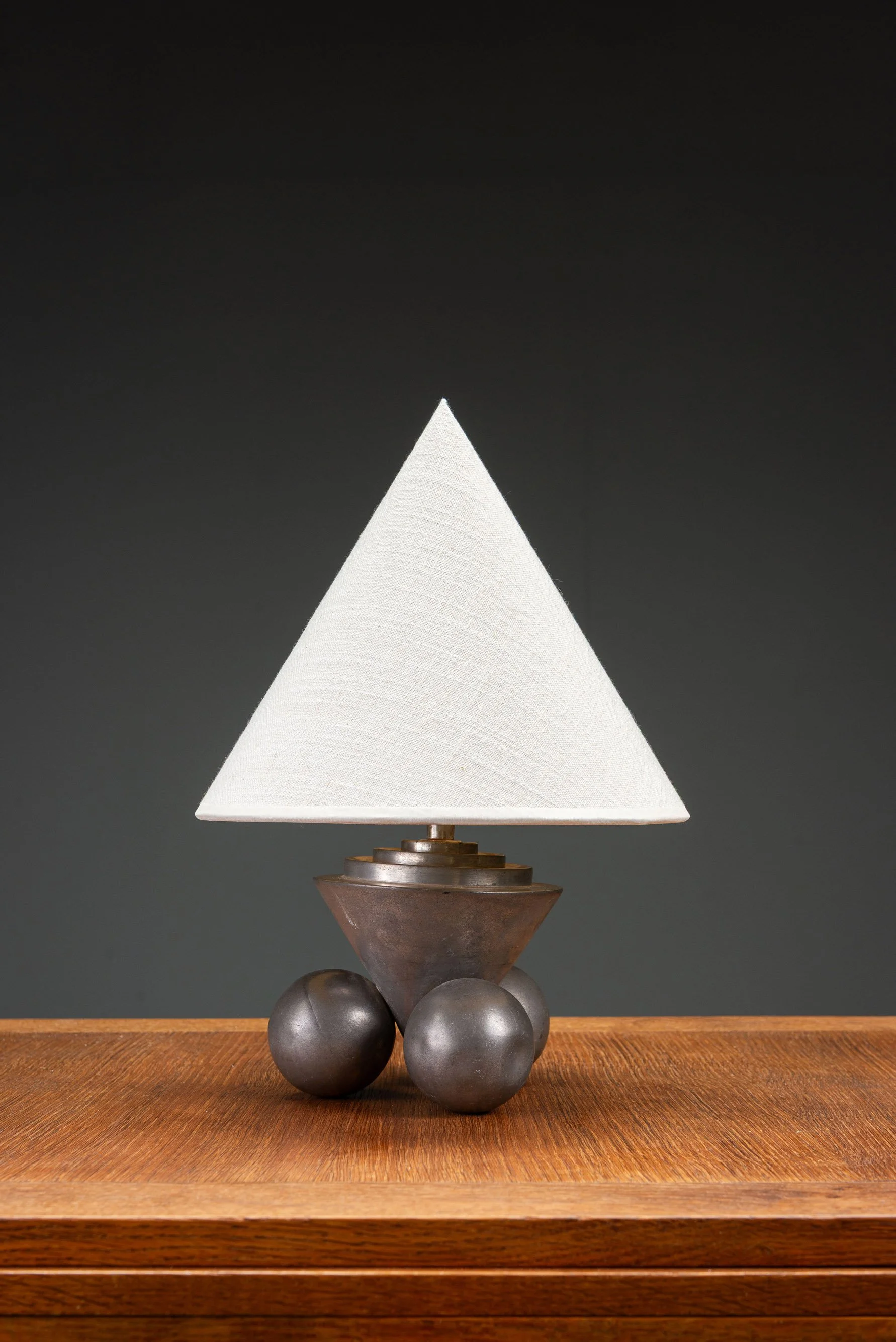
period: 1920s
origin: The Netherlands
dimensions (cm): h38 x w26 x d26 cm
dimensions (inch): h14,96 x w10,24 x d10,24 in
material: tin, original shade
Rewired with a new socket and plug, according to European standards. If you would prefer the shade to be a different shape or colour, please contact us for our services.

Maurice Dufrêne (1876-1955)
period: 1925
origin: France
dimensions (cm): h163 x w166 x d43 cm
dimensions (inch): h64,17 x w65,35 x d16,93 in
material: glass, wood
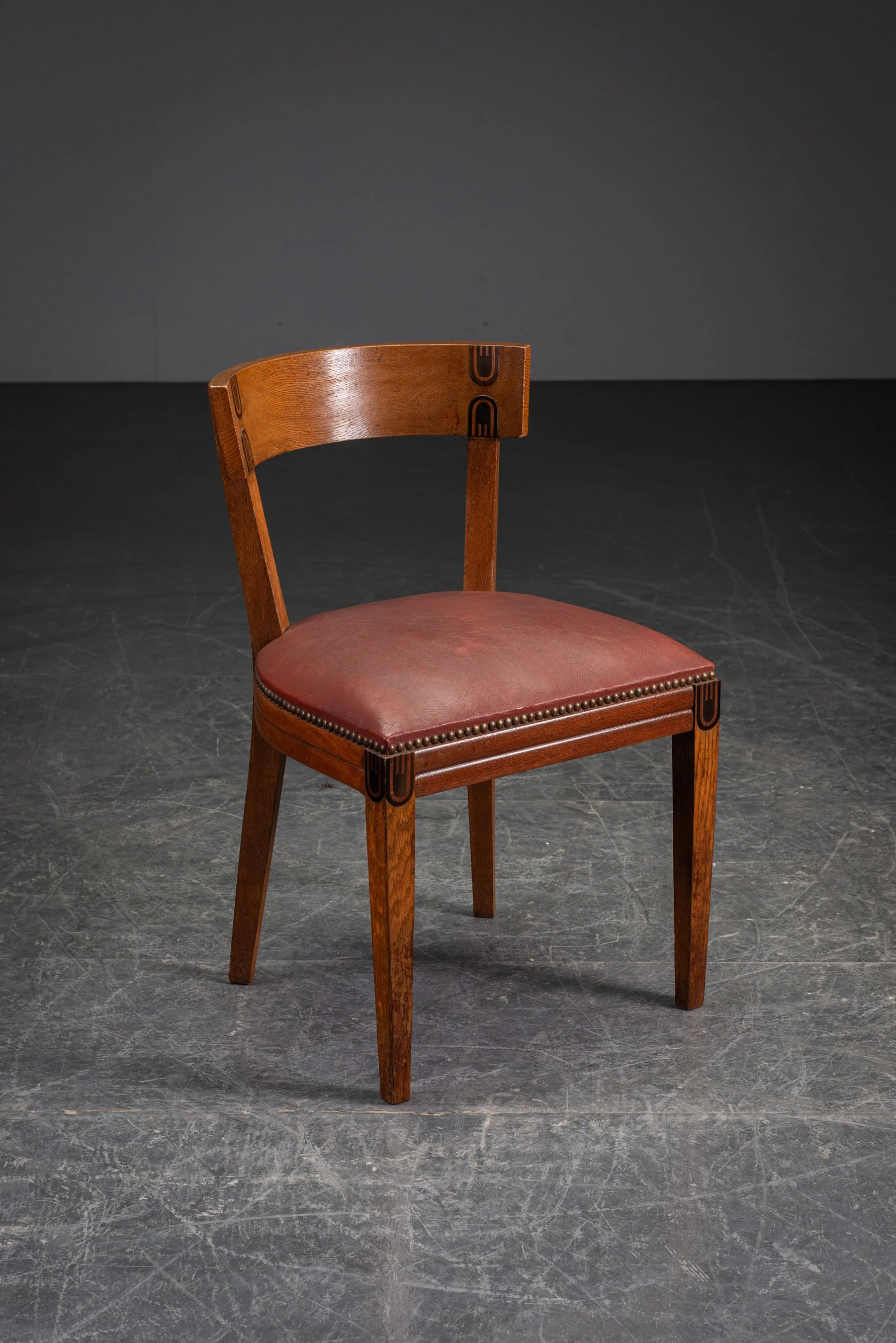
Maurice Dufrêne (1876-1955)
period: 1925
origin: France
dimensions (cm): h75 x w50 x d56 cm (sh47 cm)
dimensions (inch): h29,53 x w19,69 x d22,05 in (sh18,50 cm)
material: vintage upholstery, wood

De Coene
period: 1953
origin: Belgium
dimensions (cm): h68,5 x w67,5 x d82,5 cm (sh42 / ar55 cm)
dimensions (inch): h26,97 x w26,57 x d32,48 in (sh16,54 / ar21,65 in)
material: newly upholstered, wood
Price for the set.
If you would prefer this piece to be upholstered in a different fabric or colour, please contact us for our upholstery services.
Very rare and collectible set.
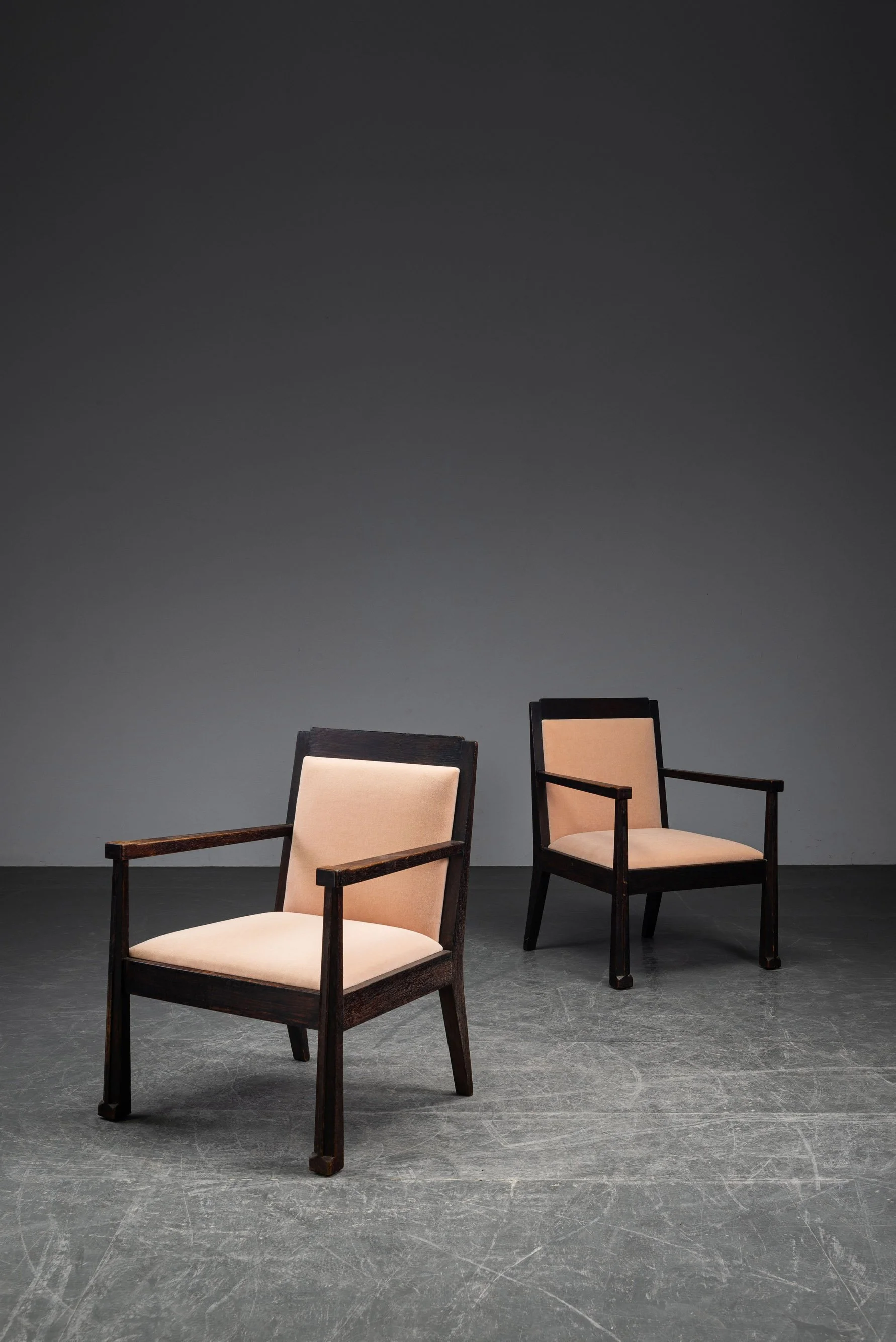
Cornelis van der Sluys (1881-1944)
period: 1909
origin: The Netherlands
dimensions (cm): h82 x w63 x d58 cm
dimensions (inch): h32,28 x w24,8 x d22,83 in
material: newly upholstered with pure Mohair, wood
If you would prefer this piece to be upholstered in a different fabric or colour, please contact us for our upholstery services.
price for the set.

Gerrit Rietveld
G. van de Groenekan for Metz & Co.
period: 1930s
origin: The Netherlands
dimensions (cm): h81 x w27 x d27 cm
dimensions (inch): h31,89 x w10,63 x d10,63 in
material: wood

Louis Bogtman (1900-1969)
Atelier Bogtman
period: 1920s
origin: The Netherlands
dimensions (cm): h202 x w69 x d69 cm
dimensions (inch): h79,53 x w27,17 x d27,17 in
material: original batik on wood, new linen shade
Truly monumental, both in size and presence, this collector’s piece by Louis Bogtman is a rare example of Amsterdamse School design — a movement deeply influenced by Indonesian culture, shaped by the ties between Indonesia and the Netherlands at the time.
Bogtman, who was awarded a silver medal at the 1925 World Expo in Paris, is still recognized for his museum-quality craftsmanship, and his work is held in prestigious museum collections. One hundred years later this particular lamp by his hand continues to be an absolute showstopper. The original shade has been replaced, but the batik technique used to stain the wood base remains unabatedly exquisite.
Rewired according to European standards. If you would prefer the shade to be a different shape or colour, please contact us for our services.

Willem Rädecker (1883-1971)
period: 1910s
origin: The Netherlands
dimensions (cm): h123 x w69 x d71,5 cm (sh48,5 / ar67,5 cm)
dimensions (inch): h48,43 x w27,17 x d28,15 in (sh19,09 in / ar26,57 in)
material: leather, solid mahogany
Price for the set.

Johannes (Jo) Wilhelmus Uiterwaal (1897-1972)
period: 1920s
origin: The Netherlands
dimensions (cm): h88 x w58 x d54 cm (sh44 / ar63 cm)
dimensions (inch): h34,65 x w22,83 x d21,26 in (sh17,32 / ar24,80 in)
material: leather, wood
The sculptor Jo Uiterwaal is remembered mainly for his monumental sculptures showing traits of Cubism and Futurism alongside their traditional essence. Less known is the fact that he and architect Gerrit Rietveld were befriended as young fellows, and that they made a number of furniture pieces together. It is undetermined whether this armchair is one of them, but it does clearly show De Stijl influences and is unmistakably reminiscent of Rietveld’s slat chairs.
For enquiries and additional photos please contact us.
Willem Rädecker (1883-1971)
period: 1920s
origin: The Netherlands
dimensions (cm): h122 x w46,5 x d56,5 cm (sh44 cm)
dimensions (inch): h48,03 x w18,31 x d22,24 in (sh17,32 in)
material: solid wood with woodcarving
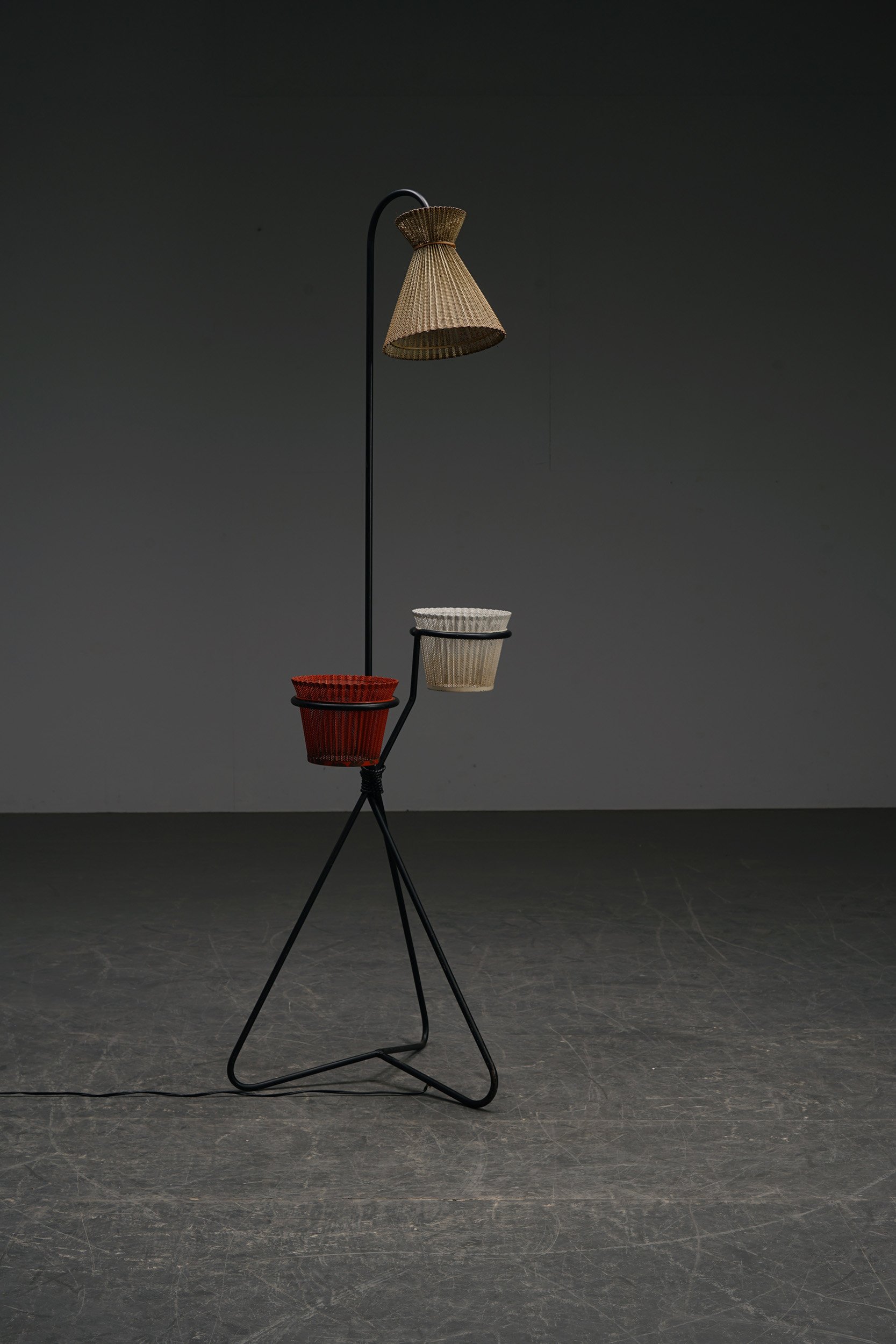
Mathieu Matégot (1910-2001)
Atelier Matégot
period: 1950s
origin: France
dimensions (cm): h161,5 x w51 x d43 cm
dimensions (inch): h63,58 x w20,08 x d16,93 in
material: metal
Rare and collectible lamp with original paint.
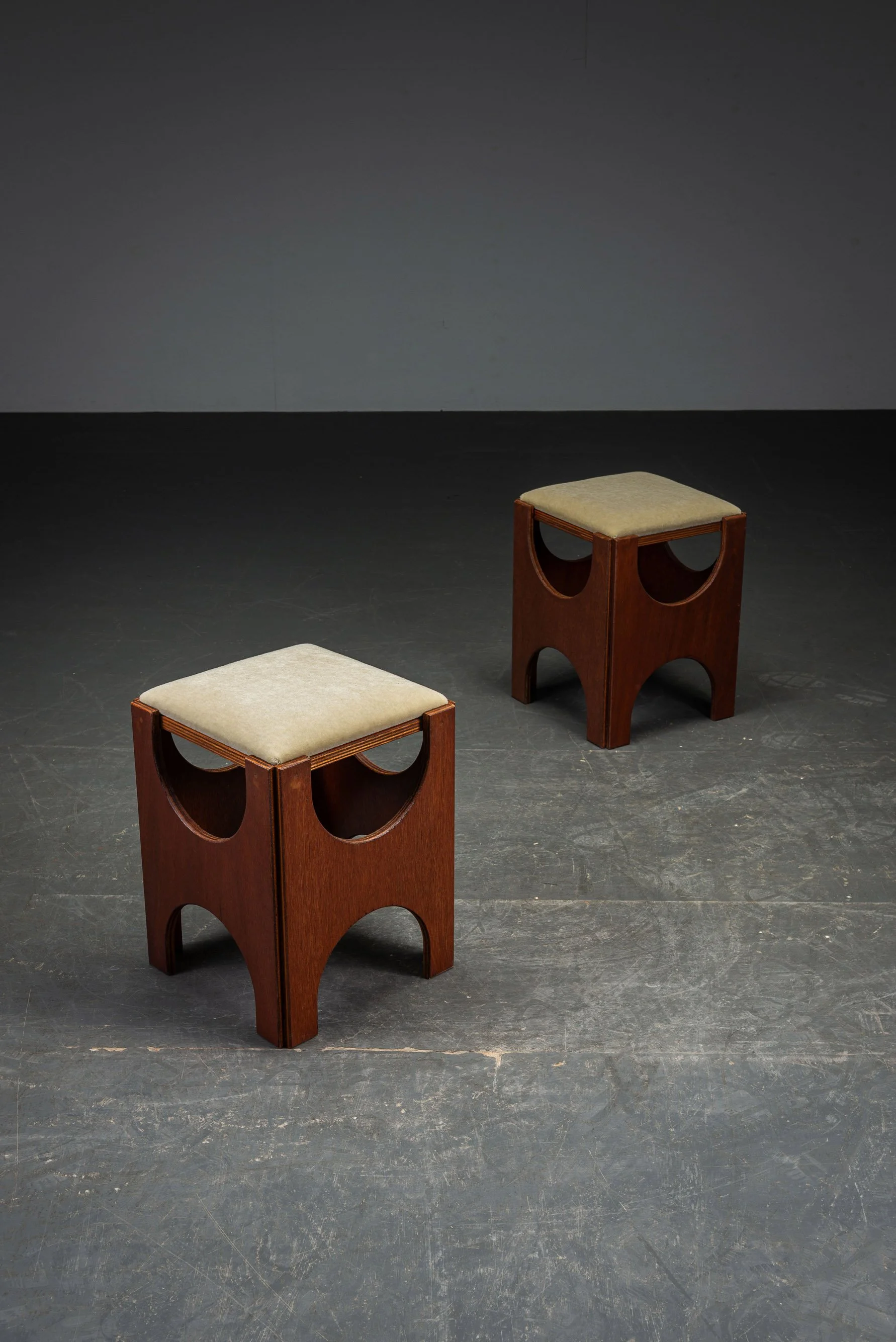
Architect Charles Vandenhove (1927-2019)
period: 1960s
origin: Belgium
dimensions (cm): h44 x w32,5 x d32,5 cm
dimensions (inch): h17,32 x w12,8 x d12,8 in
material: plywood, newly upholstered with Mohair Velours
If you would prefer this piece to be upholstered in a different fabric or colour, please contact us for our upholstery services.
Two stools available (cream coloured). Price per piece.
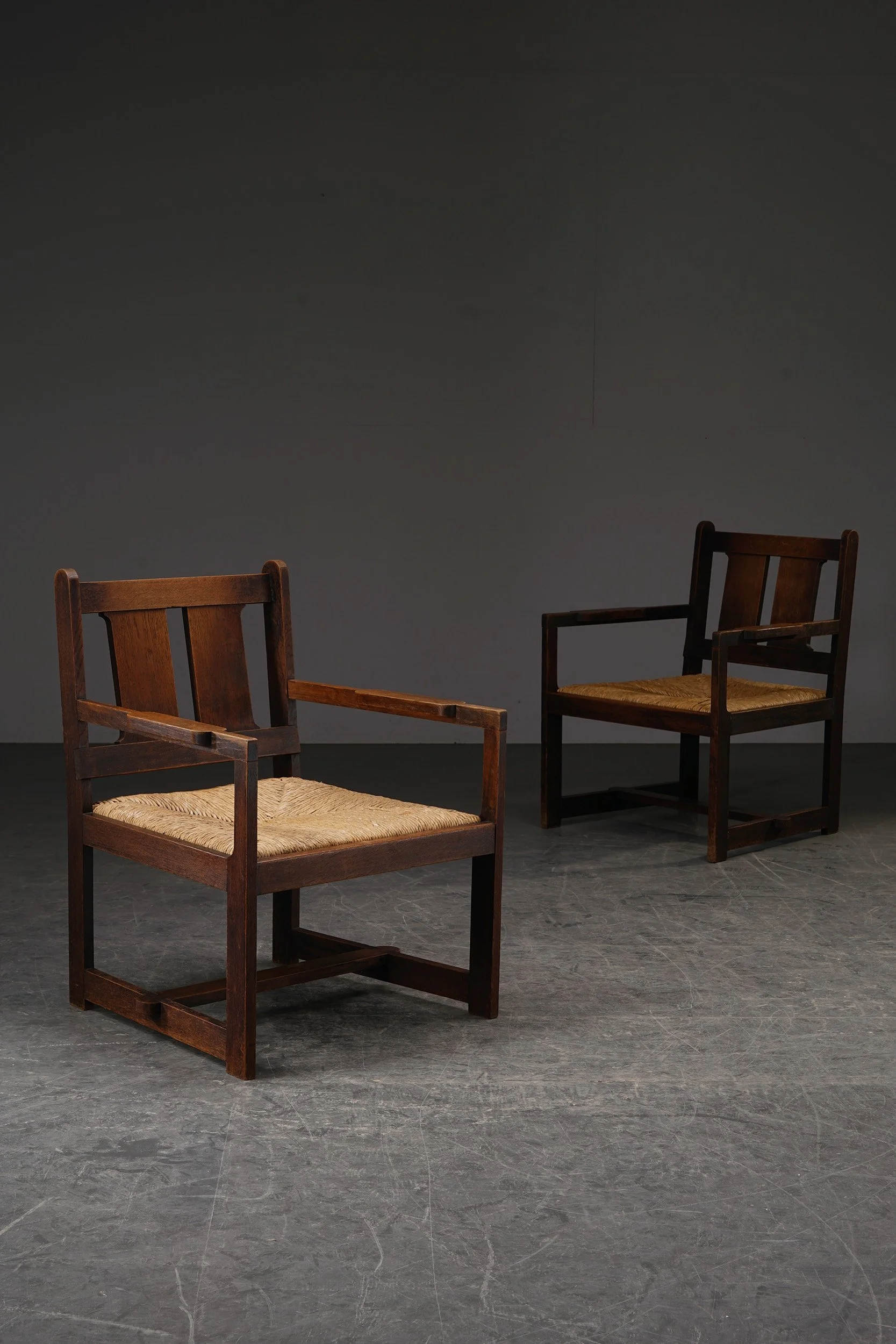
Cornelis van der Sluys
period: ca. 1907
origin: The Netherlands
dimensions (cm): h86 x w66,5 x d67 cm (sh41 / ar61 cm)
dimensions (inch): h33,86 x w26,18 x d26,38 in (sh16,14 / ar24,02 in)
material: rush, oak wood
Price for the set.
This chair without armrests, from the same series, is part of the design collection of Museum Boijmans van Beuningen.
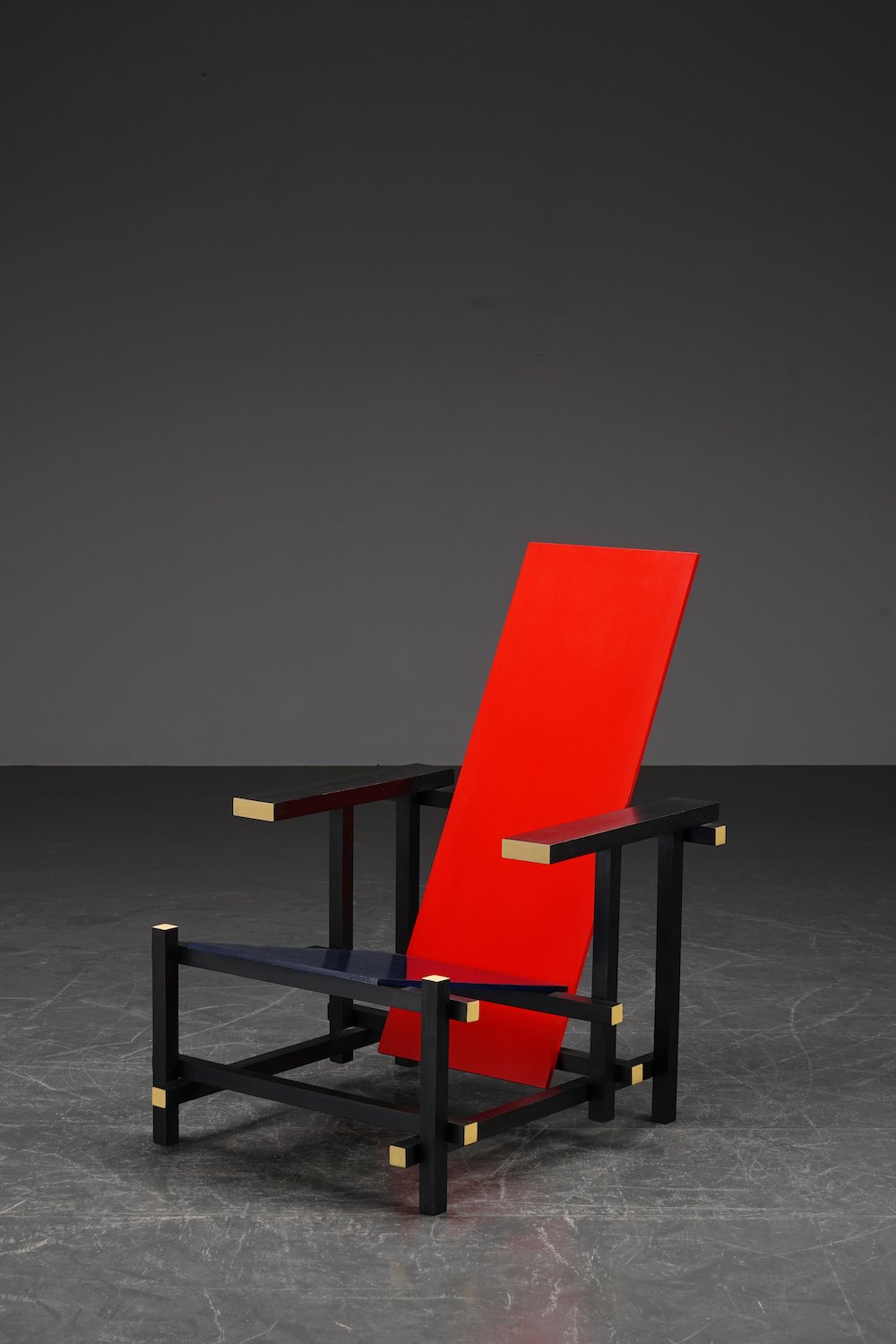
Gerrit Th. Rietveld (1888 – 1964)
G. A. van de Groenekan, De Bilt
period: 1986
origin: The Netherlands
dimensions (cm): h87 x w66 x d84 cm (sh33 cm)
dimensions (inch): h34,25 x w25,98 x d33,07 in (sh12,99 in)
material: painted wood, maker’s mark
For enquiries, provenance, and additional photos please contact us.

Attributed to interior architect Fer Semey (1891-1973)
period: 1930s
origin: The Netherlands
dimensions (cm): h130,5 / 106 x w140,5 x d37,5 cm
dimensions (inch): h51,38 / 41,73 x w55,31 x d14,76 in
material: metal, wood

Pol Spilliaert (1935-2023)
title: 'French Muse' aka 'The King'.
period: 1970s
origin: Belgium
dimensions (cm): h85 x w35 x d29 cm
dimensions (inch): h33,46 x w13,78 x d11,42 in
material: plaster
Depicted in Jaak Fontier, 'Pol Spilliaert', Drukkerij Lannoo NV, Tielt, 2005, p. 50

Pol Spilliaert (1935-2023)
title: 'Tendre Guerre'
period: 1970s
origin: Belgium
dimensions (cm): h57 x w48 x d26 cm
dimensions (inch): h22,44 x w18,9 x d10,24 in
material: plaster
Amazing sculpture in solid plaster depicting an abstract battle between feminine form and masculine form. The word battle refers to the title given by the artist himself: ‘Tendre Guerre’, which translates into ‘Tender War’.

Em. Prof. Ir. Architect Wim van den Bergh (1955)
model: 'Mono-Tube Chair'
period: 1981
origin: The Netherlands
dimensions (cm): h72 x w48,5 x d52 cm (sh46,5 / ar72 cm)
dimensions (inch): h28,35 x w19,09 x d20,47 in (sh18,31 / ar28,35 in)
material: leather, metal
Acquired directly from the designer.
Dutch architect Wim van den Bergh’s asymmetrical Mono-Tube Chair offers a radical revision of the iconic tubular steel chair designs of (a.o.) Marcel Breuer and Ludwig Mies van der Rohe in the 1920s. Only 30 were ever produced, of which the first prototype was commissioned by Museum Boijmans Van Beuningen in Rotterdam.
Rooted in the same logic as the early cantilever models, the Mono-Tube Chair pushes the principles of tubular steel design to the limit. It’s constructed from a single tube bent into one clear, flowing line, fully exploiting the material’s natural buoyancy and torsional strength. Bending and spiralling forces are evenly distributed throughout the structure. The result is a seat that reconciles visual lightness with mechanical solidity, balancing stability and the sensation of suspension in one sweeping gesture.
In fact, the Mono-Tube Chair may visually be more akin to Thonet’s graceful bentwood tradition, while remaining firmly grounded in modernist engineering. This chair is a case where form follows force. What appears precarious is, in use, perfectly composed—almost defying gravity.

Em. Prof. Ir. Architect Wim van den Bergh (1955)
model: 'Mono-Tube Chair'
period: 1981
origin: The Netherlands
dimensions (cm): h72 x w48,5 x d52 cm (sh46,5 / ar72 cm)
dimensions (inch): h28,35 x w19,09 x d20,47 in (sh18,31 / ar28,35 in)
material: leather, metal
Acquired directly from the designer. Two chairs available. Price per piece.
Dutch architect Wim van den Bergh’s asymmetrical Mono-Tube Chair offers a radical revision of the iconic tubular steel chair designs of (a.o.) Marcel Breuer and Ludwig Mies van der Rohe in the 1920s. Only 30 were ever produced, of which the first prototype was commissioned by Museum Boijmans Van Beuningen in Rotterdam.
Rooted in the same logic as the early cantilever models, the Mono-Tube Chair pushes the principles of tubular steel design to the limit. It’s constructed from a single tube bent into one clear, flowing line, fully exploiting the material’s natural buoyancy and torsional strength. Bending and spiralling forces are evenly distributed throughout the structure. The result is a seat that reconciles visual lightness with mechanical solidity, balancing stability and the sensation of suspension in one sweeping gesture.
In fact, the Mono-Tube Chair may visually be more akin to Thonet’s graceful bentwood tradition, while remaining firmly grounded in modernist engineering. This chair is a case where form follows force. What appears precarious is, in use, perfectly composed—almost defying gravity.
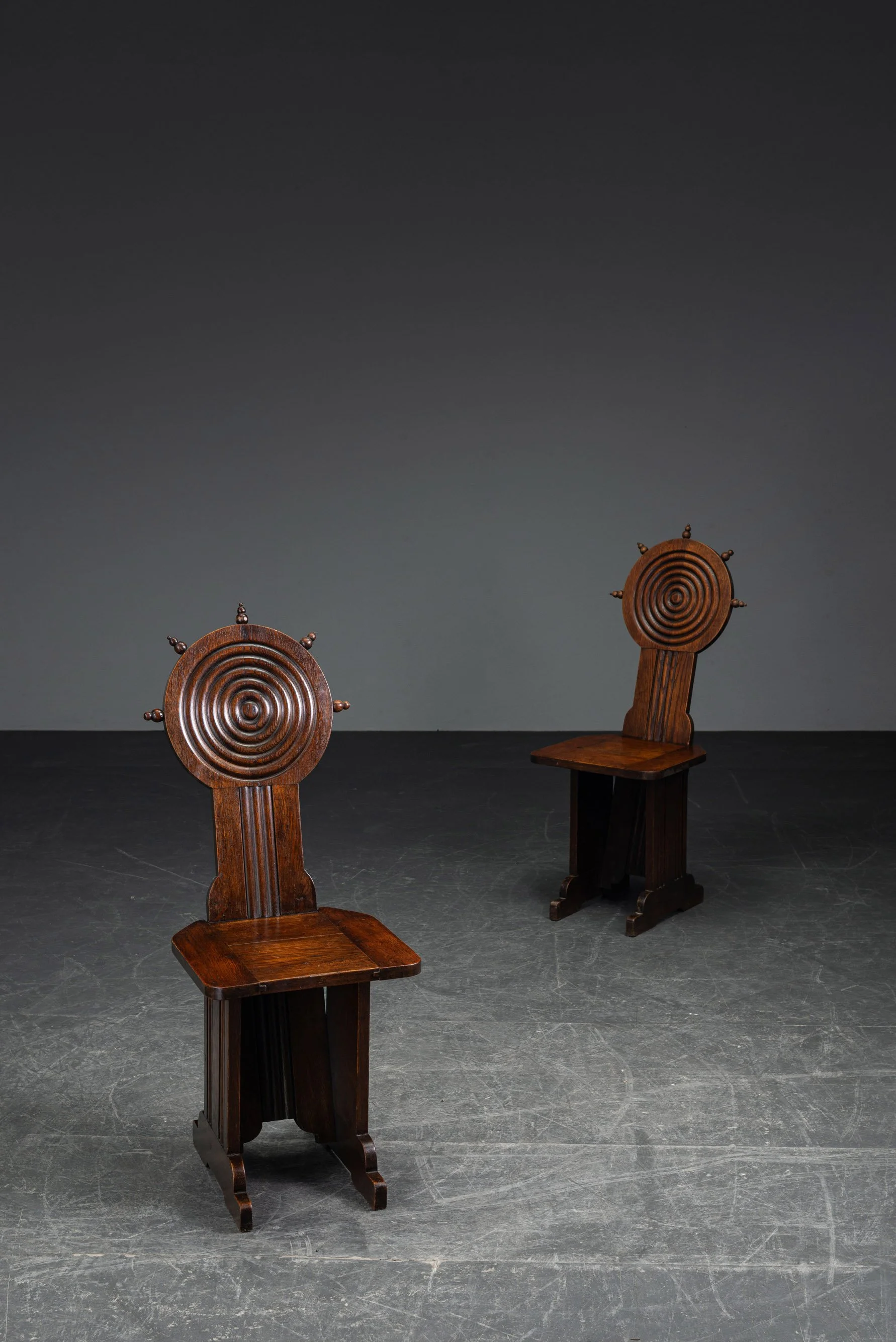
Charles Dudouyt (1885-1946)
period: 1940s
origin: France
dimensions (cm): h94 x w35 x d34 cm
dimensions (inch): h37,01 x w13,78 x d13,39 in
material: wood
Price per piece.
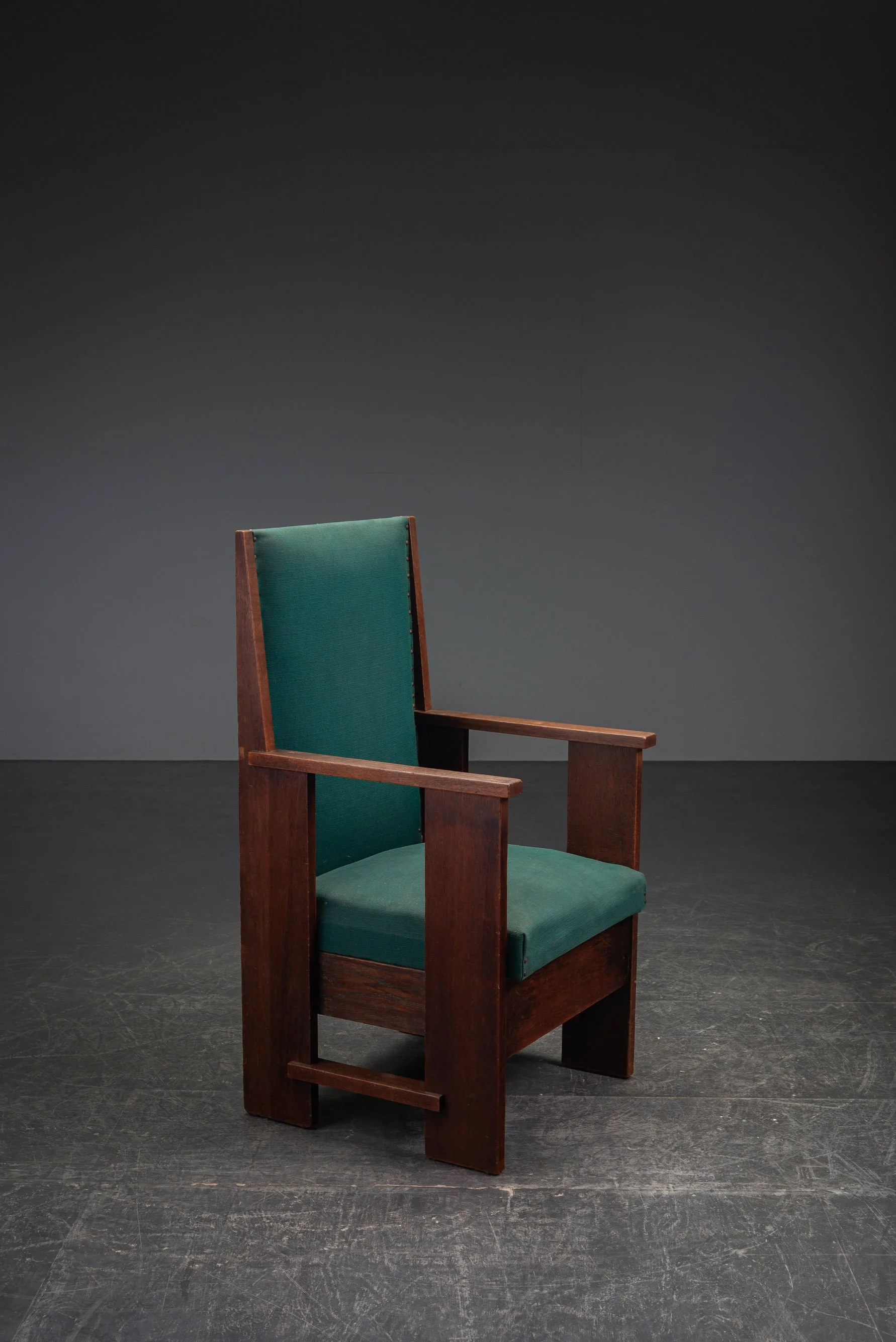
Architect H. Wouda (1885-1946)
period: 1920s
origin: The Netherlands
dimensions (cm): h111 x w59,5 x d57 cm (sh48 / ar70 cm)
dimensions (inch): h43,70 x w23,43 x d22,44 in (sh18,90 / ar27,56 in)
material: restored wood, vintage upholstery
Hendrik Wouda’s work is enticingly straightforward and well-balanced. He is most known for his designs for the firm H. Pander & Zonen and is regarded as one of the leading figures of the architectural style Nieuwe Haagse School, greatly inspired by the architect Frank Lloyd Wright.
If you would prefer this piece to be upholstered in a different fabric or colour, please contact us for our upholstery services.

Architect Mart Stam (1899-1986)
Goed Wonen / Pastoe
model: A2-1
period: 1940s
origin: The Netherlands
dimensions (cm): h85 x w43 x d41 cm (sh46 cm)
dimensions (inch): h33,46 x w16,93 x d16,14 in (sh18,11 in)
material: rush, wood
Available as set or single chairs. Price per piece.

Elmar Berkovich
Metz & Co.
period: 1940s
origin: The Netherlands
dimensions (cm): h75 x w124 x d72 cm
dimensions (inch): h29,53 x w48,82 x d28,35 in
material: wood, knobs with original gold paint

Willem Penaat (1875-1957)
Metz & Co.
period: 1940s
origin: The Netherlands
dimensions (cm): h55,5 x w74,5 x d74,5 cm
dimensions (inch): h21,85 x w29,33 x d29,33 in
material: wood

Alphonse Siebers (1893-1978)
L.O.V. — Labor Omnia Vincit
period: 1920s
origin: The Netherlands
dimensions (cm): h85,5 x w41,5 x d47 cm (sh48 cm)
dimensions (inch): h33,66 x w16,34 x d18,50 in (sh18,90 in)
material: rush, oak wood

period: 1920s
origin: The Netherlands
dimensions (cm): h114 x w164,5 x d49 cm
dimensions (inch): h44,88 x w64,76 x d19,29 in
material: wood
Unique piece with sculptural expressionist details typical for the Amsterdam School architectural movement.

Rudolf Wolf (1919-1989)
period: 1960s
origin: The Netherlands
dimensions (cm): h181 x w36,5 x d36,5 cm
dimensions (inch): h71,26 x w14,37 x d14,37 in
material: metal

Rudolf Wolf (1919-1989)
period: 1960s
origin: The Netherlands
dimensions (cm): h181 x w36,5 x d36,5 cm
dimensions (inch): h71,26 x w14,37 x d14,37 in
material: metal

Reinoud Oudshoorn (1953)
period: contemporary
origin: The Netherlands
dimensions (cm): h16,5 x w11 x d5,5 cm
dimensions (inch): h6,5 x w4,33 x d2,17 in
material: solid aluminium
Price per piece.
Originally commissioned by the Amsterdam Foundation of the Arts, these Sculptural Numbers were designed by Dutch artist Reinoud Oudshoorn (b. 1953) for the "Olympian Quarter" in Amsterdam (2002–2008), a landmark residential development comprising 900 homes by architects Rudi Uytenhaak, Lafour & Wijk, and Mulleners & Mulleners.
Cast in solid, high-grade aluminium, ball burnished and with an irresistible shapeliness, each number embodies Oudshoorn’s founding idea: that every resident should have a sculpture of their own. Inspired by the expressive forms of the Amsterdam School architectural movement, these numbers invite touch and wonder. On a façade, they glisten like oversized raindrops. Indoors, they glow like sculptural silver gems.
Oudshoorn is internationally recognised for his work, which translates the illusory language of painting into three-dimensional form. His Sculptural Numbers are weatherproof and made to endure — for generations. A 200-year lifespan is guaranteed.
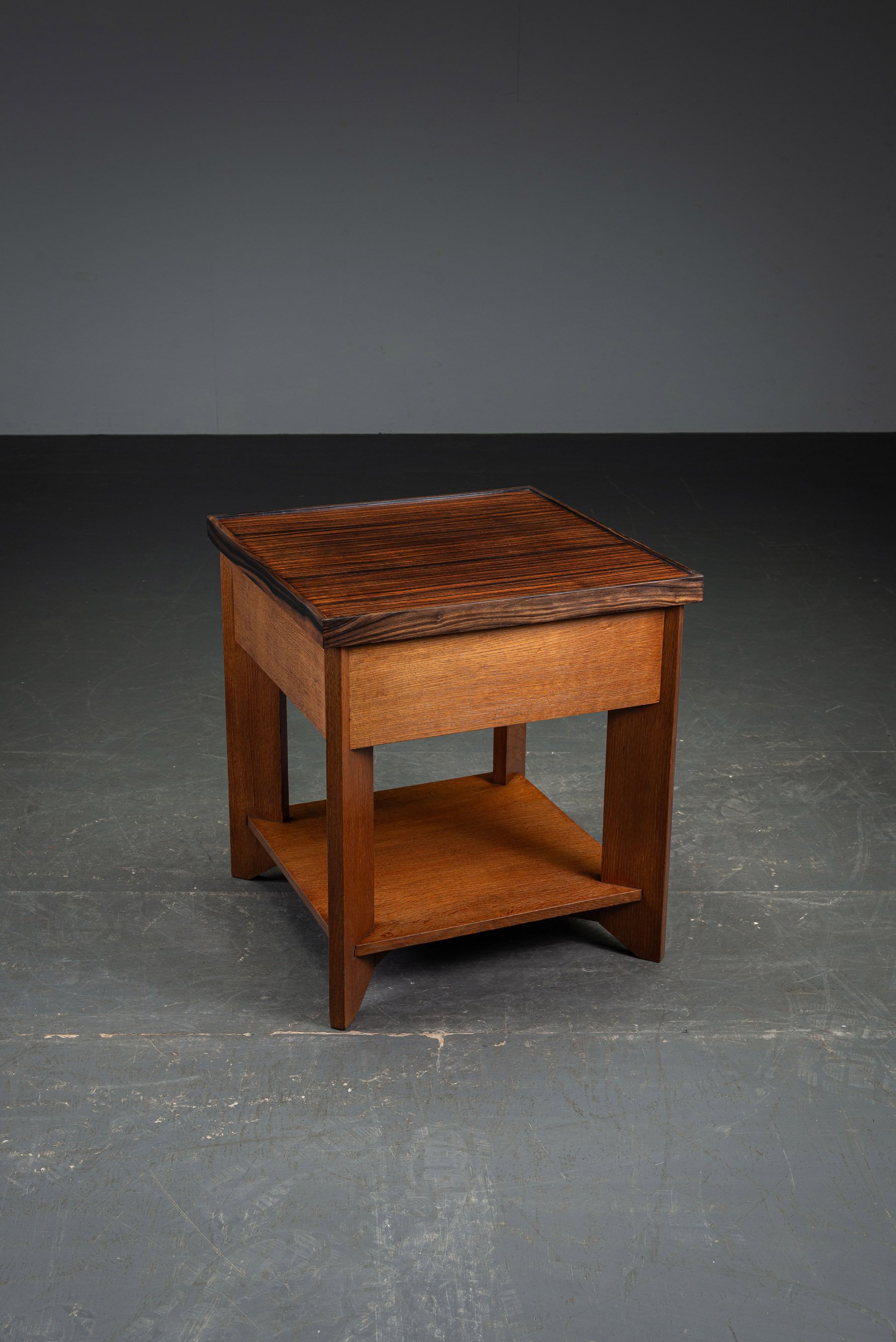
Architect H. Wouda (1885-1946)
Pander
period: 1920s
origin: The Netherlands
dimensions (cm): h60 x w55 x d55 cm
dimensions (inch): h23,62 x w21,65 x d21,65 in
material: wood
Hendrik Wouda’s work is enticingly straightforward and well-balanced. He is most known for his designs for the firm H. Pander & Zonen and is regarded as one of the leading figures of the architectural style Nieuwe Haagse School, greatly inspired by the architect Frank Lloyd Wright.

period: 1920s
origin: The Netherlands
dimensions (cm): h86 x w72,5 x d66 cm (sh46 / ar69,5 cm)
dimensions (inch): h33,86 x w28,54 x d25,98 in (sh18,11 / ar27,36 in)
material: wood, newly upholstered with Mohair Velours
Unique custom made piece for a church in the Amsterdam School style in the south of the Netherlands.

Architect P.H. Endt (1889-1963)
L.O.V (Labor Omnia Vincit)
period: 1920s
origin: The Netherlands
dimensions (cm): h75/74,5 x w65/64 x d66 cm (sh45 / ar60 cm)
dimensions (inch): h29,53/h29,33 x w25,59/25,20 x d25,98 in (sh17,72 / ar23,62 in)
material: newly upholstered, wood

Charlotte Perriand (1903-1999)
for Steph Simon
period: 1950s
origin: France
dimensions: h70 x w40 x d40 cm (sh45 cm)
material: rush, solid ash wood
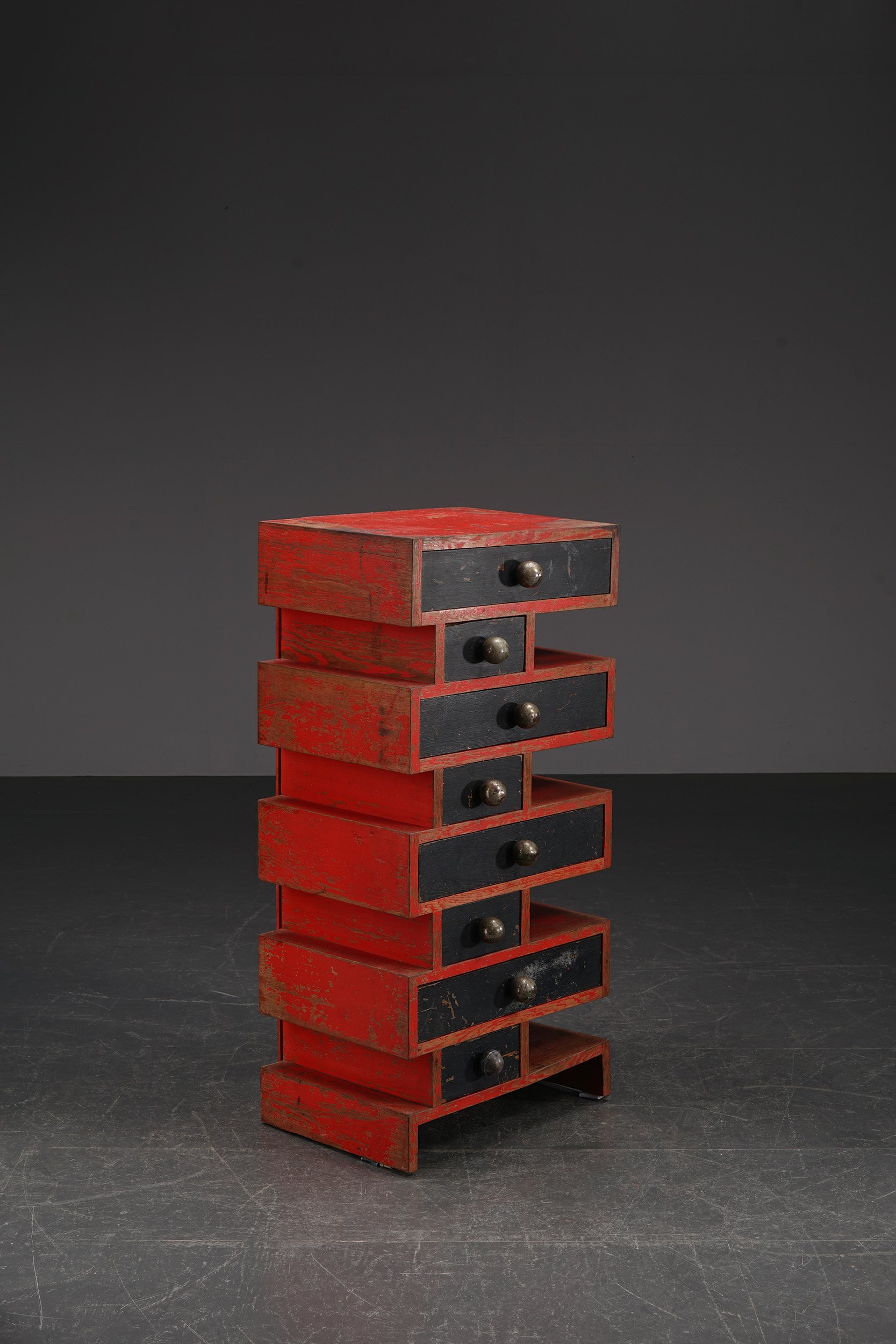
period: 1930s
origin: France
dimensions: h113 x w56 x d41 cm
material: metal, wood

Gerrit Th. Rietveld (1888-1964)
period: 1950s
origin: The Netherlands
dimensions: h79 x w57 x d56 cm
material: solid wood

Jean Prouvé (1901-1984)
period: 1970s
origin: France
dimensions (cm): h76 x w205,5 x d76 cm
dimensions (inch): h29,92 x w80,91 x d29,92 in
material: metal base with original dark grey lacquer, original pink Granito top

period: 1950s
origin: The Netherlands
dimensions (cm): h65 x w62 x d45 cm (sh48 / ar55 cm)
dimensions (inch): h25,59 x w24,41 x d17,72 in (sh18,90 / ar21,65 in)
material: solid wood, newly upholstered with Mohair Velours
Altar chair from a modernist reconstruction church.

Pierre Chareau (1883-1950)
period: 1980s
origin: France
dimensions (cm): h48,5 x w49 x d42 cm
dimensions (inch): h19,09 x w19,29 x d16,54 in
material: wood, steel
Originally designed in 1927, this is an early (re)production with beautiful patina from circa 1980.

period: 1940s
origin: Italy
dimensions (cm): h82 x w51 x d68 cm (sh30 / ar55 cm)
dimensions (inch): h32,28 x w20,08 x d26,77 in (sh11,81 / ar21,65 in)
material: original upholstery, wood
A unique and superb one-off piece, retaining its original upholstery and paint.
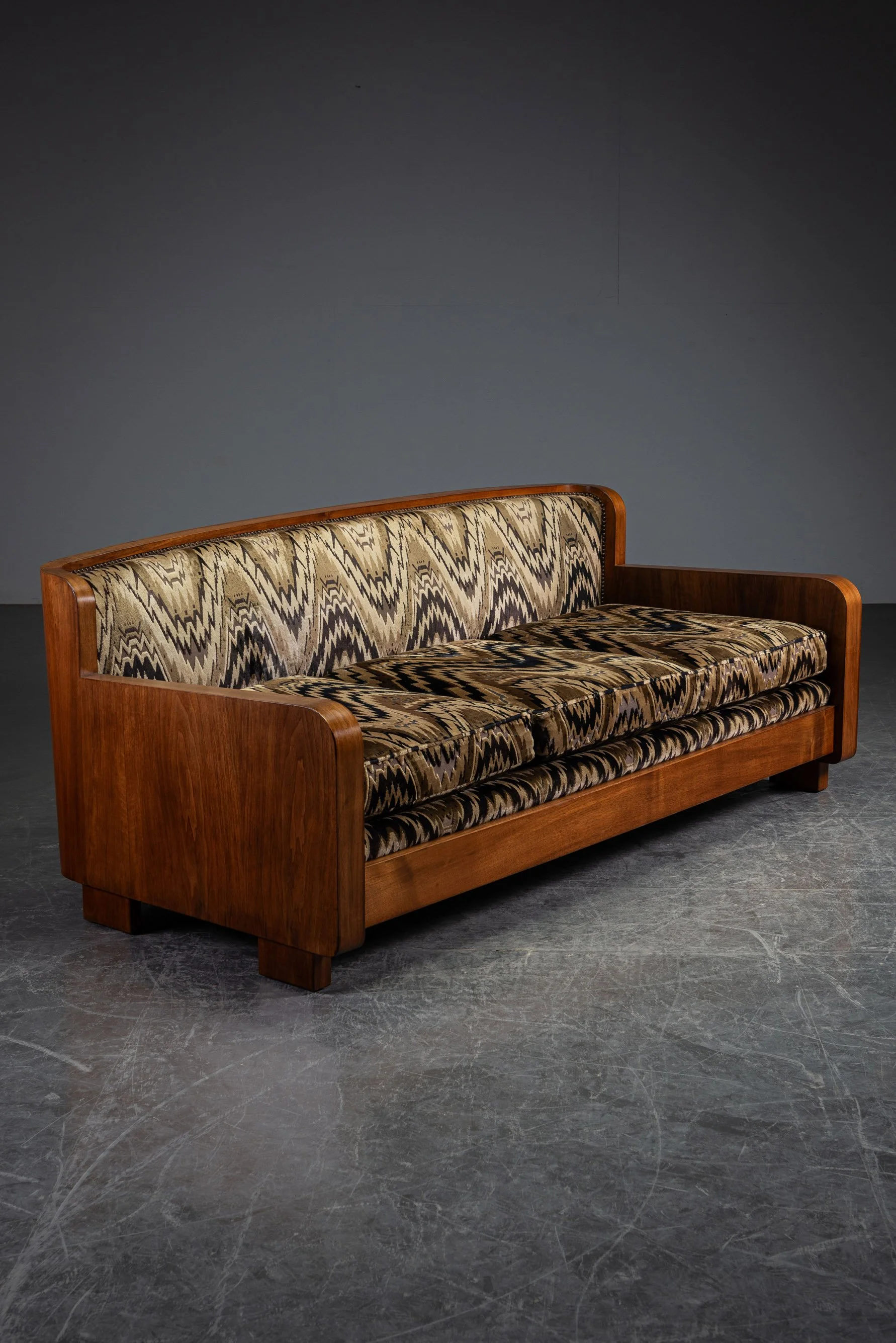
Fer Semey
Pander
period: 1930s
origin: The Netherlands
dimensions (cm): h67 x w195 x d91 cm (sh48 cm)
dimensions (inch): h26,38 x w76,77 x d35,83 in (sh18,90 in)
material: vintage upholstery, wood

André Sornay (1902-2000)
period: 1930s
origin: France
dimensions (cm): h100 x w72 x d40 cm
dimensions (inch): h39,37 x w28,35 x d15,75 in
material: solid oak wood patinated with green liming wax, glass

Piet Klaarhamer
period: 1910s
origin: The Netherlands
dimensions (cm): h84 x w56 x d50 cm (sh43 / ar69 cm)
dimensions (inch): h33,07 x w22,05 x d19,69 in (sh16,93 / ar27,17 in)
material: wood, vintage upholstery
Piet Klaarhamer was an early modernist designer who pursued innovation and purity. His furniture designs show clear constructions, honest use of simple types of wood without the use of decoration. Klaarhamer managed to transfer this formal language to his students, including the well-known architects Piet Elling and Gerrit Rietveld.
This chair with armrests has the same details as a cabinet that Klaarhamer designed and which Rietveld, when he was still a young carpenter, constructed. The chair without armrests is the chair upon which Gerrit Rietveld based his design for his well known 'Military Chair'.
These chairs are quite unknown but very deeply embedded in the history of Rietveld his oeuvre. They are documented quite well in the monograph on Klaarhamer. Rietveld wrote about them to Architect J.J.P. Oud in a letter offering them for a project some years later, also depicted in the literature.

Etienne Kohlmann (1903-1988)
period: 1930s
origin: France
dimensions (cm): h81,5 x w71 x d69,5 cm (sh38 cm)
dimensions (inch): h32,09 x w27,95 x d27,36 in (sh14,96 in)
material: newly upholstered, wood

Architect Mart Stam (1899-1986)
Goed Wonen
model: A1-2
period: 1947
origin: The Netherlands
dimensions (cm): h82 x w62 x d57 cm (sh41,5 / ar61 cm)
dimensions (inch): h32,28 x w24,41 x d22,44 in (sh16,34 / ar24,02 cm)
material: rush, wood

Piet Klaarhamer
period: 1910s
origin: The Netherlands
dimensions (cm): h84 x w39 x d44.5 cm (sh43 cm)
dimensions (inch): h33,07 x w15,35 x d17,52 in (sh16,93 in)
material: wood, vintage upholstery
Piet Klaarhamer was an early modernist designer who pursued innovation and purity. His furniture designs show clear constructions, honest use of simple types of wood without the use of decoration. Klaarhamer managed to transfer this formal language to his students, including the well-known architects Piet Elling and Gerrit Rietveld.
The chair without armrests is the chair upon which Gerrit Rietveld based his design for his well known 'Military Chair'. The chair with armrests has the same details as a cabinet that Klaarhamer designed and which Rietveld, when he was still a young carpenter, constructed.
These chairs are quite unknown but very deeply embedded in the history of Rietveld his oeuvre. They are documented quite well in the monograph on Klaarhamer. Rietveld wrote about them to Architect J.J.P. Oud in a letter offering them for a project some years later, also depicted in the literature.

Louis Bogtman (1900-1969)
Atelier Bogtman
period: 1920s
origin: The Netherlands
dimensions (cm): h181 x w60 x d60 cm
dimensions (inch): h71,26 x w23,62 x d23,62 in
material: new linen shade, batik on wood
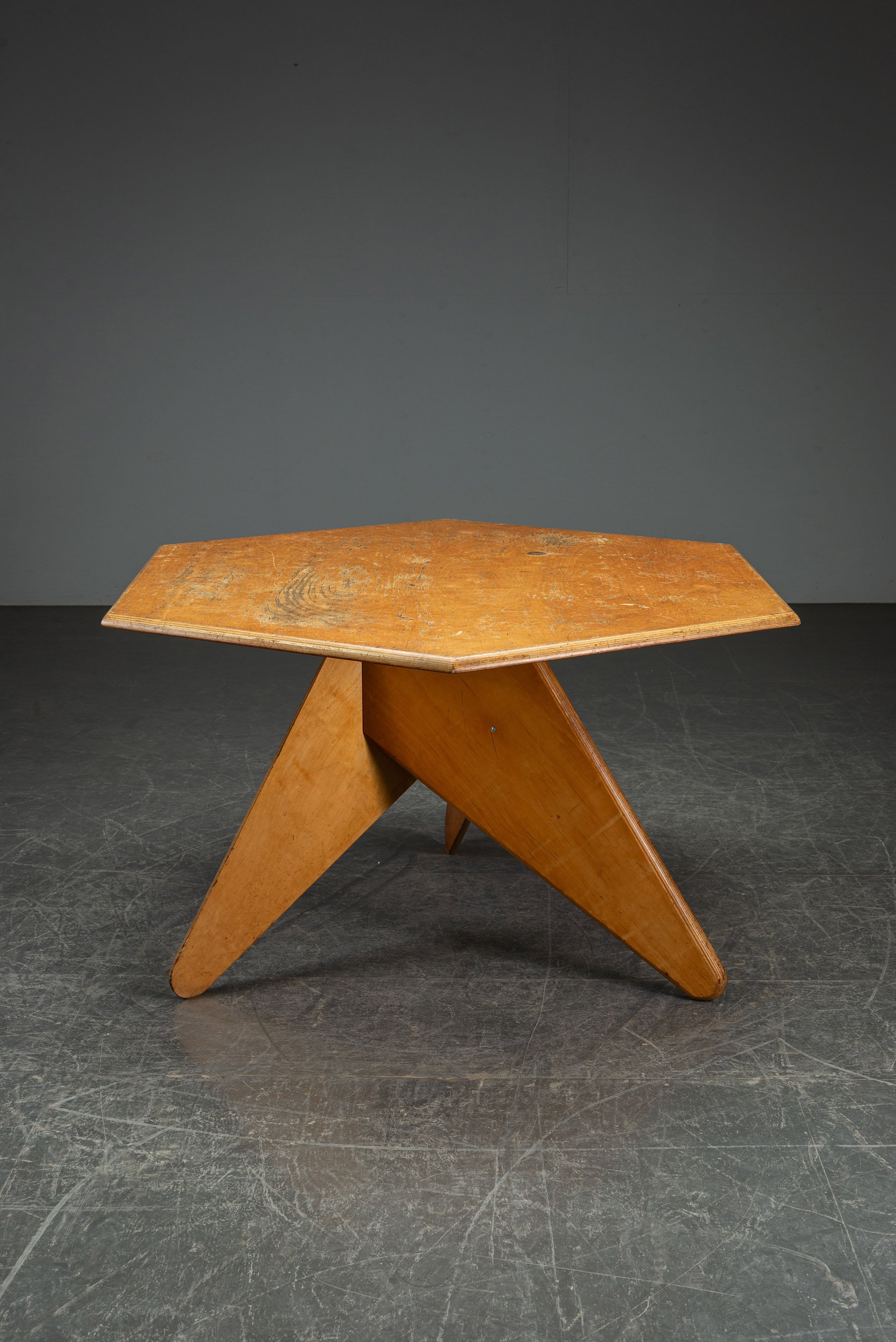
Architect Sjoerd Soeters
period: 1980s
origin: The Netherlands
dimensions (cm): h74 x w138 x d138 cm
dimensions (inch): h29,13 x w54,33 x d54,33 in
material: plywood
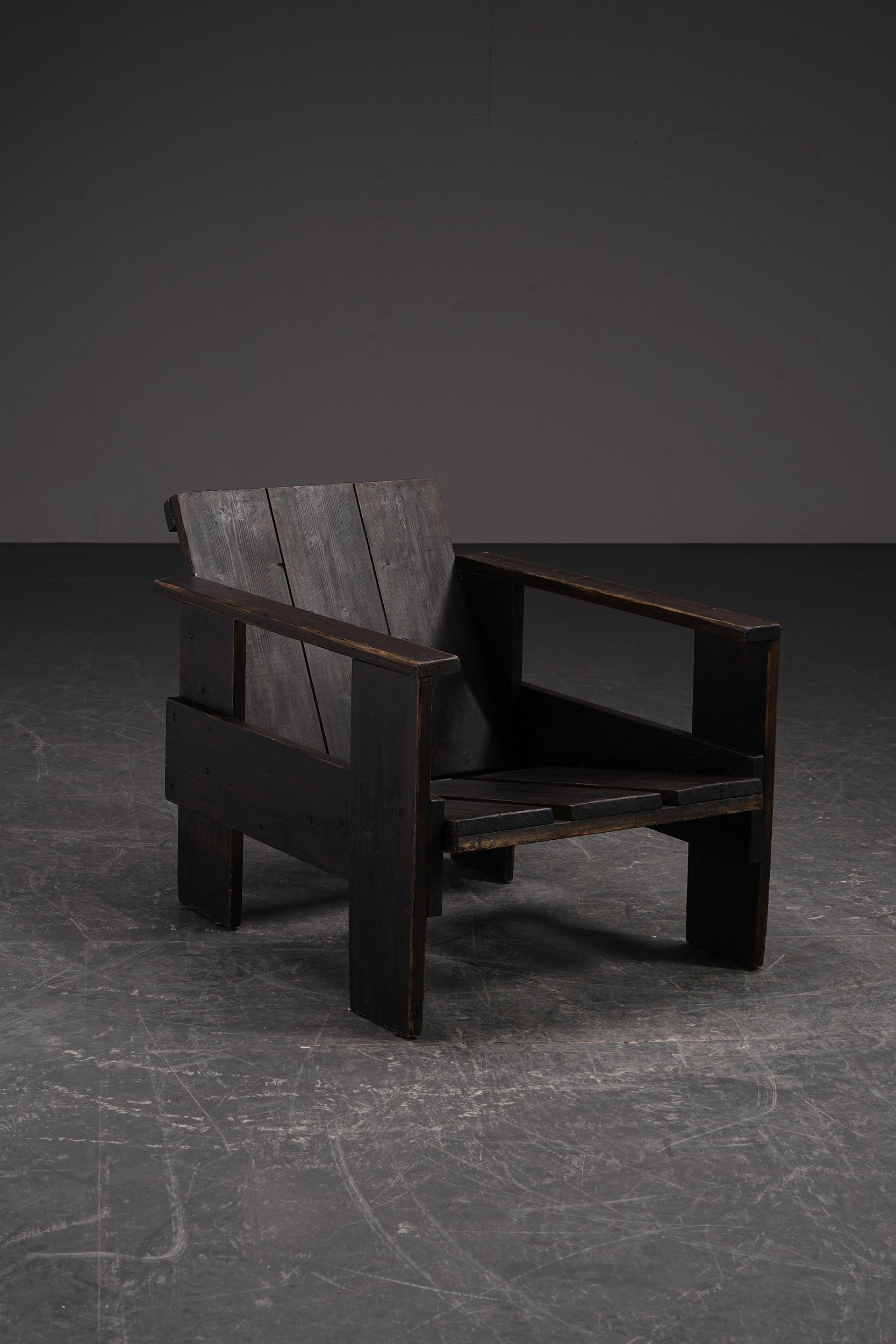
Architect Gerrit Rietveld (1888-1964)
Metz & Co. / Groenekan
period: ca. 1935-1955
origin: The Netherlands
dimensions (cm): h58,5 x w57,5 x d75,5 cm (sh28 / ar47,5 cm)
dimensions (inch): h23,03 x w22,64 x d29,72 in (sh11,02 / ar18,70 in)
material: wood

René Faublée
period: 1950s
origin: France
dimensions: h81 x w67 x d85 cm (sh30 / ar55 cm)
material: wood, rope

Victor Courtray (1896-1987)
period: 1947
origin: France
dimensions (cm): h68 x w 188,5 x d93 cm
dimensions (inch): h26,77 x w74,21 x d36,61 in
material: wood, travertine
Travertine top from a later period.

Architect Michel de Klerk (1884-1923)
’t Woonhuys
period: 1916-1917
origin: The Netherlands
dimensions (cm): h108,5 x w50 x d57 cm (sh50 / ar57 cm)
dimensions (inch): h42,72 x w19,69 x d22,44 in (sh19,69 / ar22,44 in)
material: vintage upholstery, wood
Michel de Klerk (1884-1923) is undoubtably the most prominent architect of Amsterdamse School, an architectural movement that took flight in the Netherlands around 1910.
Dynamic slopes, spikes, angles, and decoration: thanks to the many ties between Indonesia and the Netherlands at the time, the Amsterdamse School movement was strongly inspired by Indonesian culture and famed for its exuberant expressiveness.
Michel de Klerk’s best kept designs were made for furniture firm ‘t Woonhuys. He was known as a ‘genius of form’, and the eccentric details adorning his designs are of unparalleled originality and fantastic. You’d almost wonder whether to call his work furniture or sculpture.
These chairs were designed in 1916-1917 for a dining room. Having spent his youth poor and hungry, the almost skeleton-like features in Michel de Klerk’s designs may be seen as symbolizing ribcages and spines in memory of his skin-over-bone childhood. Consequently, sitting in a chair by his hand is in a way strangely satisfying for both the seated one as the chair itself, beckoning to be ‘filled’, and marvellously comfortable.
A number of these same chairs are part of the design collection of Centraal Museum Utrecht and currently on view at Musée d'Orsay in Paris.
Source:
Michel de Klerk: Bouw- En Meubelkunstenaar (1884-1923); Frans van Beurkom; Uitgeverij 010 Publishers: Rotterdam, 1990.
Archive photo:
Wonen in de Amsterdamse School: Ontwerpen voor het interieur 1910-1930; Ingeborg de Roode en Marjan Groot; THOTH Publishers: Bussum, 2016.

Architect Dom Hans van der Laan (1904-1991)
Executed by Architect Jan de Jong (1917-2001)
period: 1964
origin: The Netherlands
dimensions (cm): h42 x w145,5 x d32 cm
dimensions (inch): h16,54 x w57,28 x d12,6 in
material: wood, metal nails
Even though originally designed as a bench, it also works well as a table. A very rare collectible piece in original condition with a rich patina.

Gerrit Th. Rietveld (1888 – 1964)
G. A. van de Groenekan, De Bilt
period: 1960s
origin: The Netherlands
dimensions: h74 x w44 x d44 cm
material: elm wood, brass nuts and bolts

Mieczysław Kotarbiński (1890-1943)
period: 1920s
origin: Poland
dimensions: h97 x w44 x d56 cm (sh46 cm)
material: wood
Designed for the interior of the Polish Pavilion of the 1925 International Exhibition of Decorative Arts in Paris.

Architect Paul Wintermans
period: 1970s
origin: The Netherlands
dimensions: h58 x w65 x d66 cm
material: leather, wood

Van der Pol
period: 1930s
origin: The Netherlands
dimensions (cm): h85 x w150 x d72,5 cm
dimensions (inch): h33,46 x w59,06 x d28,54 in
material: wood, canvas top
One of a kind piece in Haagse School style with cross over Amsterdam School details. Both Architectural movements existed paralel to each other in the 1920s and 1930s. To find a design which actually embraces both movements into one object is very rare.

Mik Bakker
period: contemporary
origin: The Netherlands
dimensions (cm): h78,5 x w34,5 x d47 cm (sh45 cm)
dimensions (inch): h30,91 x w13,58 x d18,50 in (sh17,72 in)
material: antique solid oak wood beams
In 2023, KADER invited Mik Bakker to design a chair that would exemplify the KADER collection. The result: a stunning sculptural chair made from solid 200 year old wooden beams that once supported the roof of a now demolished factory in Amsterdam. In the words of KADER’s Alexander Mercer: “A contemporary, modernist, upcycled design with an architectonic presence that is actually more like a sculpture, but feel free to use it as a chair…”
Read more about Dutch Designer Mik Bakker and the Cabris Collection.

Hendrik Wouda
H. Pander & Zonen
period: 1920s
origin: The Netherlands
dimensions (cm): h55 x w80 x d37 cm
dimensions (inch): h21,65 x w31,5 x d14,57 in
material: wood
Hendrik Wouda’s work is enticingly straightforward and well-balanced. He is most known for his designs for the firm H. Pander & Zonen and is regarded as one of the leading figures of the architectural style Nieuwe Haagse School, greatly inspired by the architect Frank Lloyd Wright.
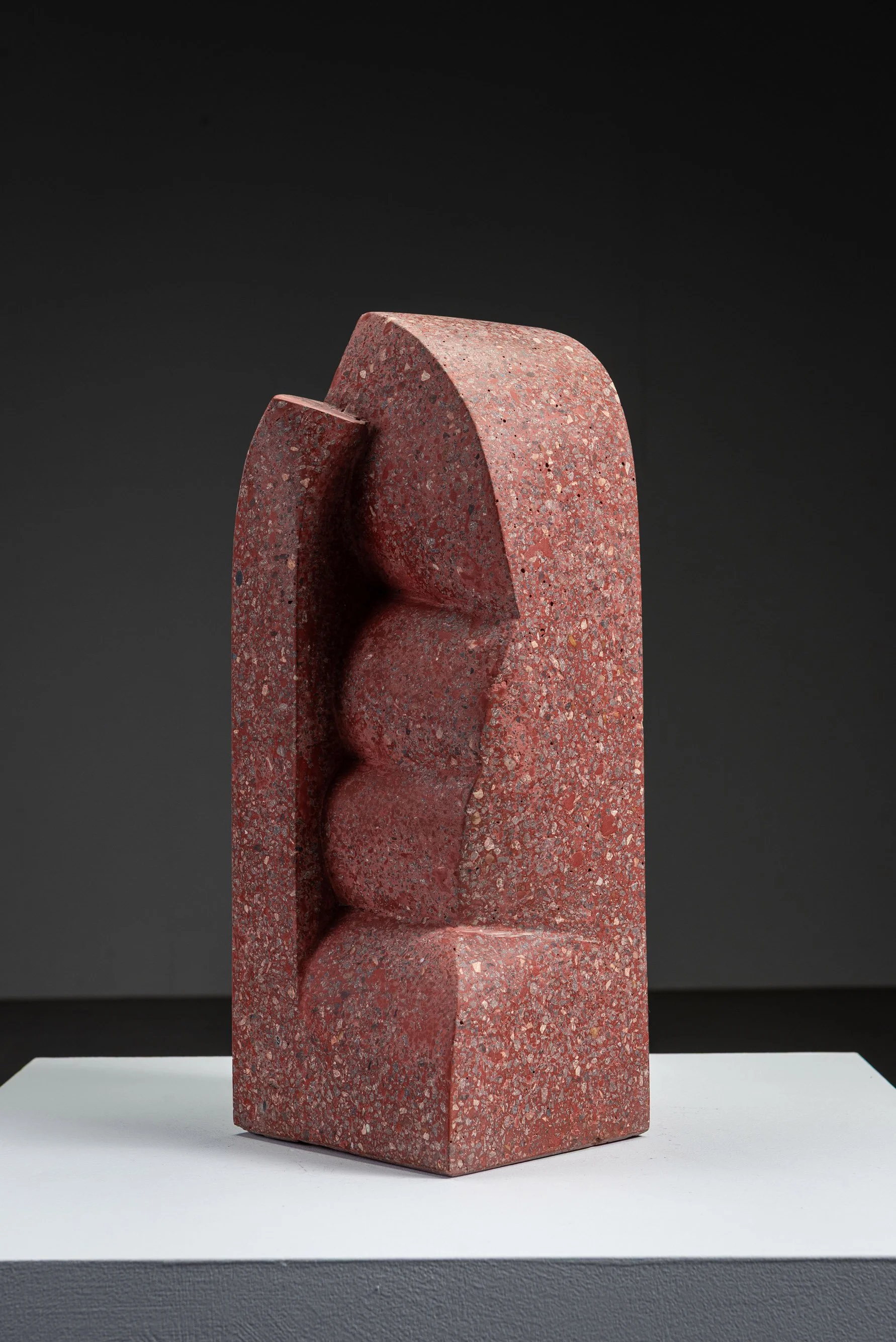
Cor Dam (1935-2019)
period: 1975-1990
origin: The Netherlands
dimensions (cm): h50 x w19 x d19 cm
dimensions (inch): h19,69 x w7,48 x d7,48 in
material: solid granito
Acquired directly from his heirs: a vivacious collection of sculptures by the Dutch sculptor Cor Dam (1935–2019).
Numerous more sculptures available. Please request our catalogue by email.
Known for his infectious delight for shapes, textures, and geometry, Dam’s work is deliberately intended to spark joy. Growing up, his hands were always molding, drawing, and building—an energy that carried straight into his practice as an artist, yielding an impressive magnitude of sculptures.
Educated at the Royal Academy in The Hague and Delft’s University of Technology under professor Wenckebach, Dam began his career in the 1960s as a designer at De Porceleyne Fles, a radical, experimental ceramic manufactory, which also produced the world-famous Delft Blue. Here, he mixed centuries-old tradition with bold abstraction, constantly challenging himself to explore new materials in his work and master a wide range of techniques: from ceramics to concrete, bronze, and brick.
Dam continued this inventiveness for many years at Structuur 68 in The Hague, a studio for ceramic experimentation that strongly encouraged his daring artistry. He often drew inspiration from sculptors such as Henry Moore, Brâncuși, Jacques Lipchitz, and Hans Arp. Sharing their attraction to geometry—not as a rigid formal device, but as a driving motif—he reinvented form in flowing motion, in shining glazes, and in curves and planes of clay both bold and seductive. Above all, Dam’s work radiates the same vitality with which it was made: playful, experimental, refined, and ever so charming.
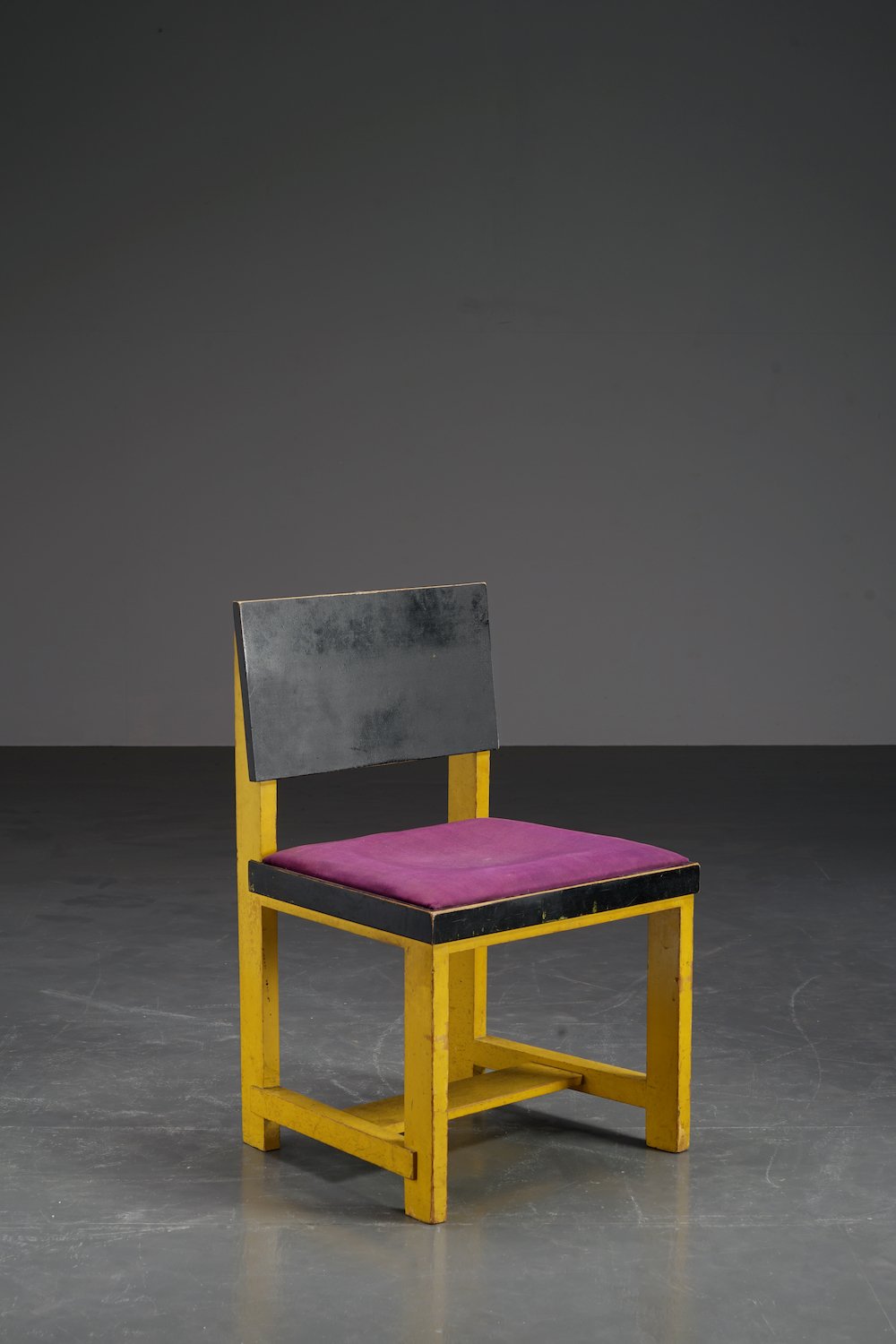
Architect Hendrik Wouda (1885-1946)
H. Pander & Zonen
period: 1920s
origin: The Netherlands
dimensions (cm): h77 x w50 x d44,5 cm (sh43 cm)
dimensions (inch): h30,31 x w19,69 x d17,52 in (sh16,93 in)
material: wood, velvet
Hendrik Wouda’s work is enticingly straightforward and well-balanced. He is most known for his designs for the firm H. Pander & Zonen and is regarded as one of the leading figures of the architectural style Nieuwe Haagse School, greatly inspired by the architect Frank Lloyd Wright.

Architect Hendrik Wouda (1885-1946)
Pander
period: 1924
origin: The Netherlands
dimensions (cm): h86/75 x w142 x d55 cm
dimensions (inch): h33,86/29,53 x w55,91 x d21,65 in
material: wood
This particular piece is featured on page 39 of Wonen in de Amsterdamse School: Ontwerpers voor het interieur 1910–1930 by Ingeborg de Roode and Marjan Groot, published by Thoth, Bussum. The publication accompanied the 2016 exhibition at the Stedelijk Museum Amsterdam.

Architect Michel de Klerk (1884-1924)
period: 1915-1916
origin: The Netherlands
dimensions (cm): h80,5 x w71,5 x d65 cm (sh47 / ar71 cm)
dimensions (inch): h31,69 x w28,15 x d25,59 in (sh18,50 / ar27,95 in)
material: vintage upholstery, wood
Michel de Klerk (1884-1923) was undoubtedly the most prominent architect and furniture designer of Amsterdamse School, a truly unique architectural movement that emerged in the Netherlands around 1910 and flourished for a relatively brief but precious period.
Brimming with eccentric detail, Amsterdamse School is one of the most outspoken Expressionist Art Deco movements in history, strongly inspired by Indonesian culture thanks to the many ties between Indonesia and the Netherlands at the time. The typical dynamic slopes and ripples, intricate facades with sculptural ornamentation, graphic accents, expressive use of wrought iron, and beautiful wood batik staining techniques all contribute to this movement’s distinctive, almost theatrical quality, widely admired as a compelling counterpoint to the rise of more Rationalist movements. Indeed, there is nothing quite like the richness in detail, material, contrast, and colour associated with the Amsterdamse School — and its appeal is irresistible.
De Klerk’s work is easily the most emblematic of the Amsterdamse School movement. This swivelling Desk Chair was designed especially for one of the executive offices in Het Scheepvaarthuis (1912–1916) — a monumental building that remains the epitome of the Amsterdamse School in Amsterdam today. Built as the headquarters of six major shipping companies, Het Scheepvaarthuis is in fact a Gesamtkunstwerk of extraordinary ambition and oustanding grandeur. Its design was a collaboration not only between De Klerk and fellow architects Joan van der Mey and Piet Kramer, but also an impressive array of sculptors — among which Hildo Krop —, designers, engineers, blacksmiths, and stained-glass artist Willem Bogtman. With fantastic maritime symbols and references to sea navigation, even the smallest detail in the architecture and interiors of Het Scheepvaarthuis reflect the Amsterdamse School’s signiture extravagance and originality.
True to the movement’s lavish expressiveness, its leading architects and designers were spurred to unparalleled creativity. In part, this explains why Amsterdamse School furniture designs are mostly unique or highly exclusive, often custom made for buildings financed by wealthy investors, with the luxury to be designed with exhuberant and expensive materials.
Because De Klerk was personally commissiond to design the executive offices of only one of the six shipping companies within Het Scheepvaarthuis, his swivelling Desk Chair is a particularly rare and distinctive piece. Its design is bold in every way: straight angles and tiers combined with flowing wood pleats and a polyhedral base, the luxurious leather lined with studs like jewels. For De Klerk, a piece of furniture was, what he called, “an extrodinary entity” (“een geheel bijzonder weezen”). Only one other identical swivelling Desk Chair from this series is known to exist. It resides in the collection of the Cultural Heritage Agency of the Netherlands (Rijksdienst voor het Cultureel Erfgoed) and is currently held in depot by the Kunstmuseum Den Haag.
The completion of Het Scheepvaarthuis helped catapult the Amsterdamse School into prominence. Its legacy would soon be expressed again in De Klerk’s exquisite design of Het Schip (1917–1920), a cherished social housing complex now partly open to the public as a museum. Other examples of this remarkable movement are to be found all over Amsterdam. Spotting them may quite literally stop you in your tracks! The peculiar artistry leaps out from its surroundings and never fails to spark awe and wonder.
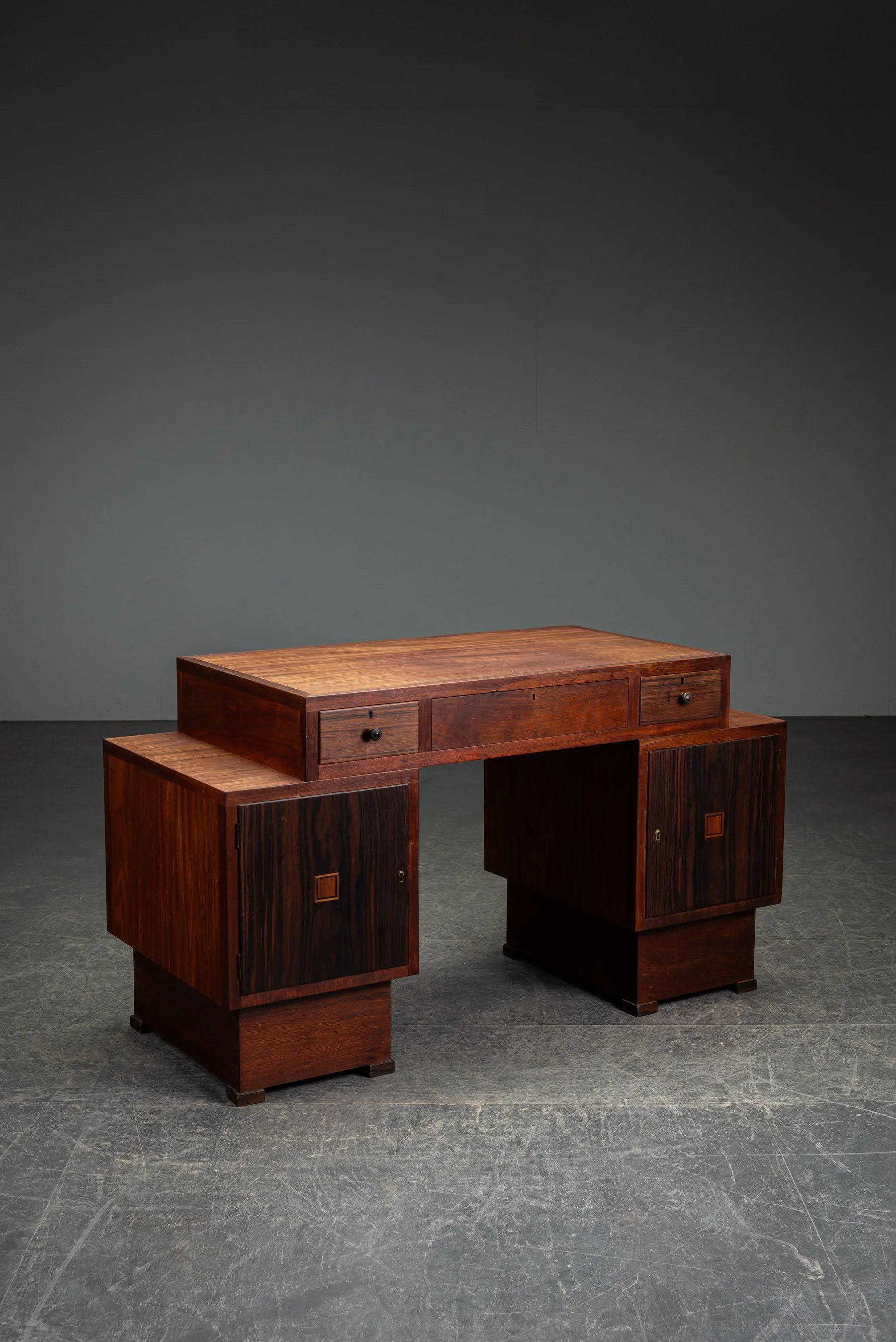
Architect Anton Hamaker (1889-1980)
‘t Woonhuys
period: 1920s
origin: The Netherlands
dimensions (cm): h76 x w132 x d57 cm
dimensions (inch): h29,92 x w51,97 x d22,44 in
material: wood
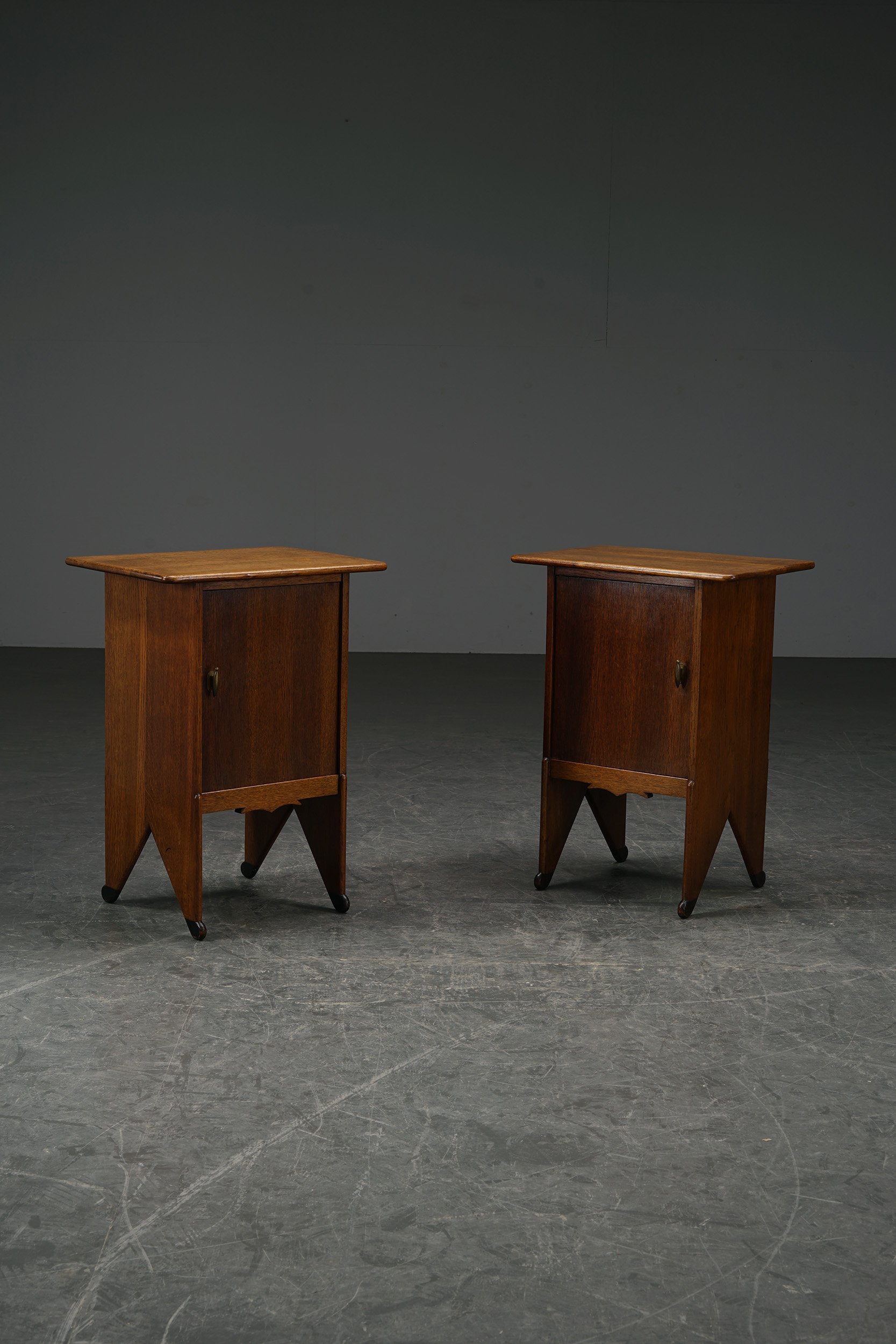
Willem Penaat (1875-1957)
Metz & Co.
period: 1920s
origin: The Netherlands
dimensions (cm): h70 x w53 x d37 cm
dimensions (inch): h27,56 x w20,87 x d14,57 in
material: wood
Very rare and original pair.
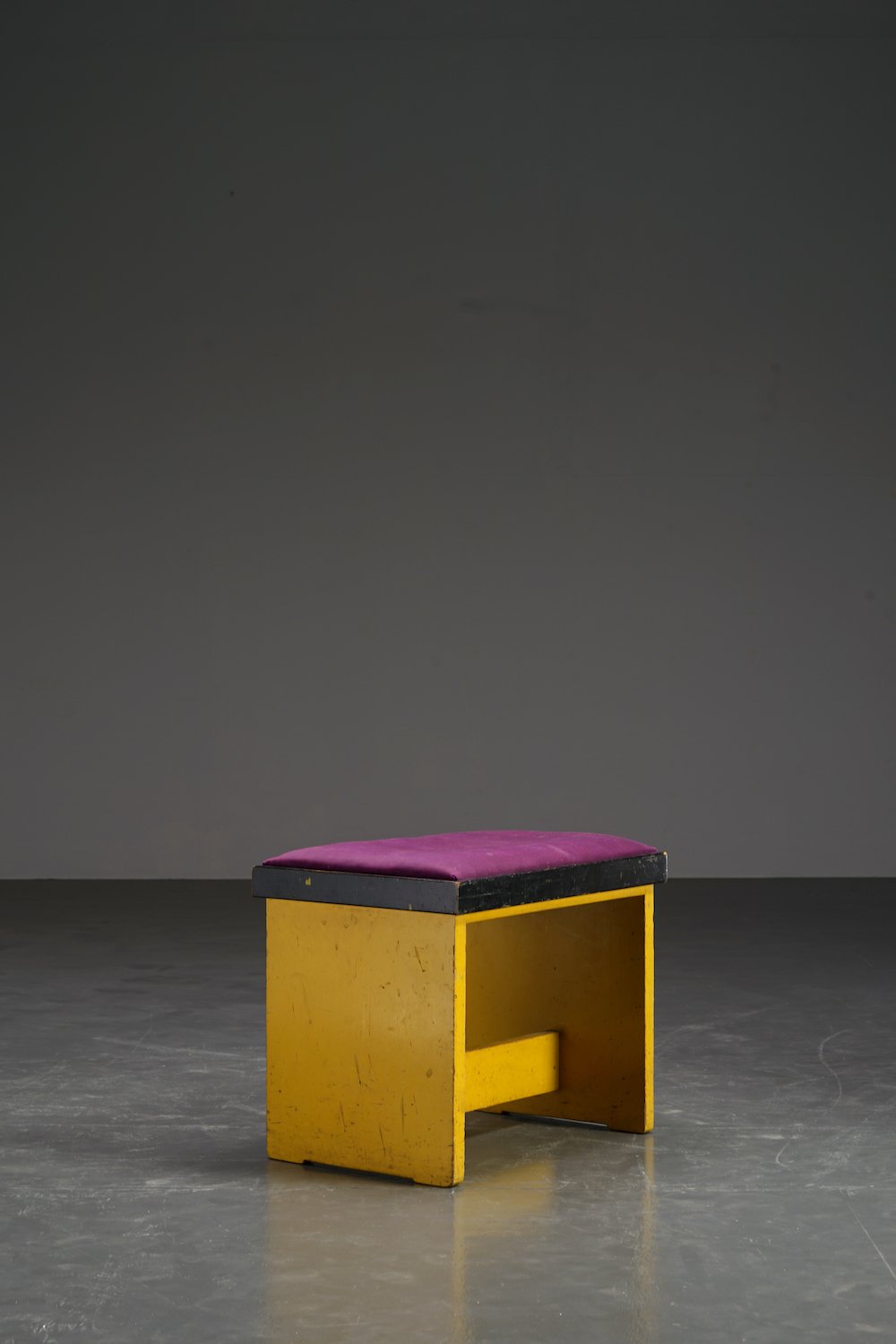
Architect Hendrik Wouda (1885-1946)
H. Pander & Zonen
period: 1920s
origin: The Netherlands
dimensions (cm): h43 x w52 x d36 cm
dimensions (inch): h16,93 x w20,47 x d14,17 in
material: wood, velvet
Hendrik Wouda’s work is enticingly straightforward and well-balanced. He is most known for his designs for the firm H. Pander & Zonen and is regarded as one of the leading figures of the architectural style Nieuwe Haagse School, greatly inspired by the architect Frank Lloyd Wright.

Jan de Jong
period: 1960s
origin: The Netherlands
dimensions (cm): h41,5 x w53,5 x d35 cm
dimensions (inch): h16,34 x w21,06 x d13,78 in
material: metal, pine wood
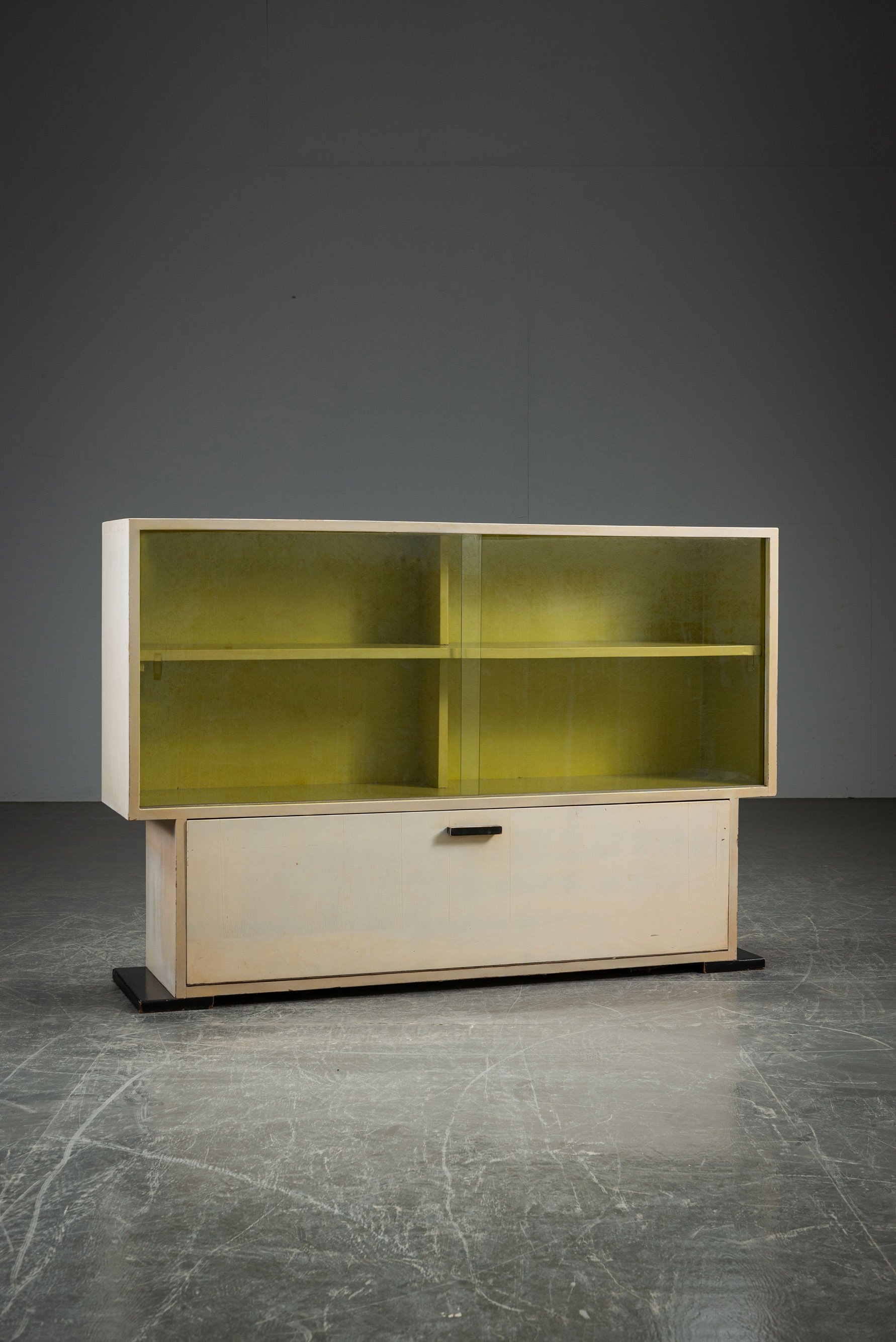
period: 1950s
origin: The Netherlands
dimensions (cm): h102 x w150 x d36 cm
dimensions (inch): h40,16 x w59,06 x d14,17 in
material: glass, wood
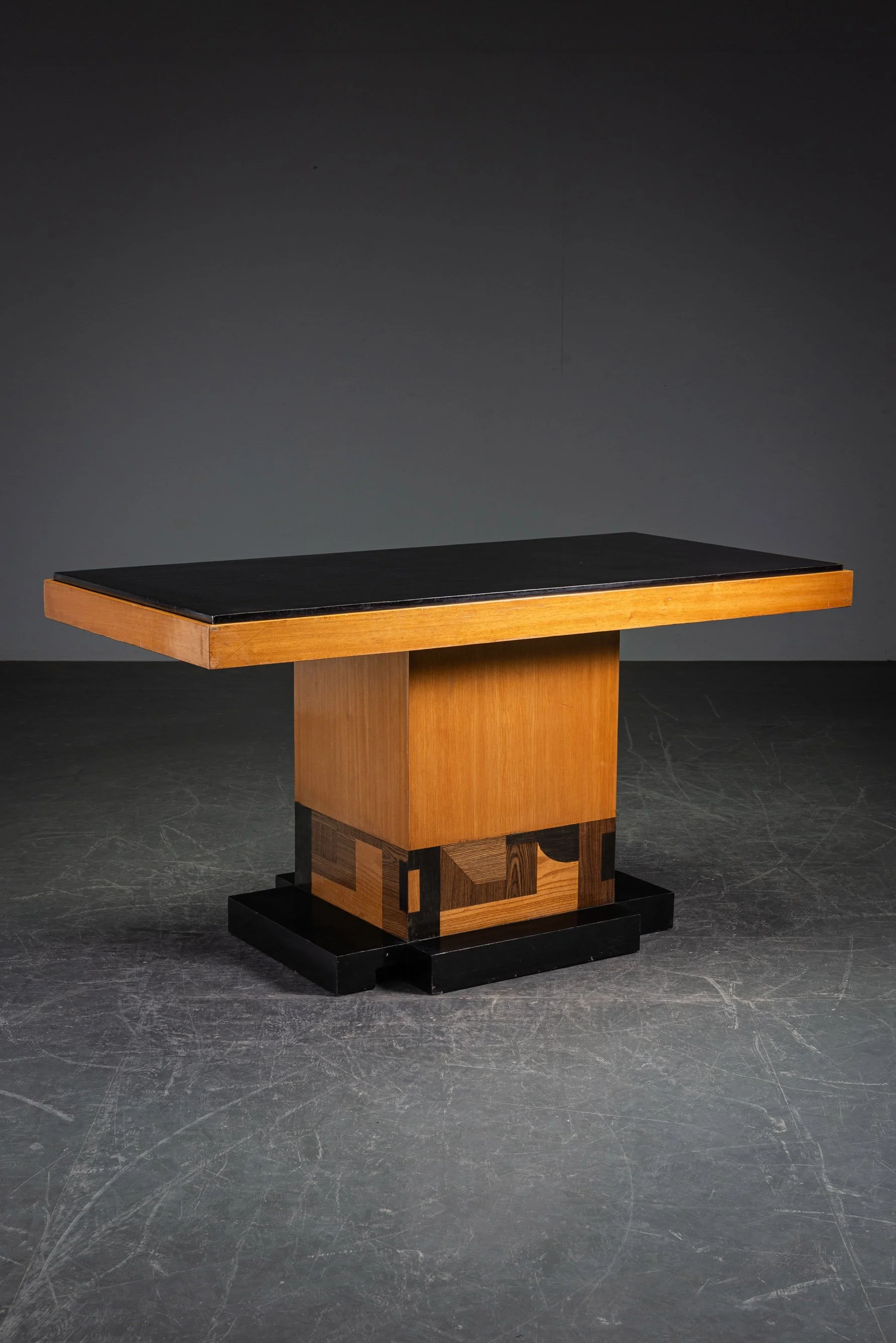
Michel Dufet (1888-1985)
period: 1930s
origin: France
dimensions (cm): h84 x w160 x d81 cm
dimensions (inch): h33,07 x w62,99 x d31,89 in
material: wood

Gerrit Rietveld
Amersfoortse
period: 1950s
origin: The Netherlands
dimensions (cm): h70 x w54,5 x d67 cm (sh38 / ar55 cm)
dimensions (inch): h27,56 x w21,46 x d26,38 in (sh14,96 / ar21,65 in)
material: leather, metal
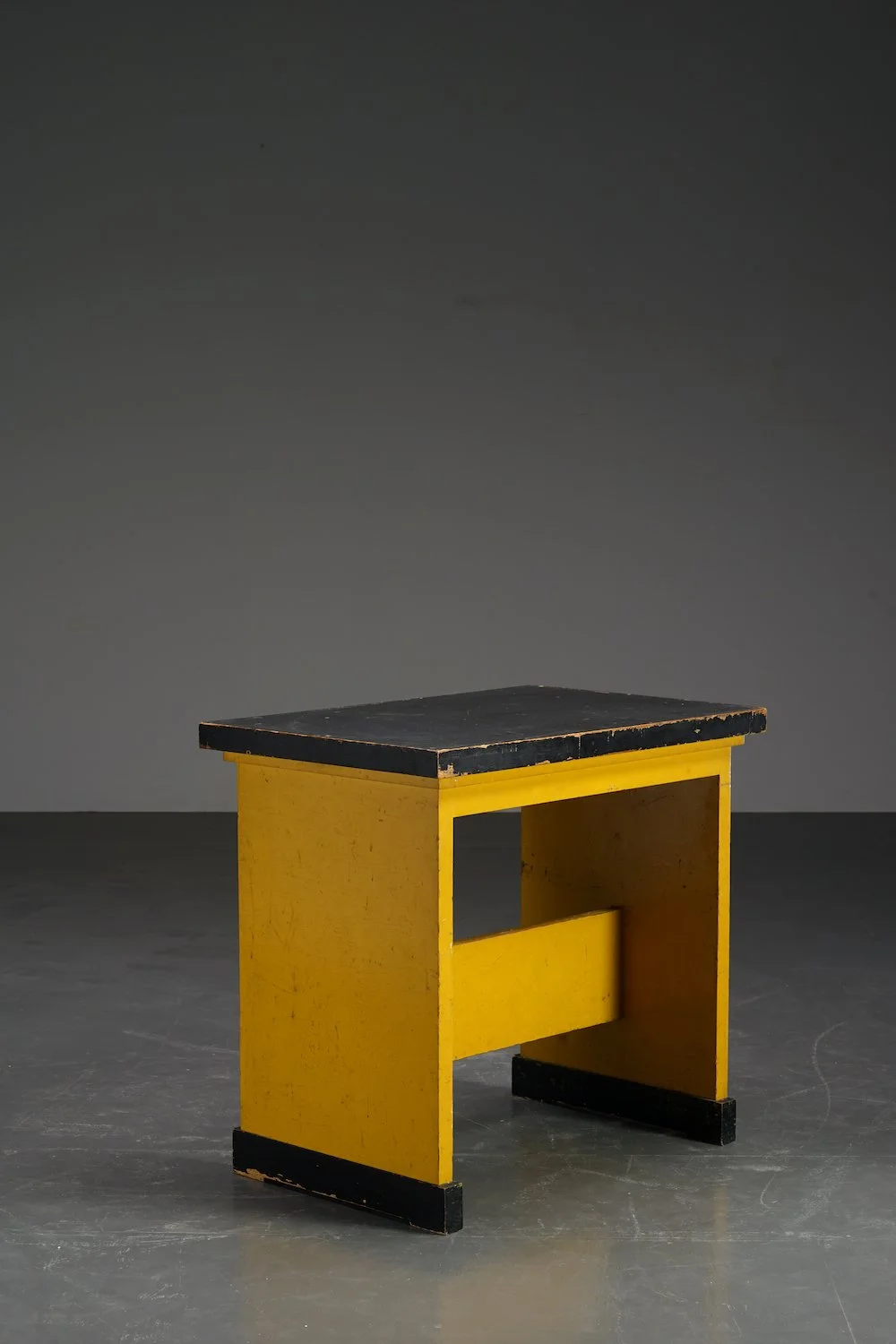
Architect Hendrik Wouda (1885-1946)
H. Pander & Zonen
period: 1920s
origin: The Netherlands
dimensions (cm): h70 x w75 x d50 cm
dimensions (inch): h27,56 x w29,53 x d19,69 in
material: wood
Hendrik Wouda’s work is enticingly straightforward and well-balanced. He is most known for his designs for the firm H. Pander & Zonen and is regarded as one of the leading figures of the architectural style Nieuwe Haagse School, greatly inspired by the architect Frank Lloyd Wright.

Artist Gerrit van Bakel (1943-1984)
period: 1970s
origin: The Netherlands
dimensions (cm): h45,5 x w33 x d33 cm
dimensions (inch): h17,91 x w12,99 x d12,99 in
material: painted wood, aluminum
Visionary at heart, artist Gerrit van Bakel was set on changing the world. He filled entire notebooks with design sketches for vehicles, street plans, houses, and even a global food supply chain. Most dreamscapes would remain confined to the realm of art, but Van Bakel’s furniture designs gave him a rather unique foothold in the domain of industrial design. To Van Bakel, even the most technical, mechanical designs carried emotion and thought. With this in mind his designs are marked by a very interesting expression of consideration and originality.

Dott. Prof. Arch. Plinio Marconi (1893-1974)
period: 1950s
origin: Italy
dimensions (cm): h77 x w277 x d92 cm
dimensions (inch): h30,31 x w109,06 x d36,22 in
material: wood
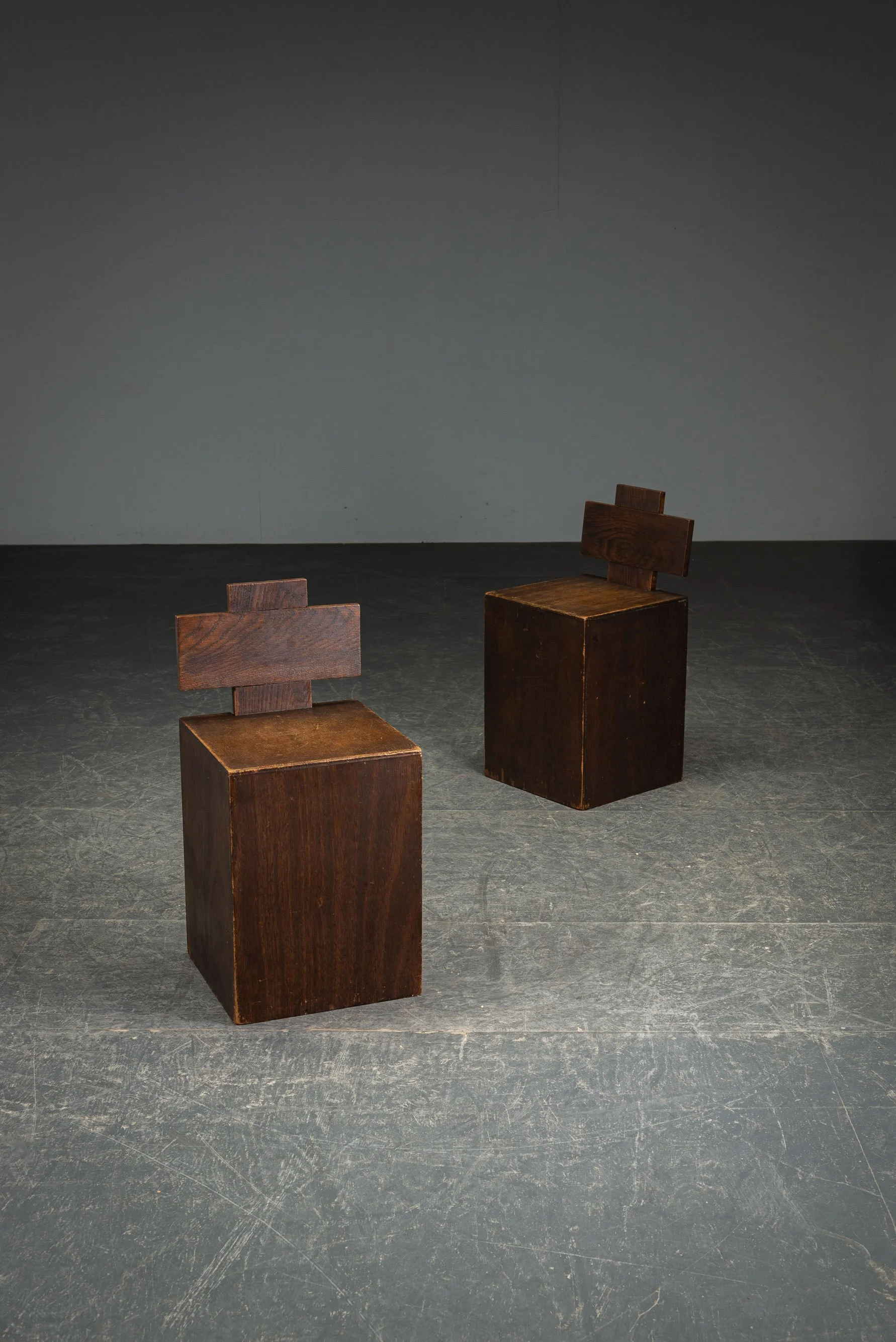
period: 1920s
origin: Belgium
dimensions (cm): h60 x w30 x d30 cm (sh40 cm)
dimensions (inch): h23,62 x w11,81 x d11,81 in (sh15,75 in)
material: wood

Gerrit Rietveld (1888-1964)
Metz & Co.
period: 1966
origin: The Netherlands
dimensions (cm): h58 x w56,5 x d75 cm (sh27,5 / ar47 cm)
dimensions (inch): h22,83 x w22,24 x d29,53 in (sh10,83 / ar18,50 in)
material: wood

Maurits Witdouck (1928-2014)
period: 1970s
origin: Belgium
dimensions: h80 x w30 x d30 cm
material: plaster
Study piece for the final monumental size sculpture in bronze which stands in the garden 'Tuin Pand Onderbergen' in Gent, Belgium.
"The former Dominican monastery Het Pand has been in use by Ghent University since 1963. It is a conference centre that serves as the 'visiting card' of the university.
The front garden was designed by Jacques Wirtz. He inspired the garden on geometric gardens from the early Renaissance. In the middle of the garden is an abstract bronze statue by sculptor Maurits Witdouck."
Source: stad.gent

Derk Holman (1916-1982)
period: 1960s
origin: The Netherlands
dimensions (cm): h78 x w26 x d27 cm
dimensions (inch): h30,71 x w10,24 x d10,63 in
material: natural stone

André Sornay (1902-2000)
period: 1930s
origin: France
dimensions (cm): h90,5 x w53,5 x d51 cm (sh46 / ar67 cm)
dimensions (inch): h35,63 x w21,06 x d20,08 in (sh18,11 / ar26,38 in)
material: vintage upholstery, wood, brass

Elmar Berkovich (1897-1968)
Metz & Co.
period: 1930s
origin: The Netherlands
dimensions (cm): h174 x w43 x d43 cm
dimensions (inch): h68,5 x w16,93 x d16,93 in
material: nickel plated brass and wood
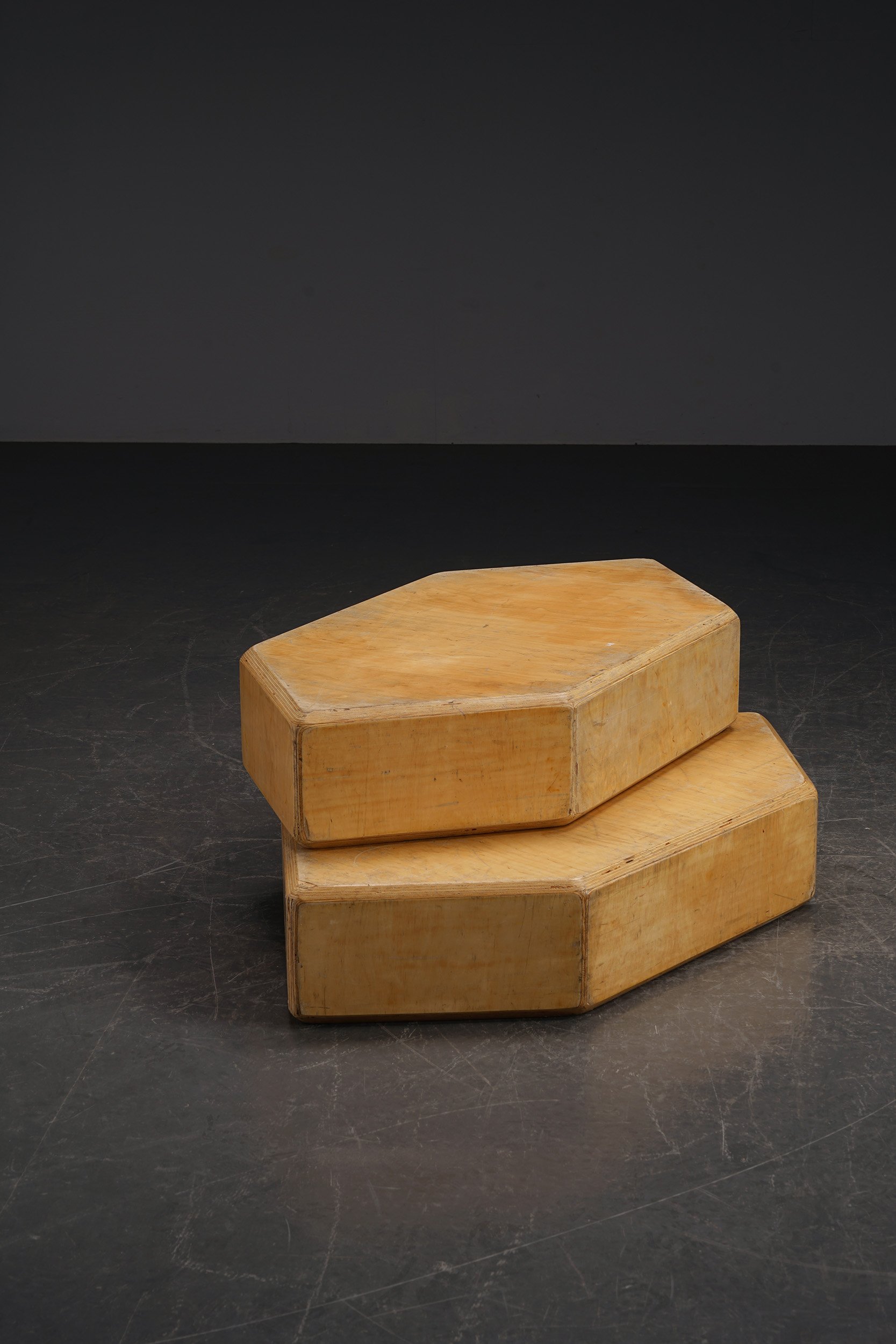
Architect Herman Hertzberger
period: 1970s
origin: The Netherlands
dimensions (cm): h20 x w112 x d57 cm
dimensions (inch): h7,87 x w44,09 x d22,44 in
material: plywood
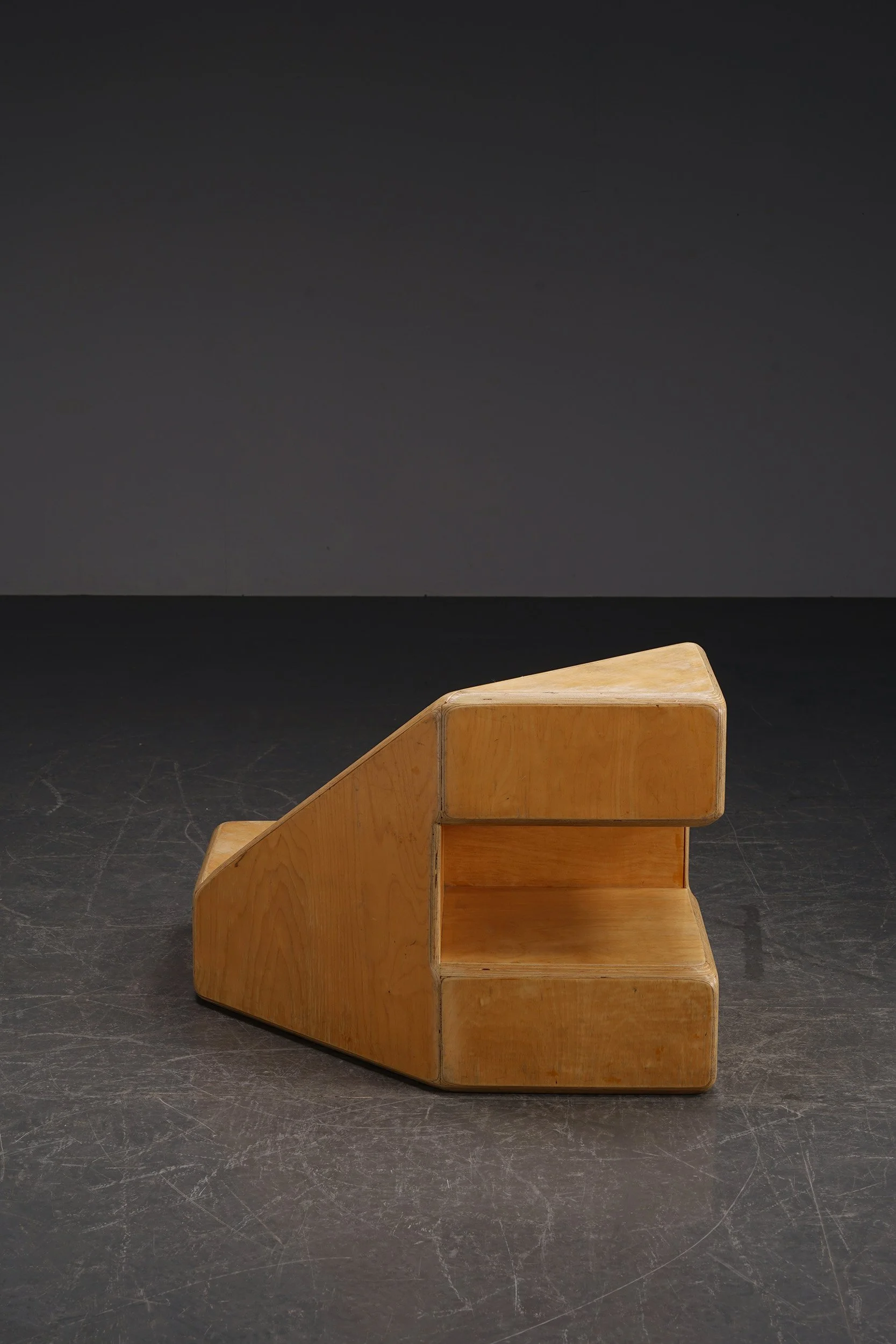
Architect Herman Hertzberger
period: 1970s
origin: The Netherlands
dimensions (cm): h60 x w113 x d57 cm
dimensions (inch): h23,62 x w44,49 x d22,44 in
material: plywood
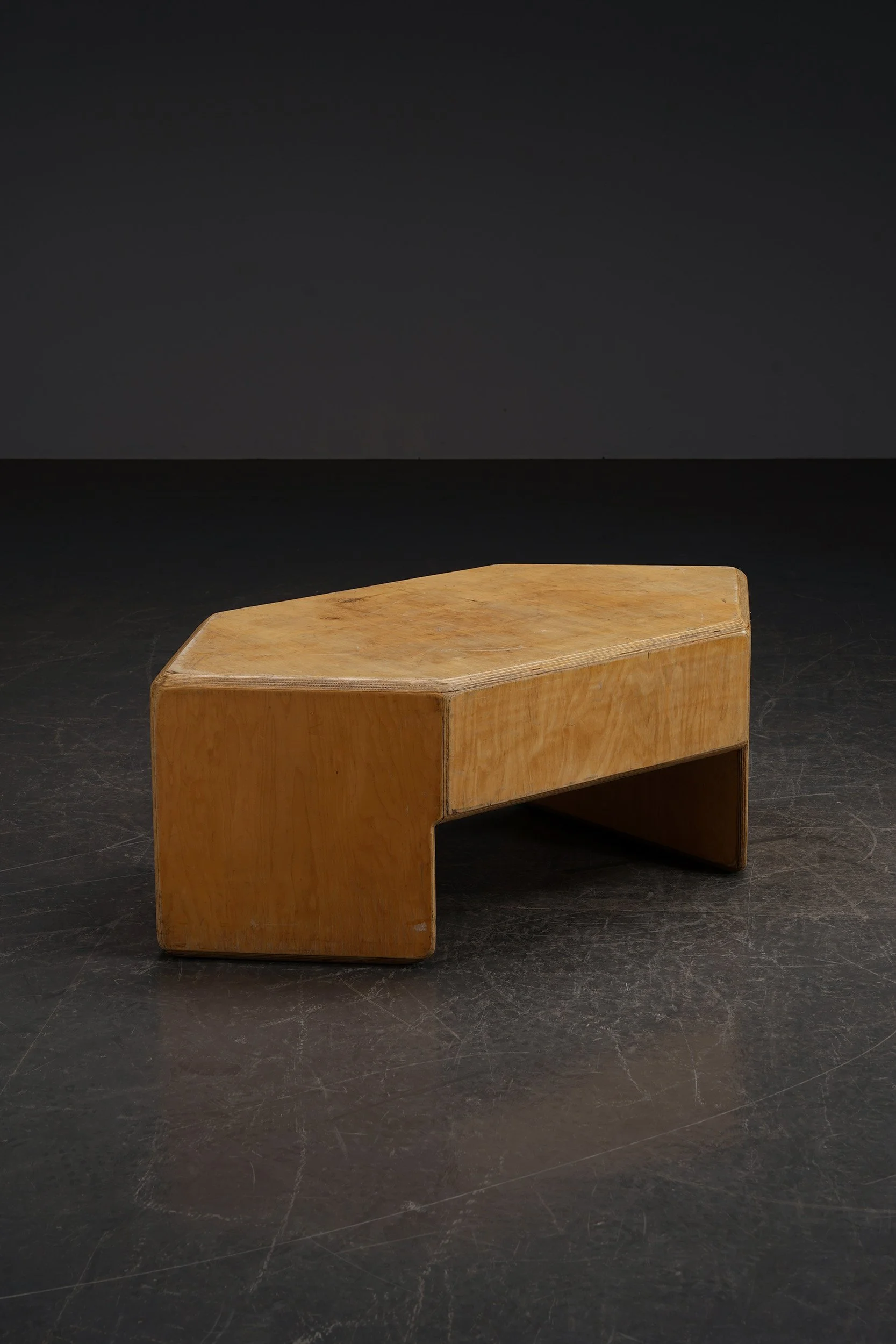
Architect Herman Hertzberger
period: 1970s
origin: The Netherlands
dimensions (cm): h40 x w112 x d57 cm
dimensions (inch): h15,75 x w44,09 x d22,44 in
material: plywood