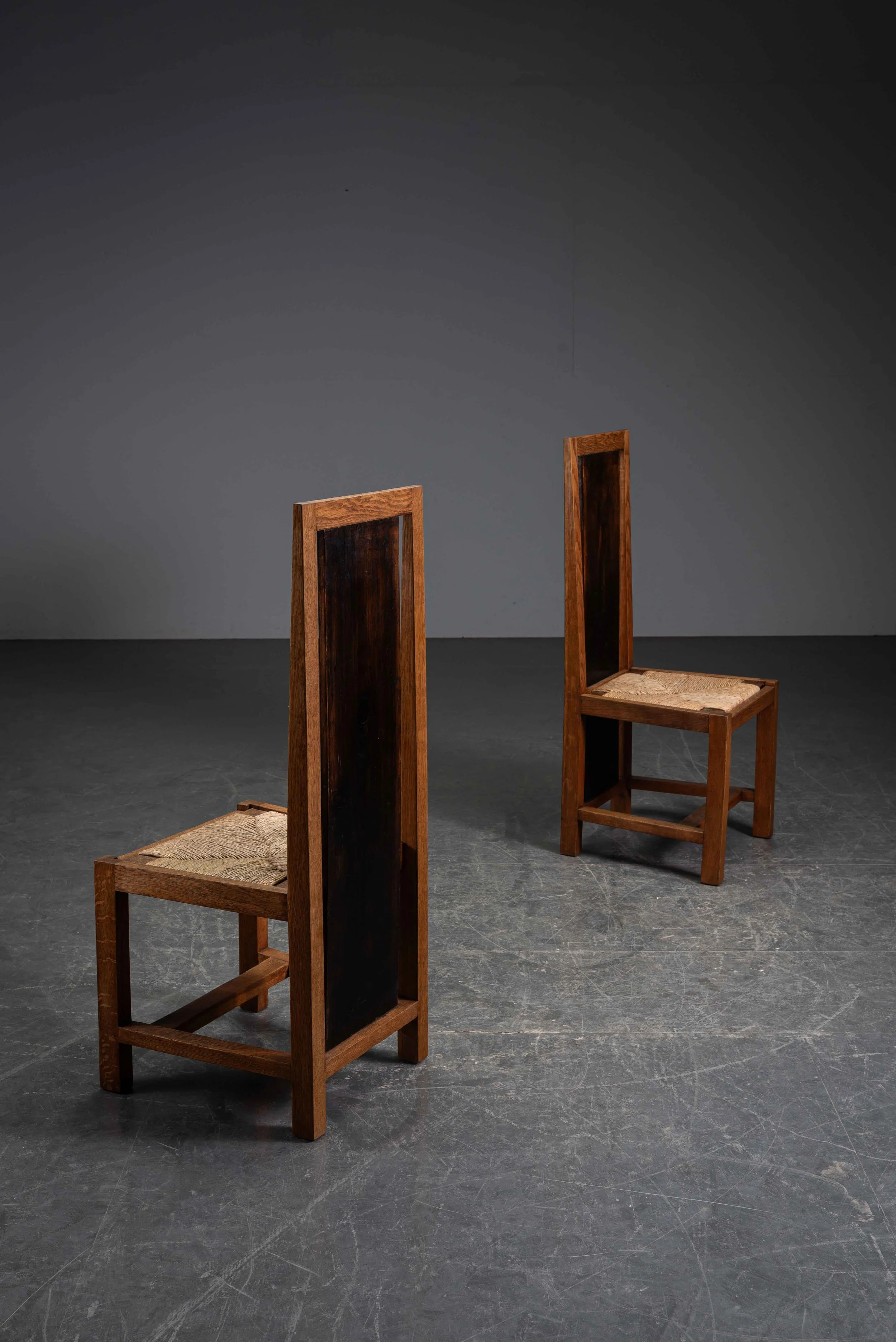
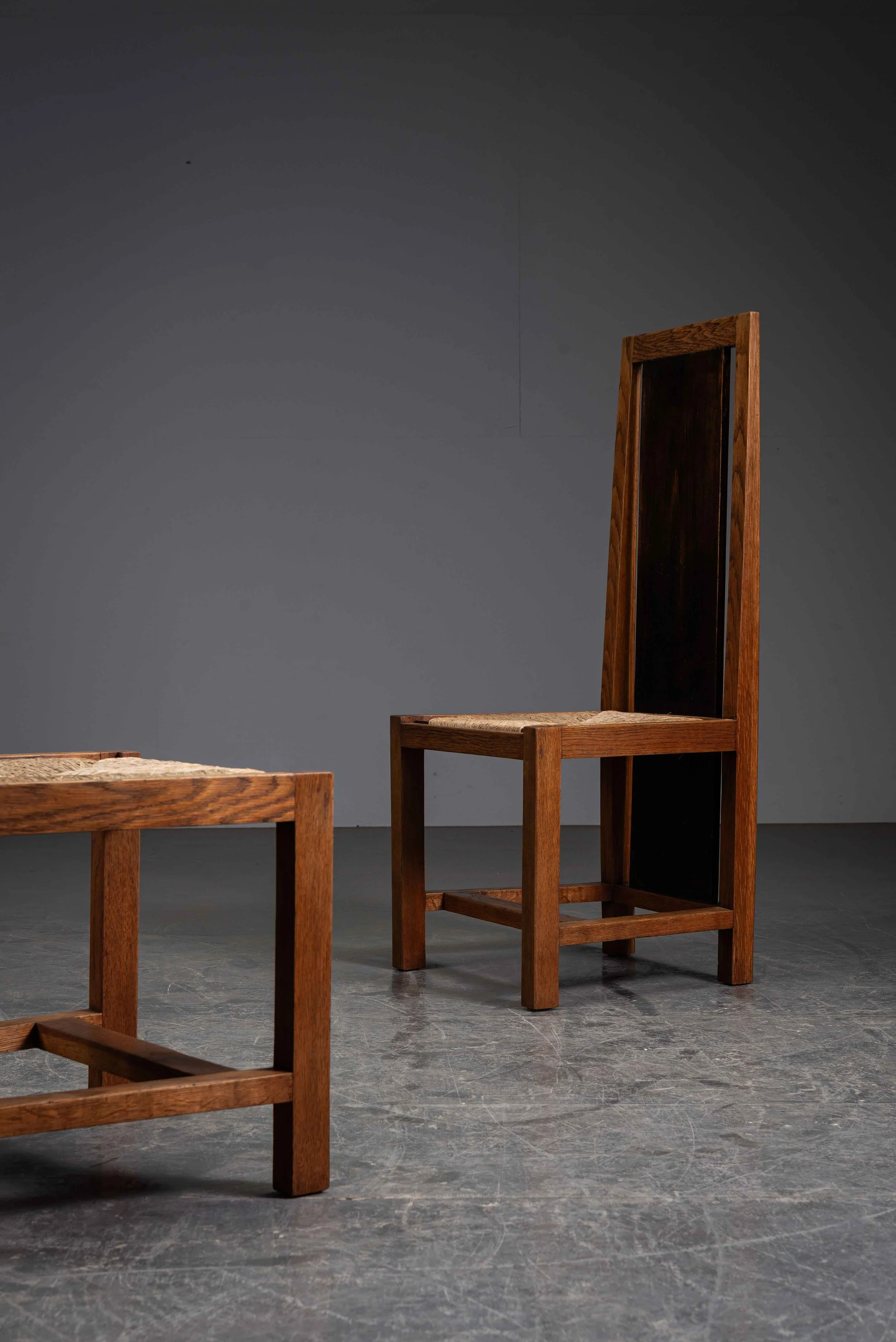
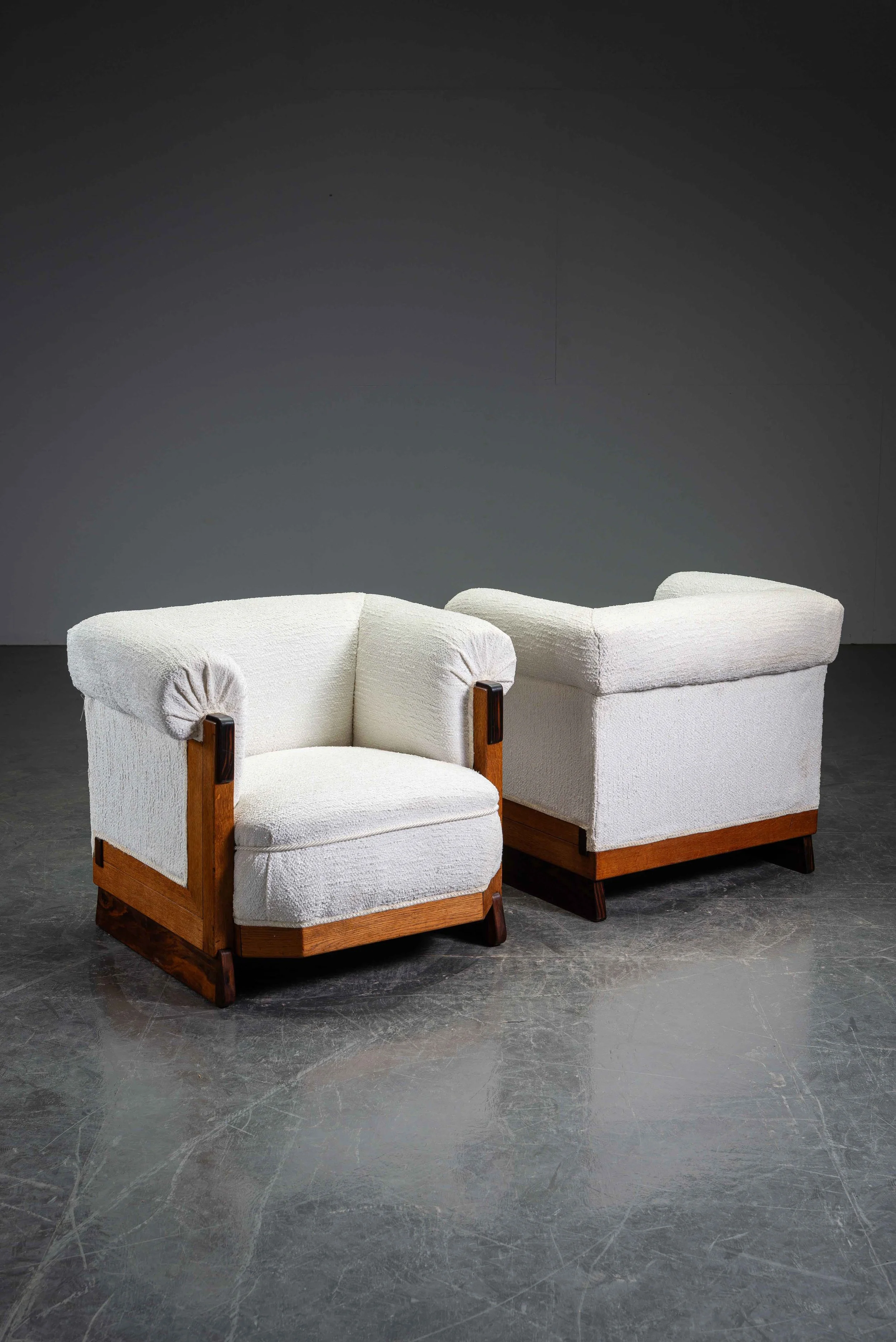
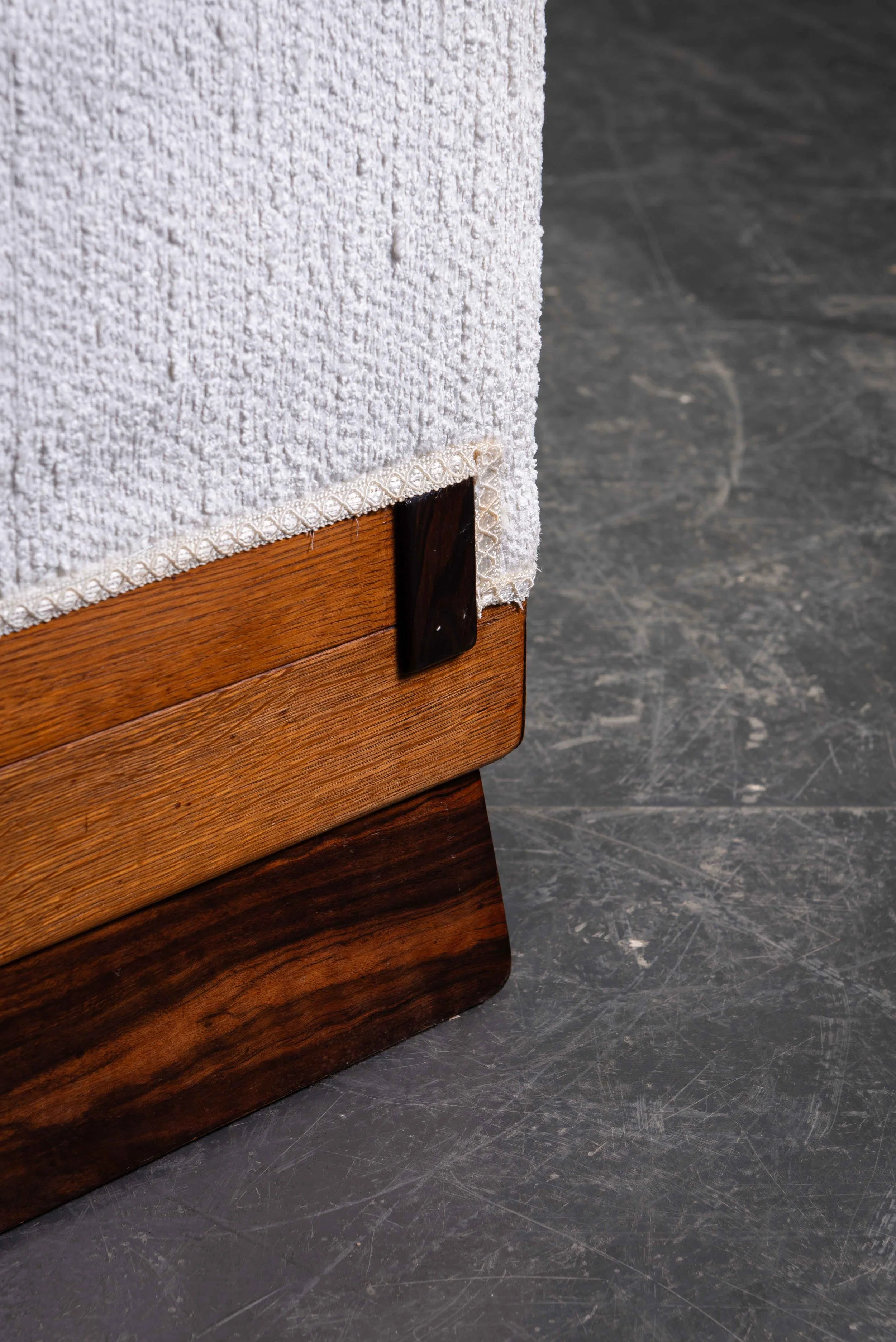
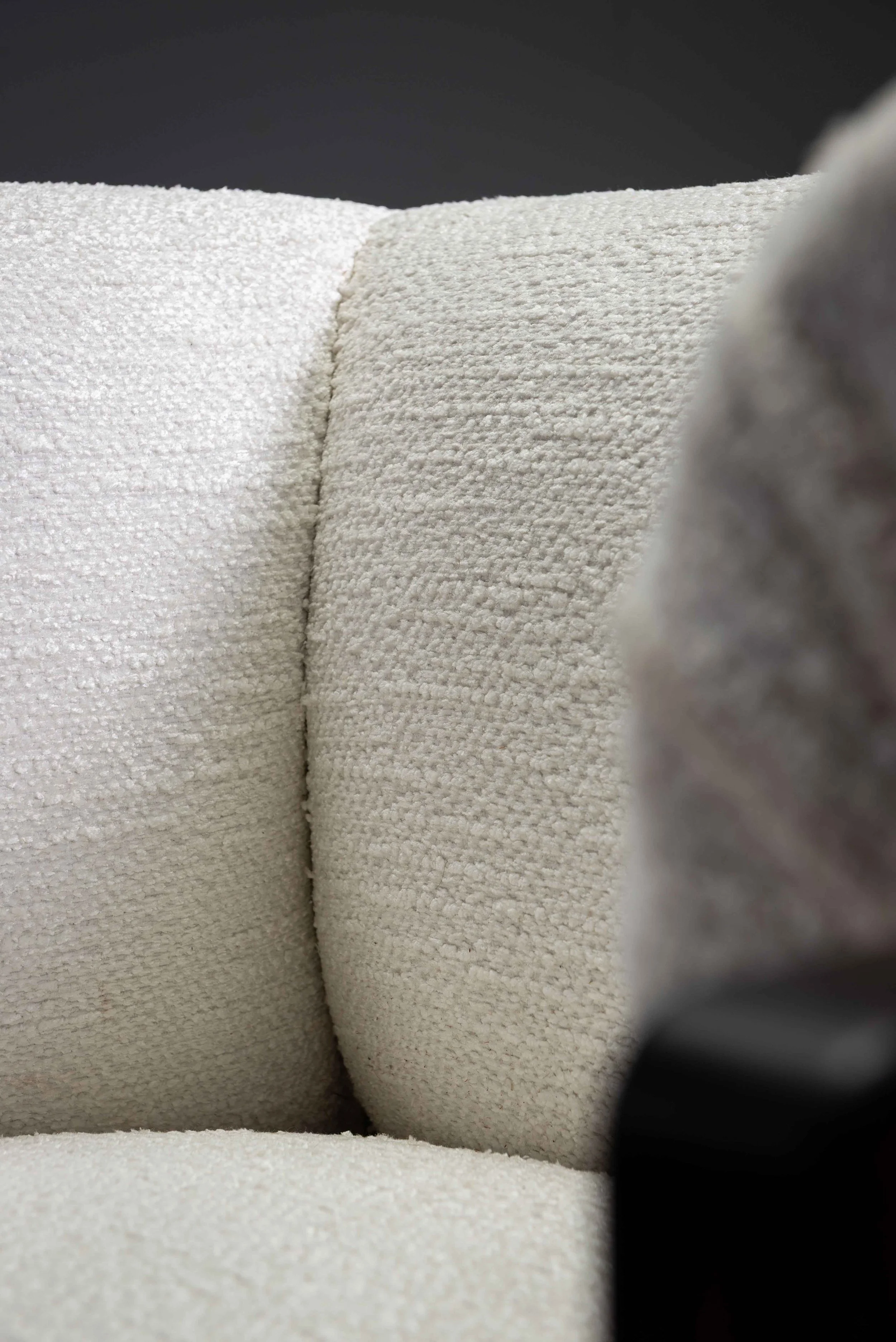
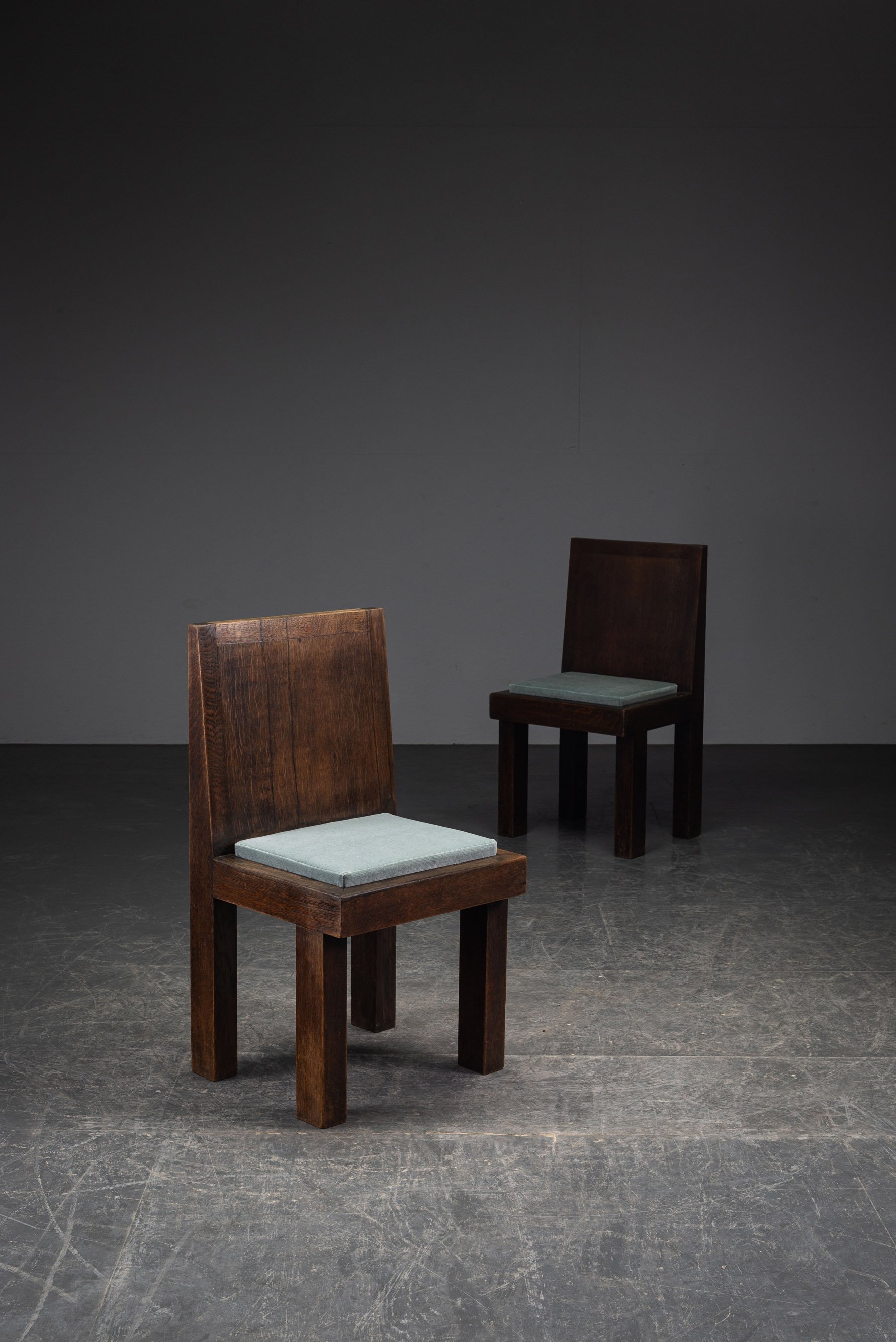
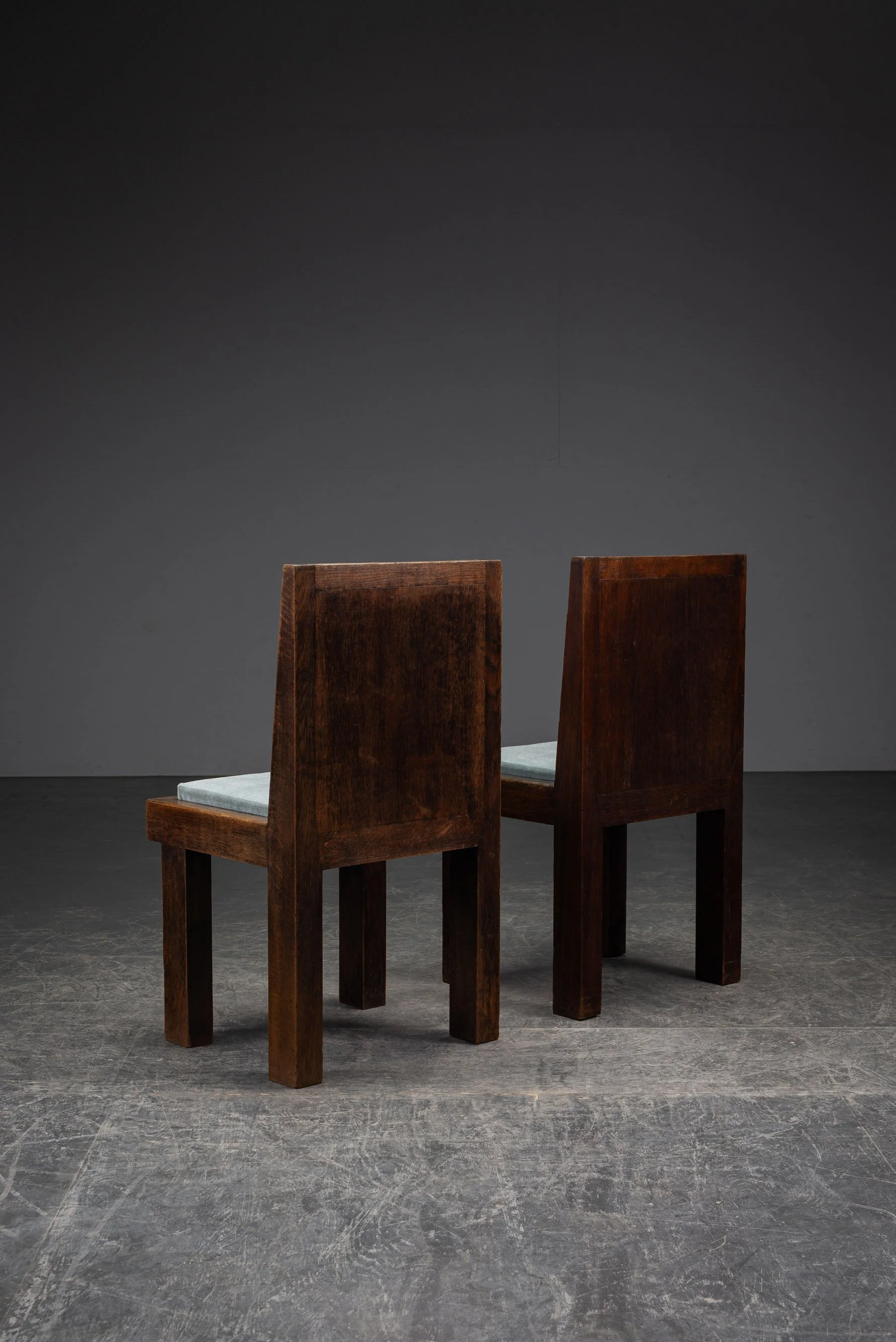
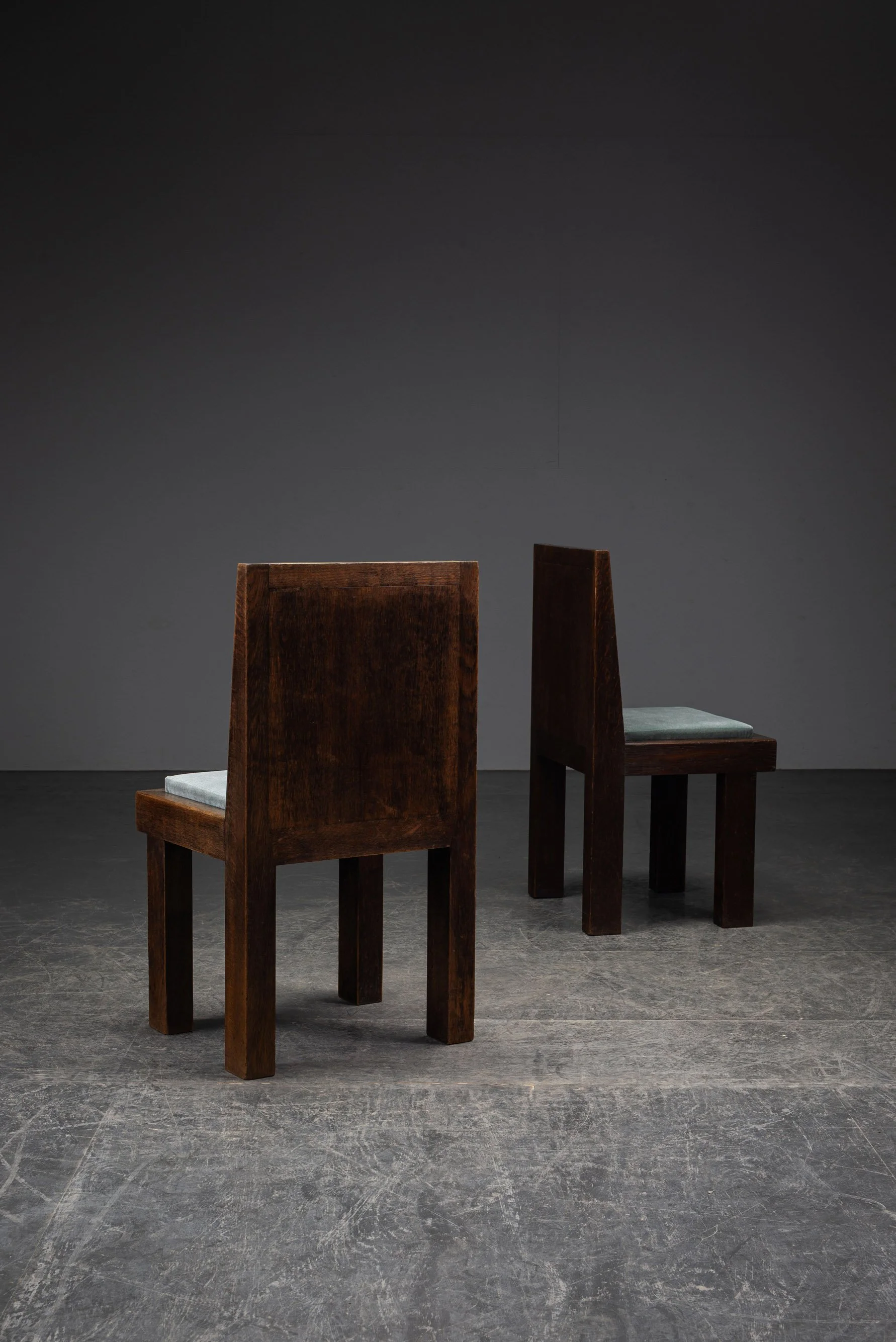
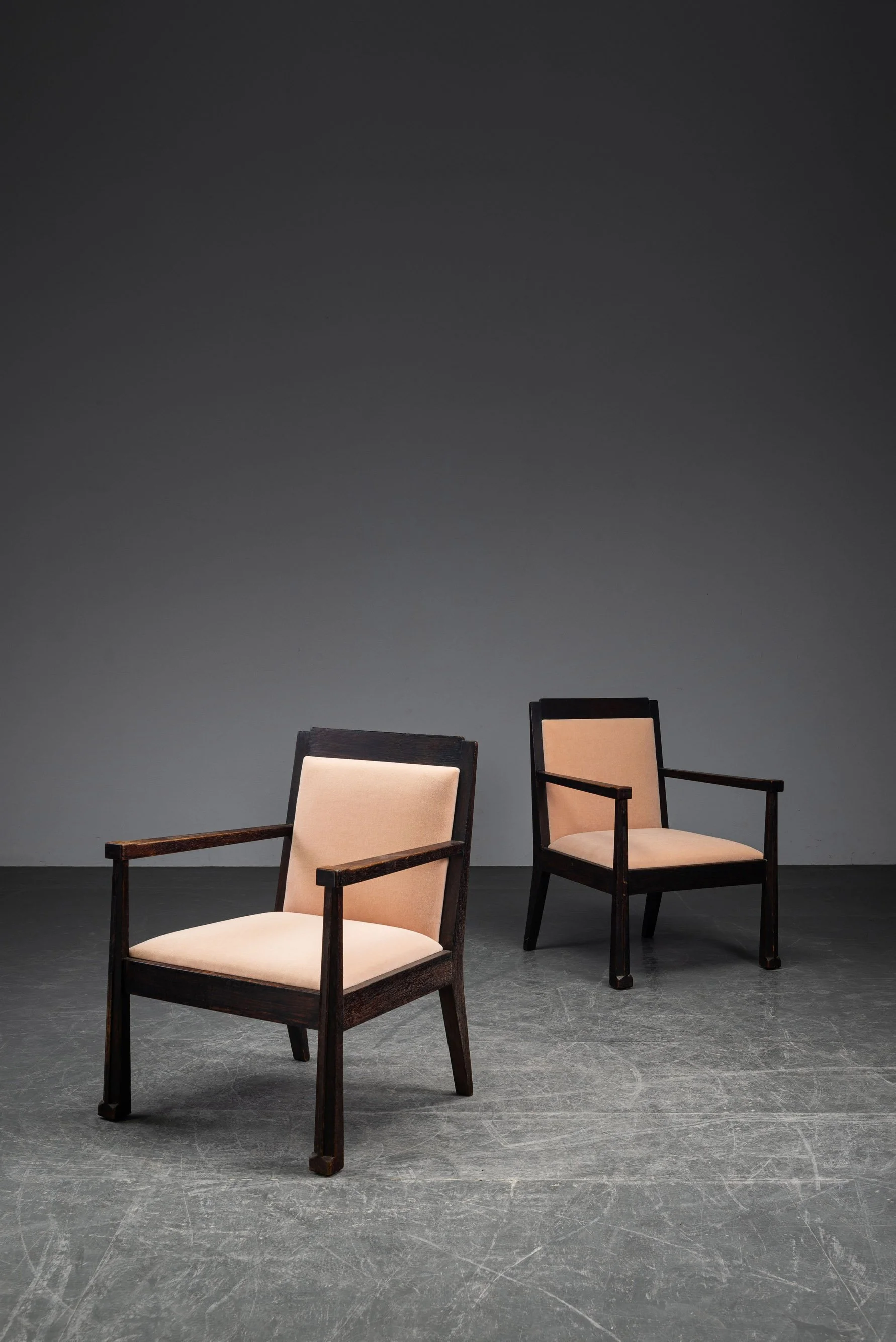
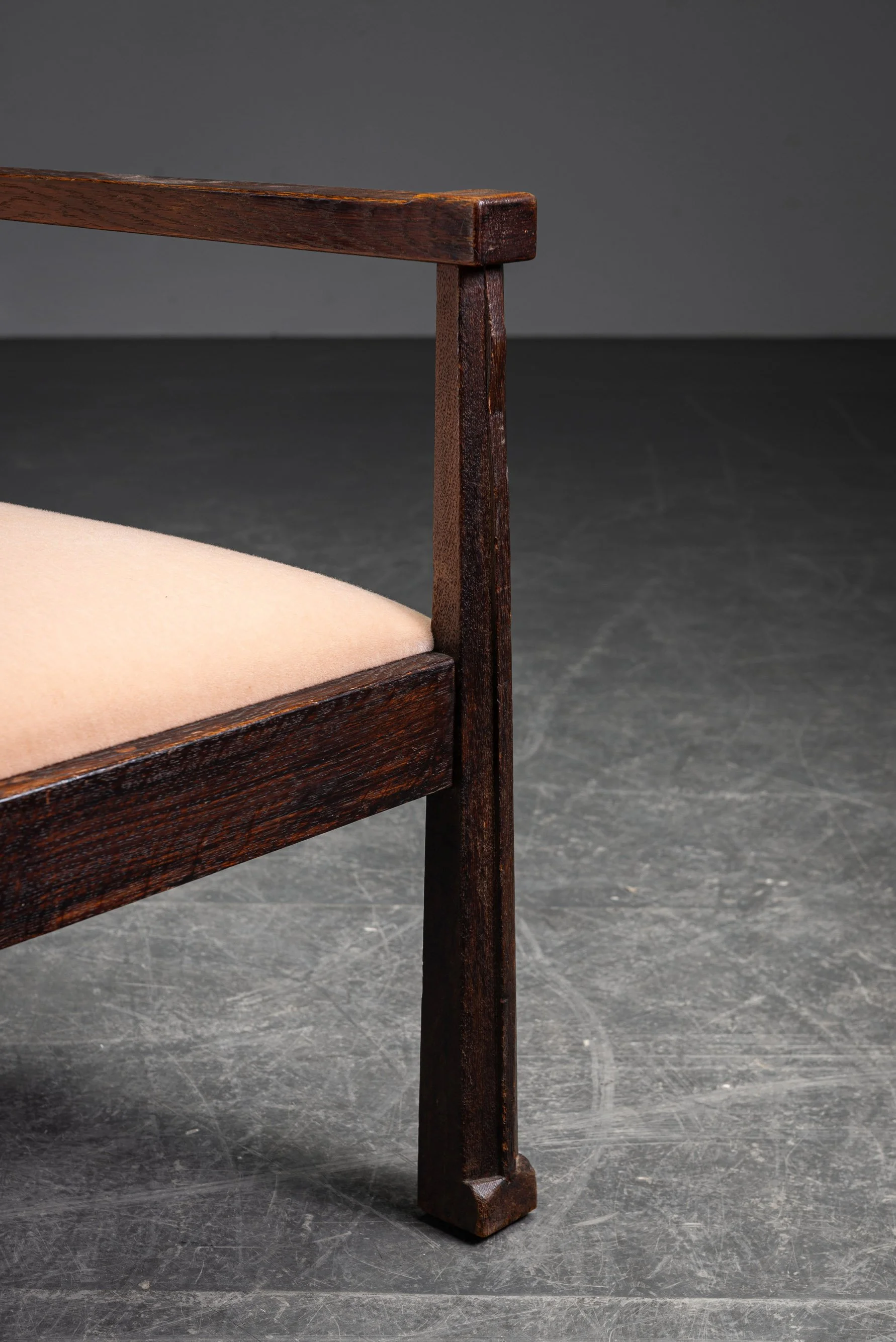
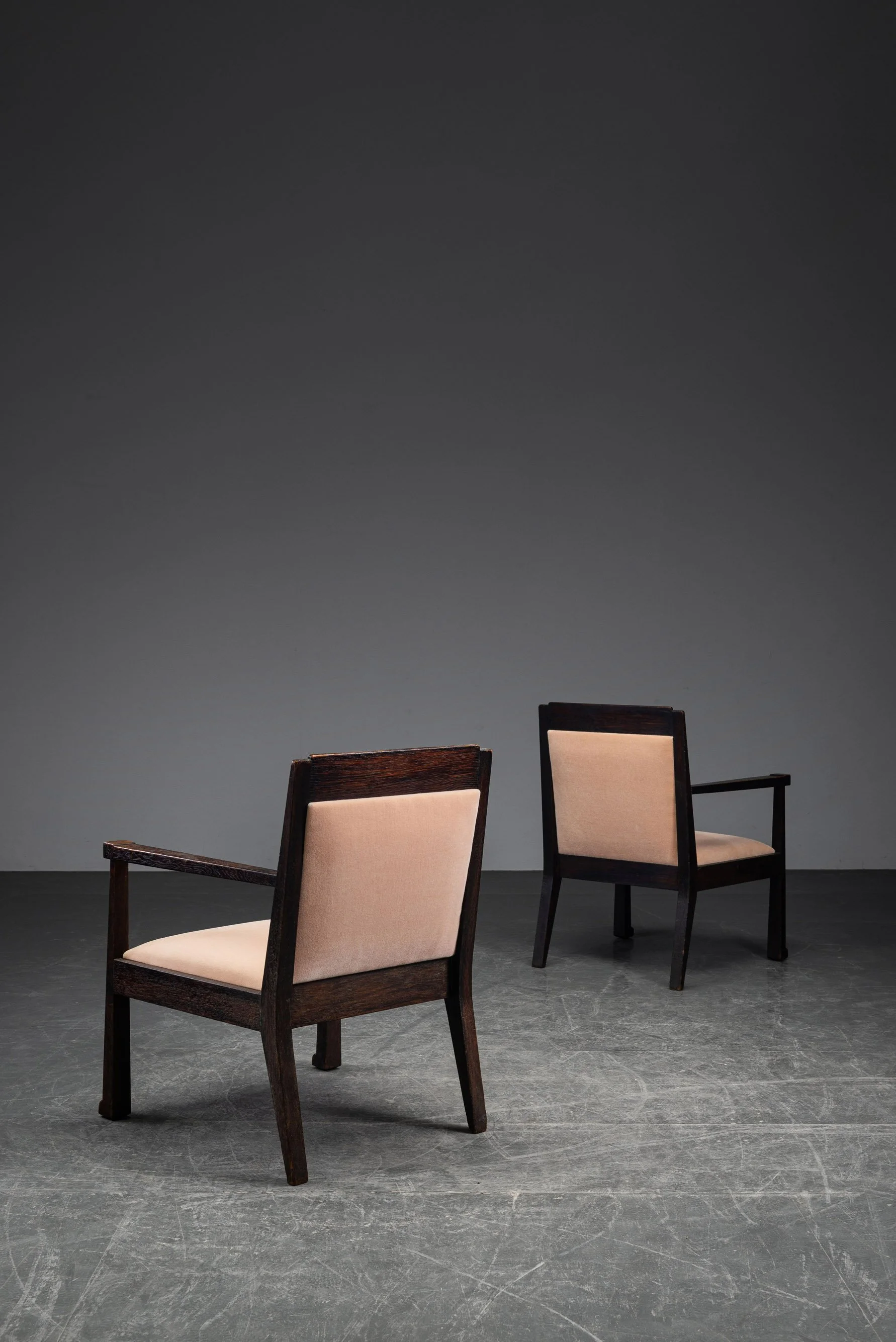
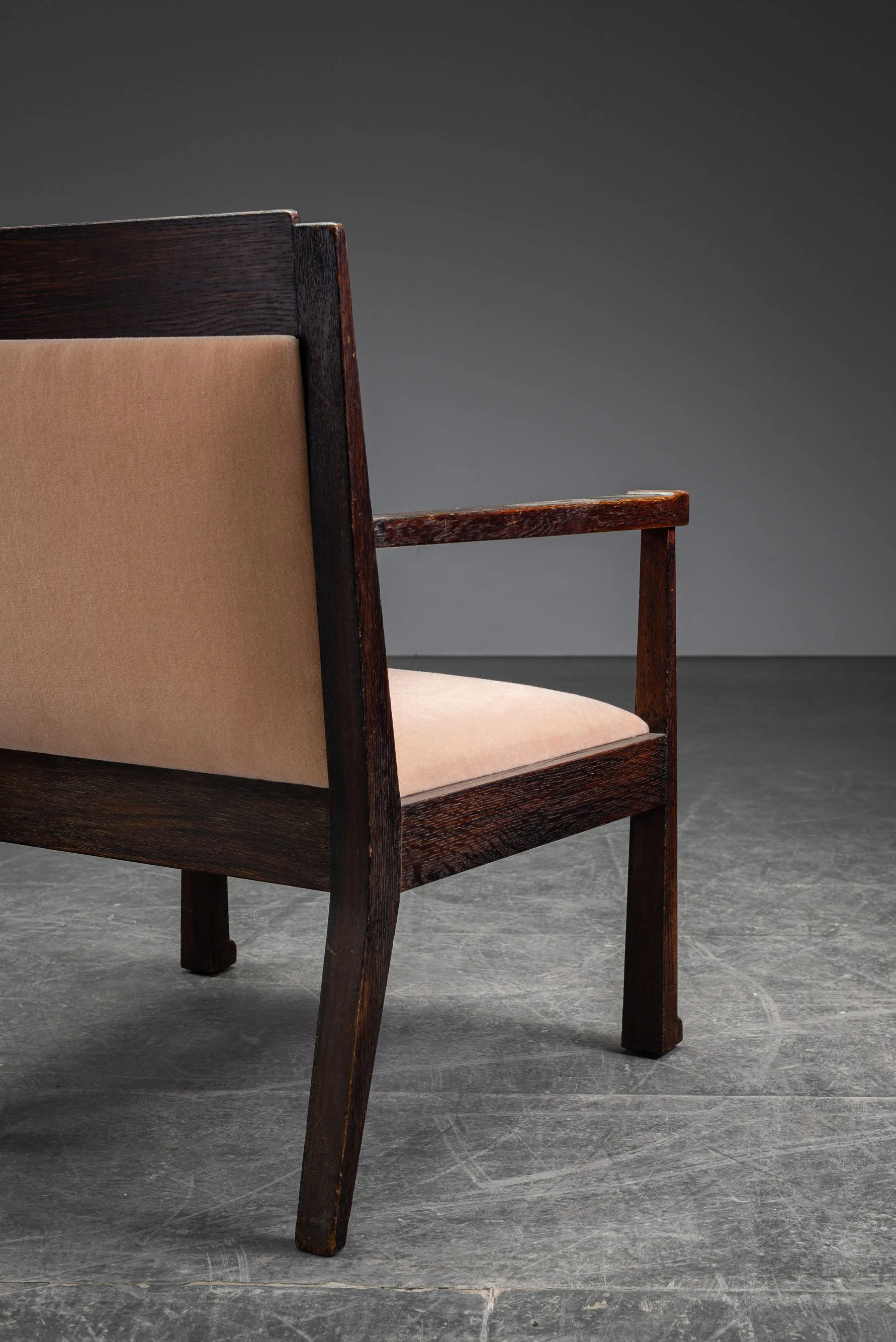
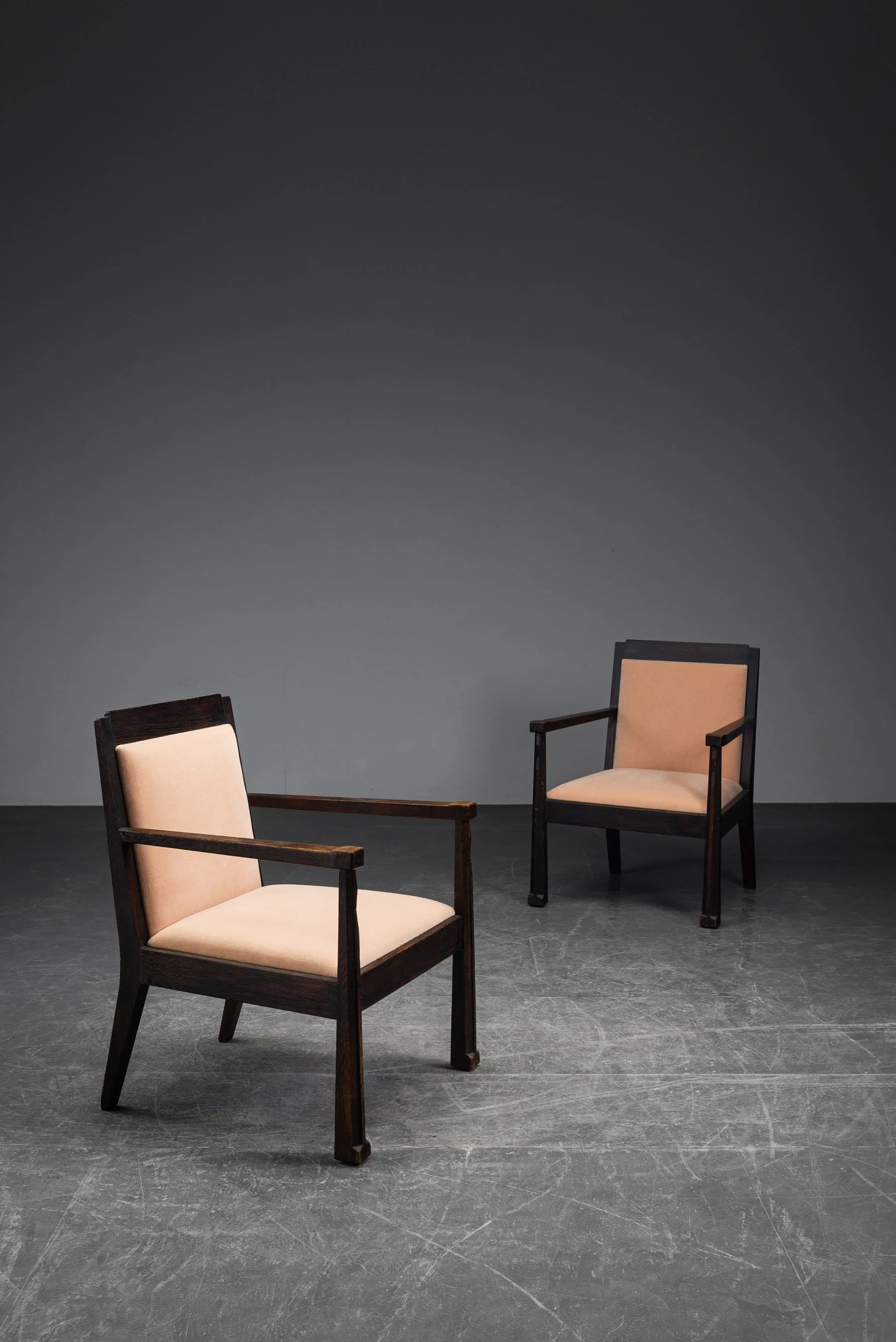
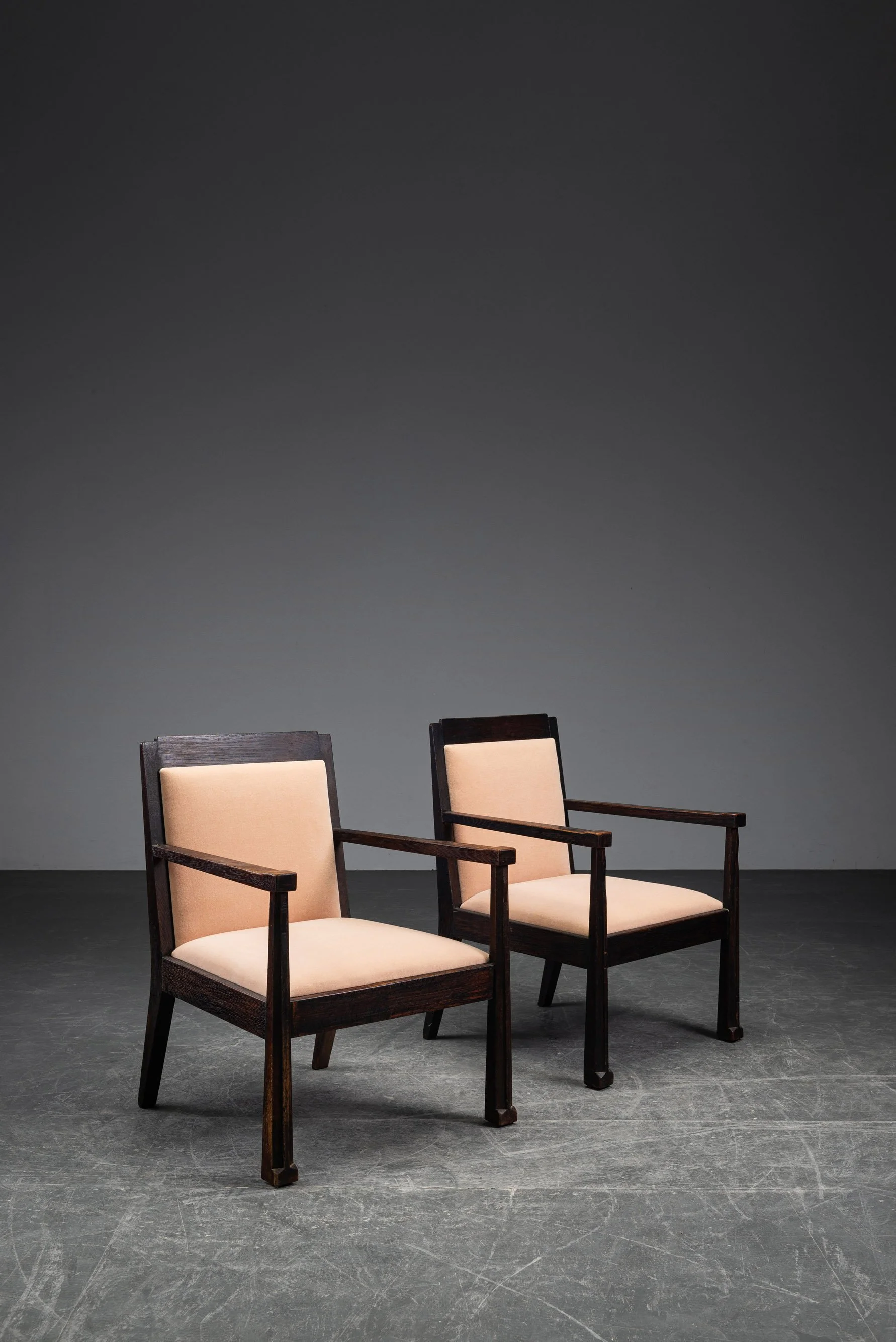
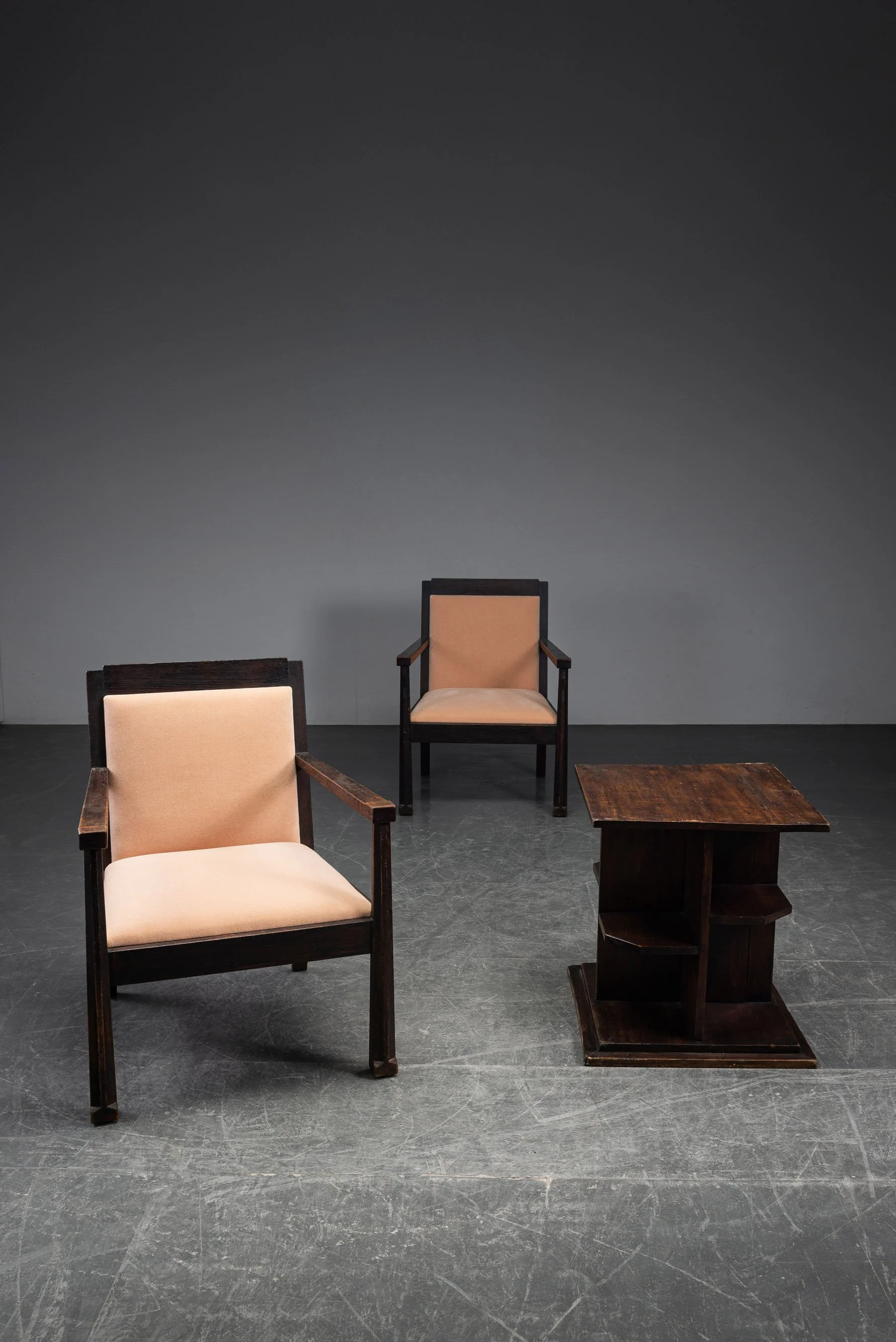
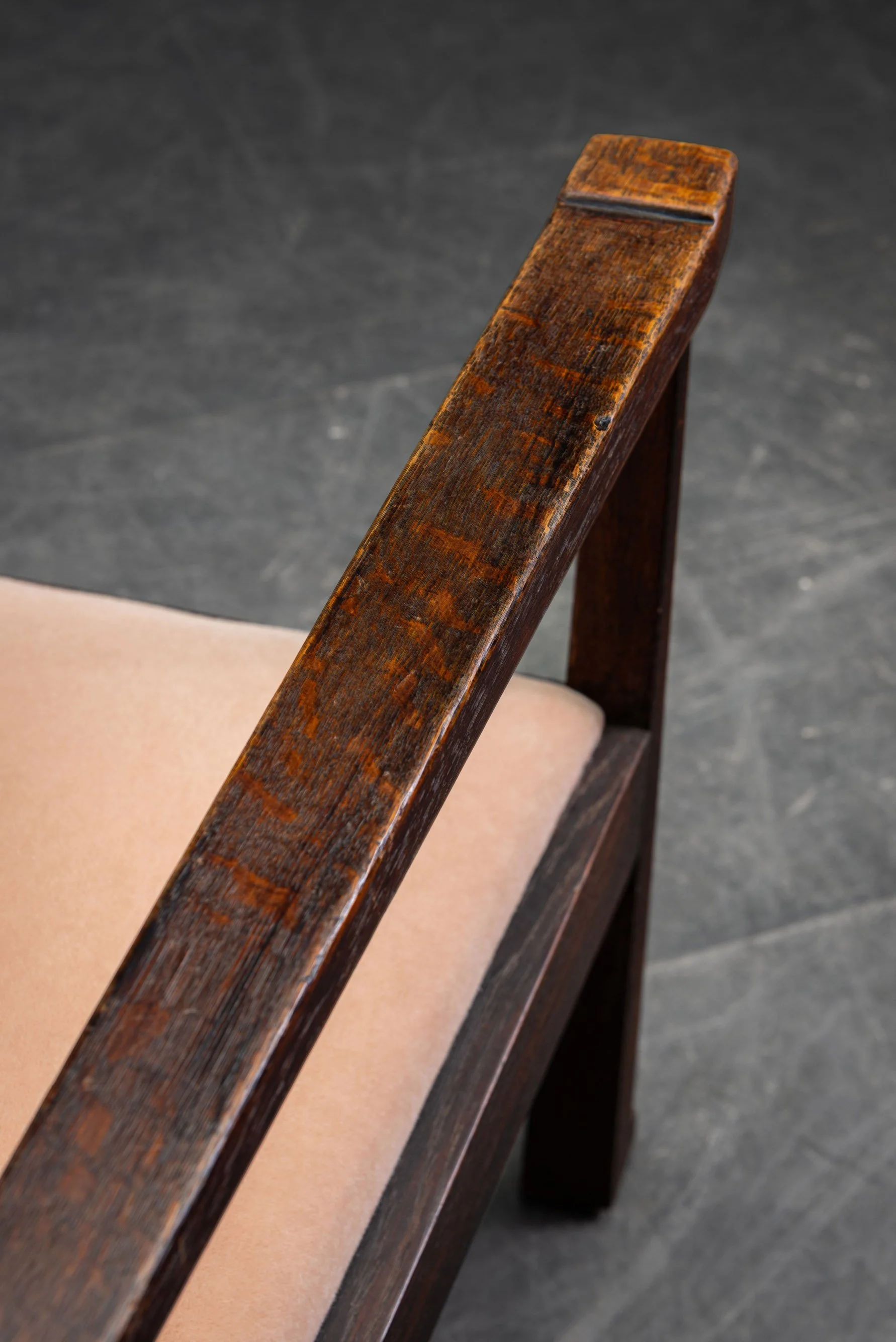
Architects A. Eibink (1893-1975) & J.A. Snellebrand (1891-1963)
period: 1910s
origin: The Netherlands
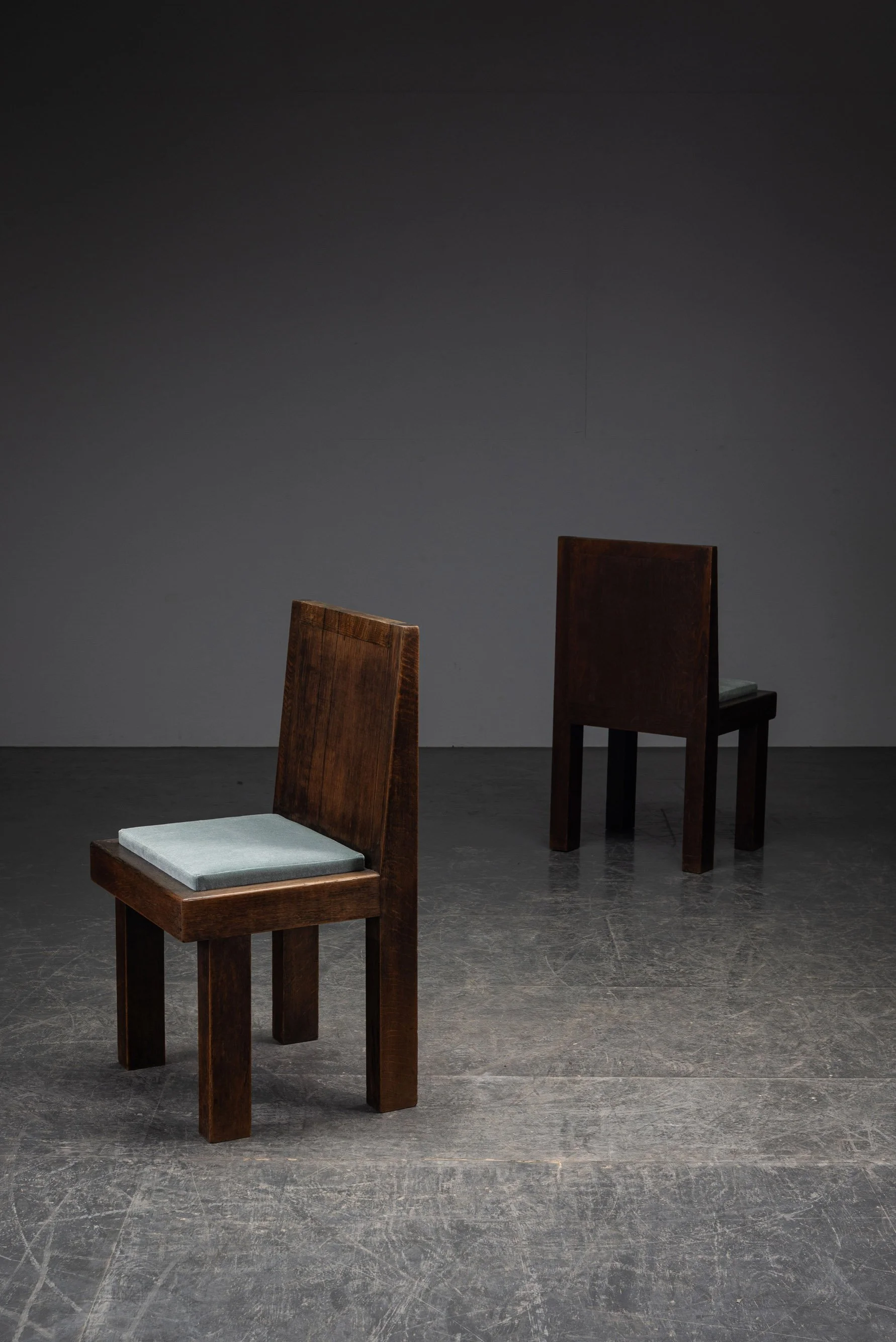
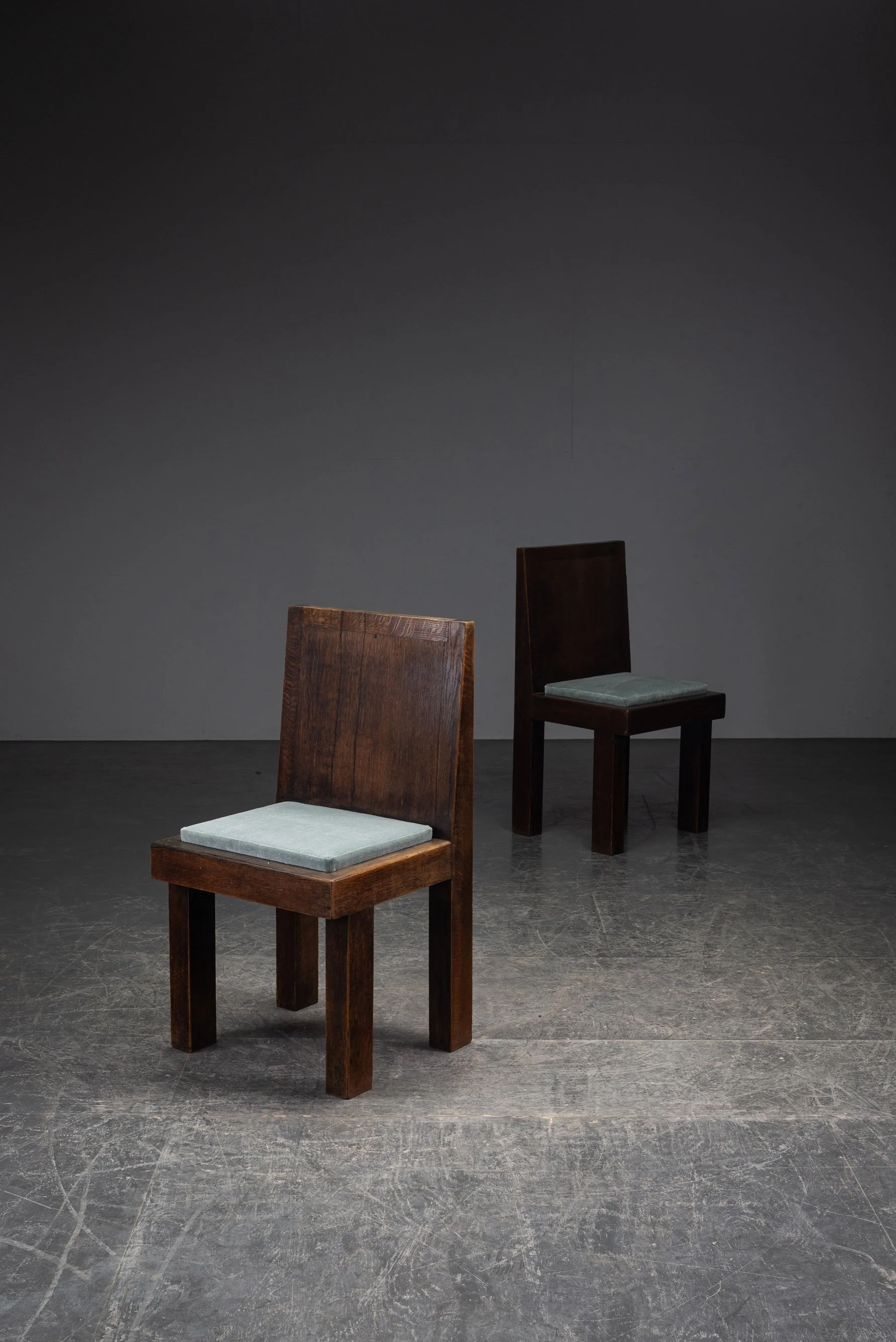
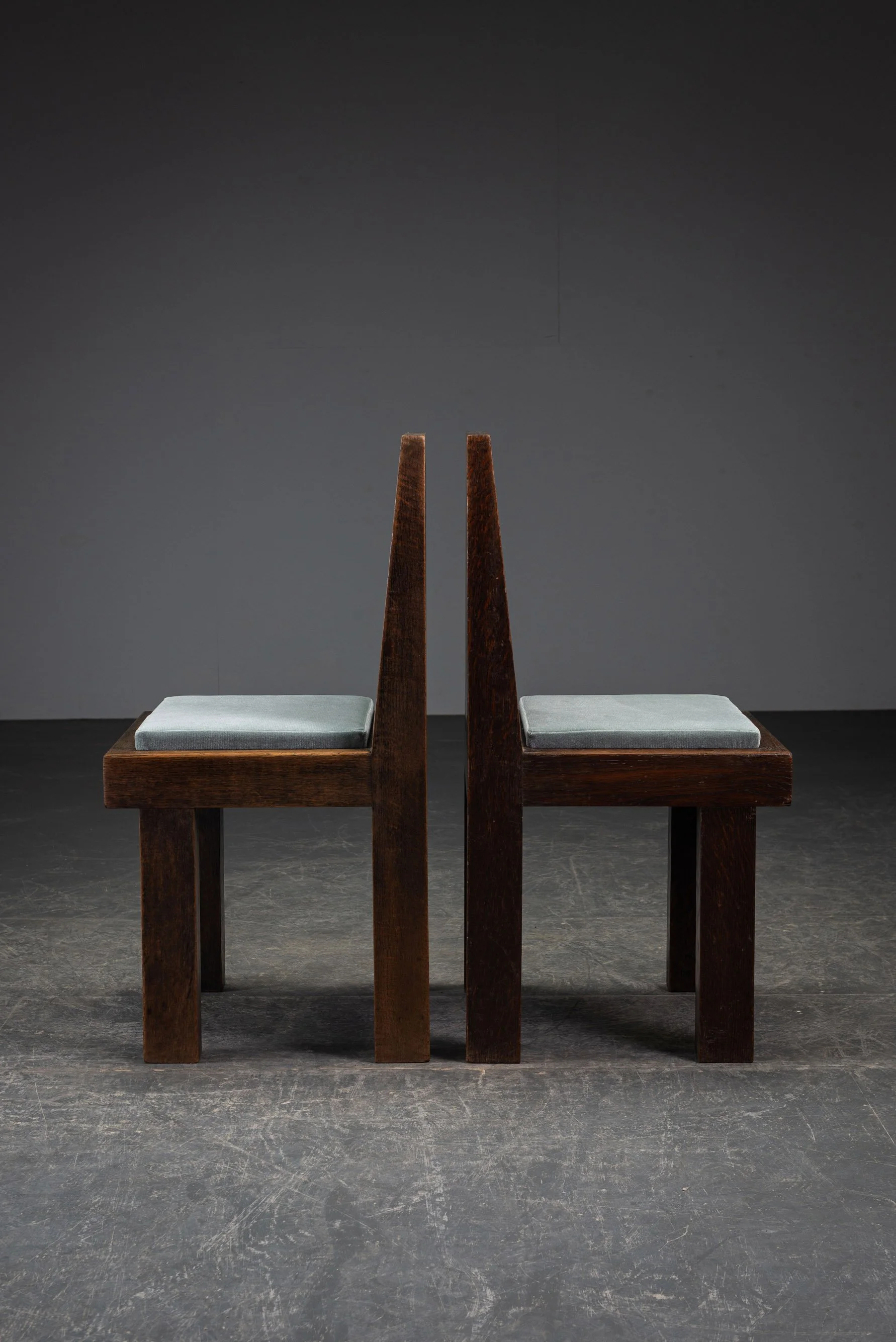
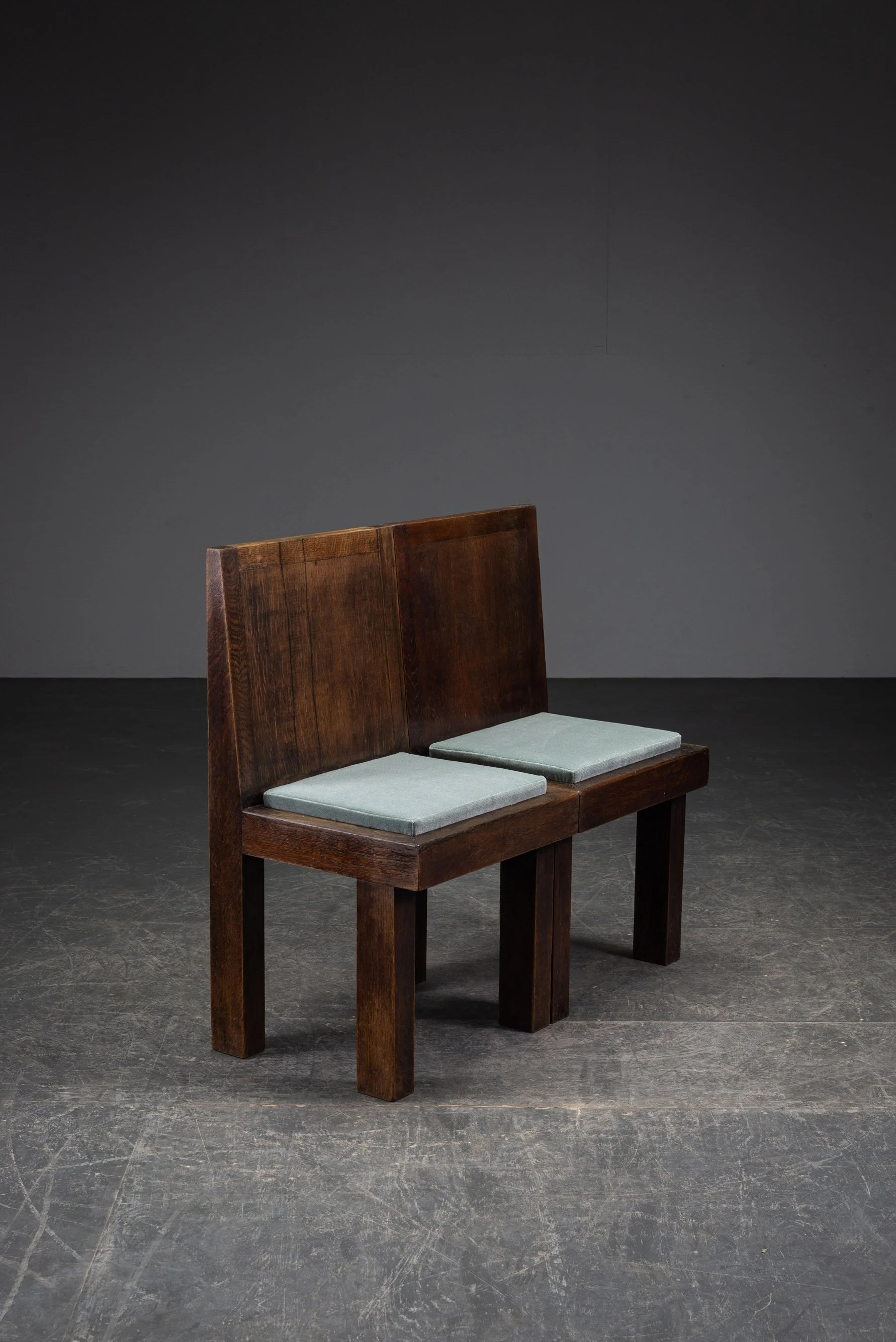
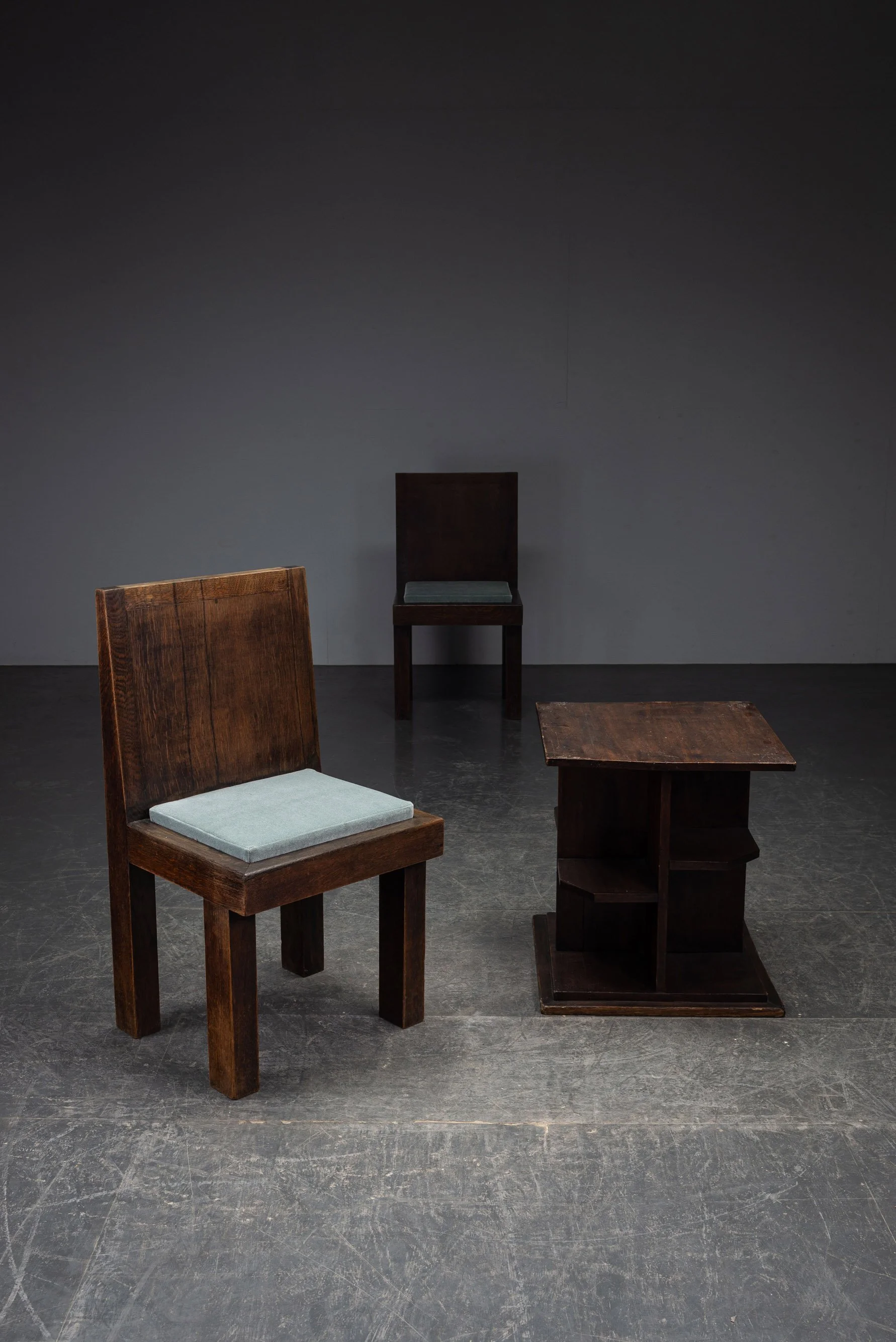
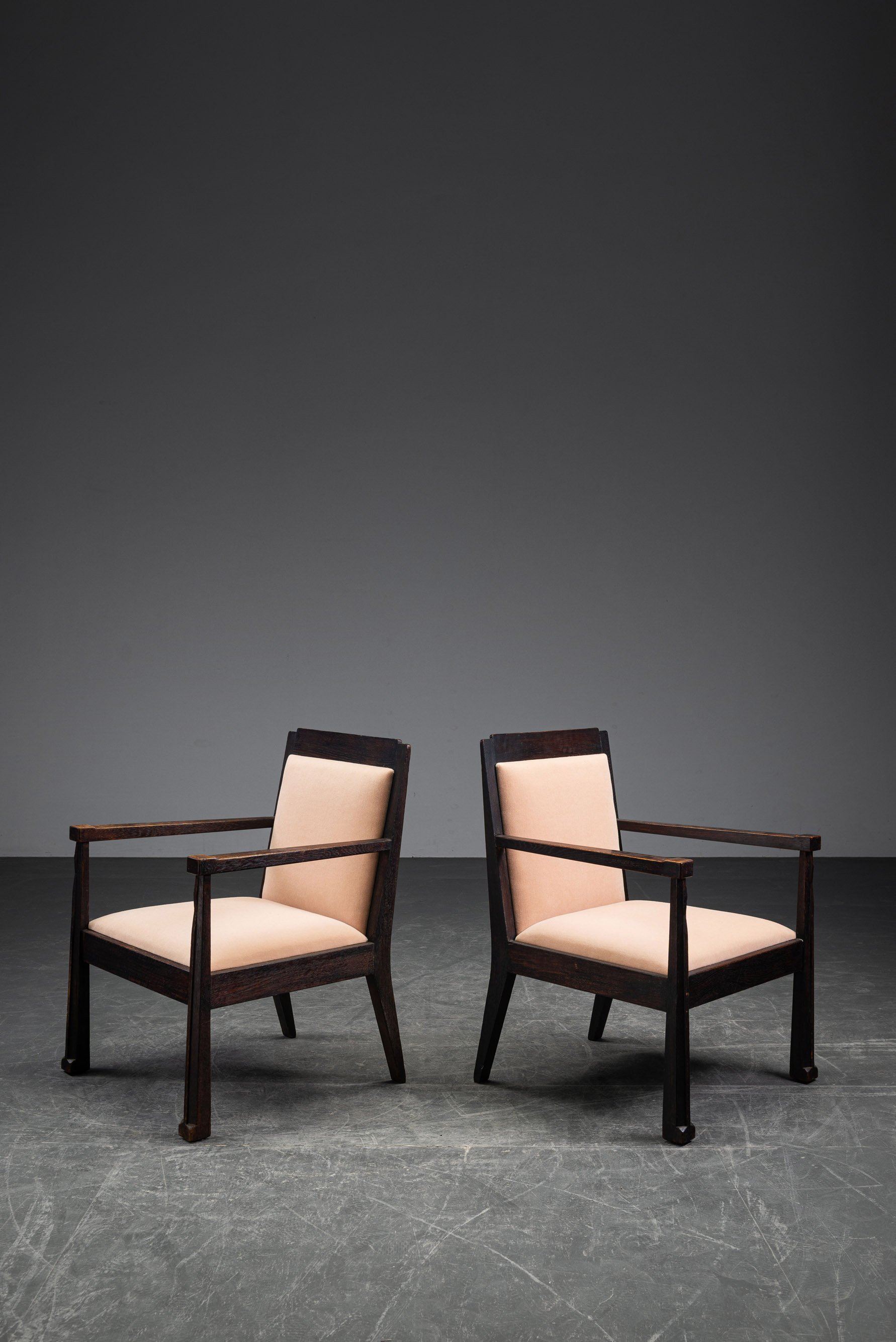
dimensions (cm): h91 x w48 x d47 cm (sh48 cm)
dimensions (inch): h35,83 x w18,9 x d18,5 in (sh18,90 in)
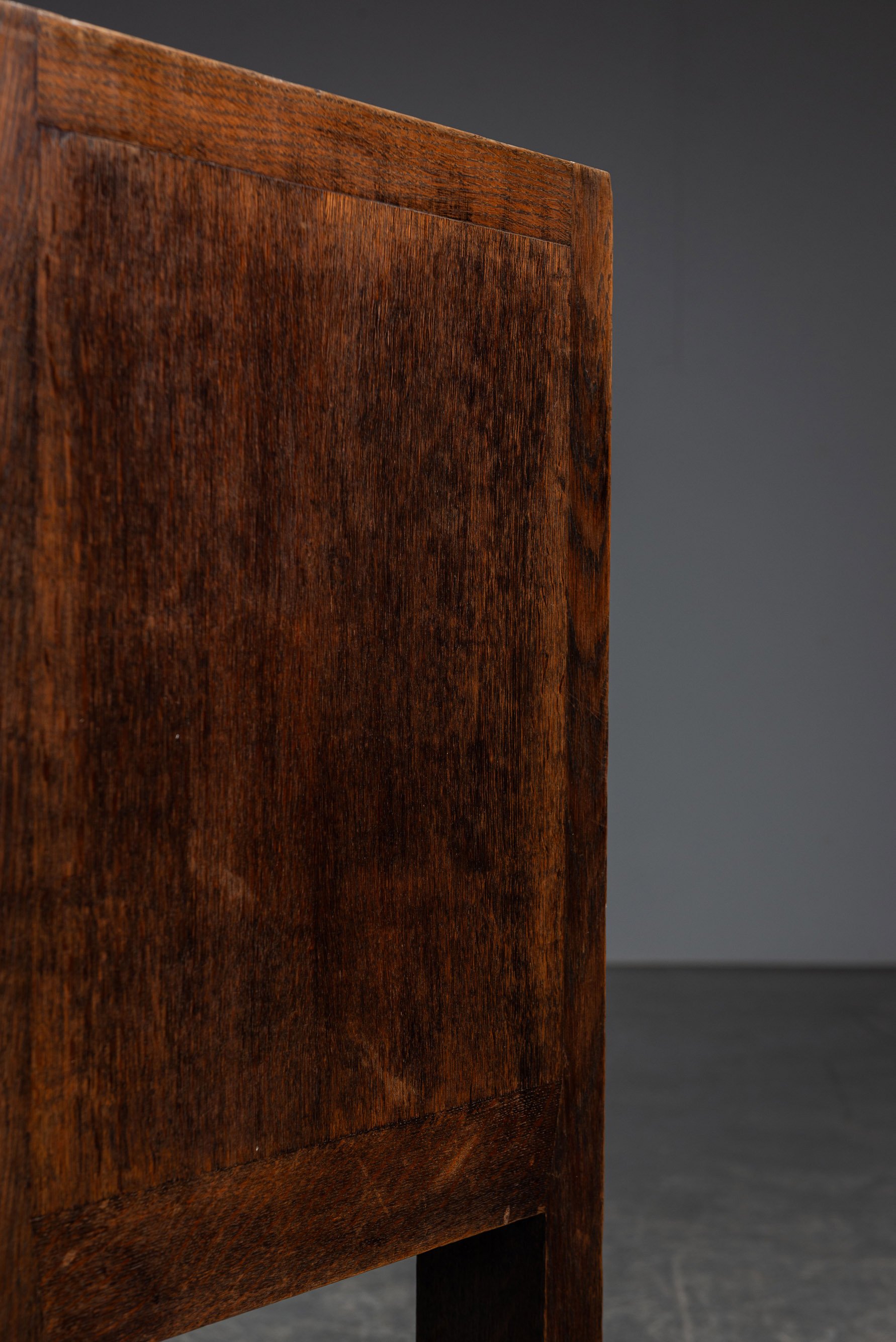
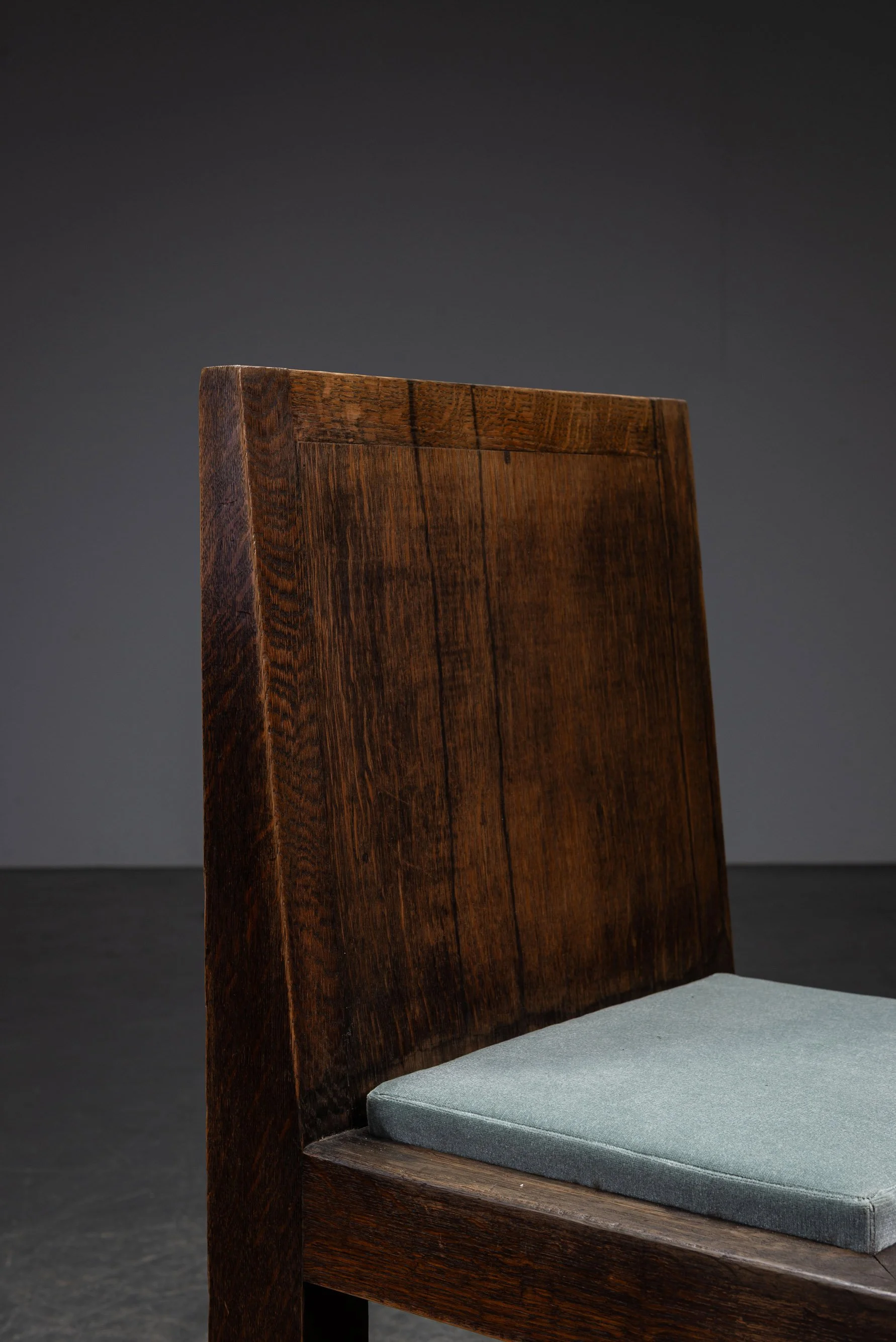
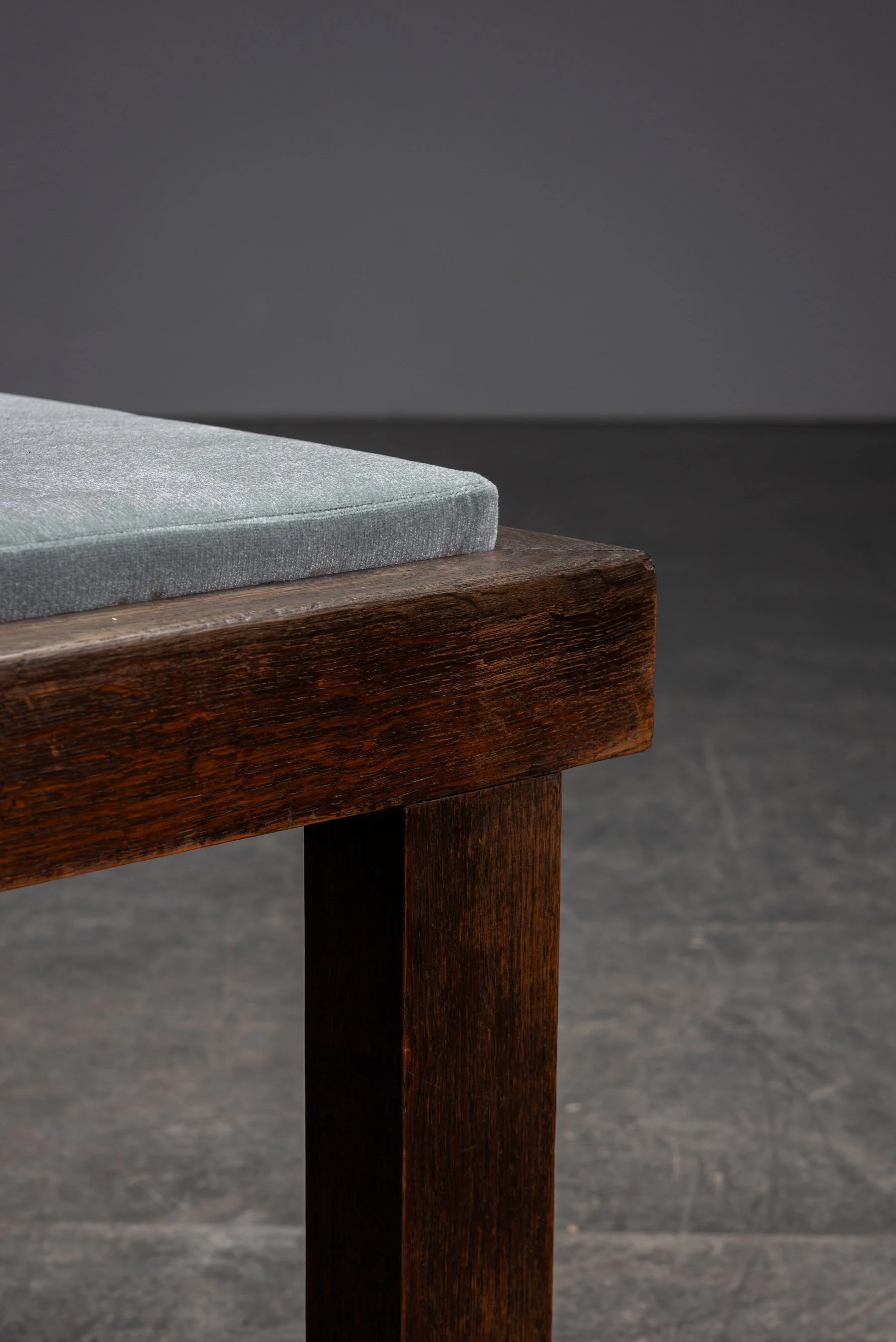
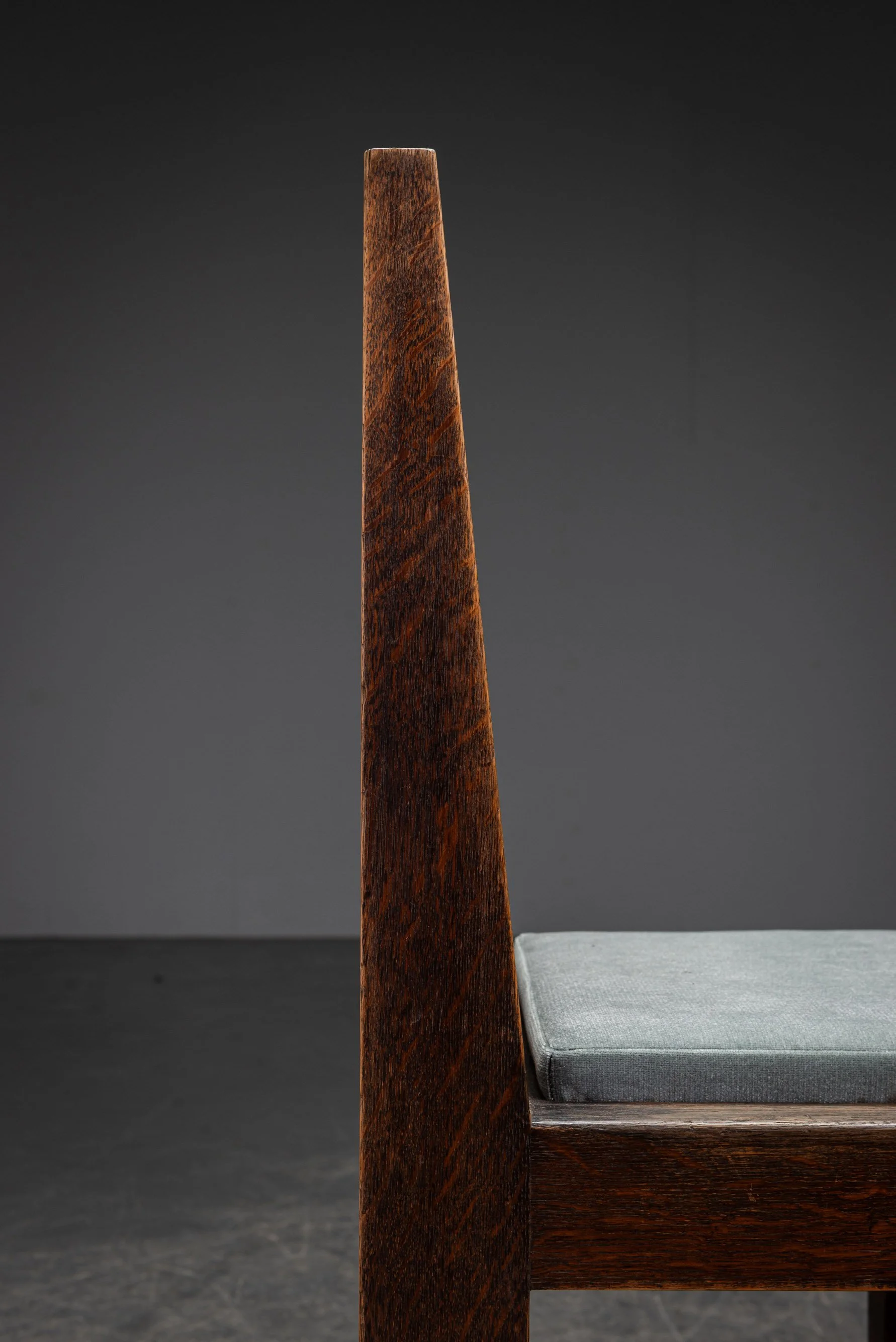
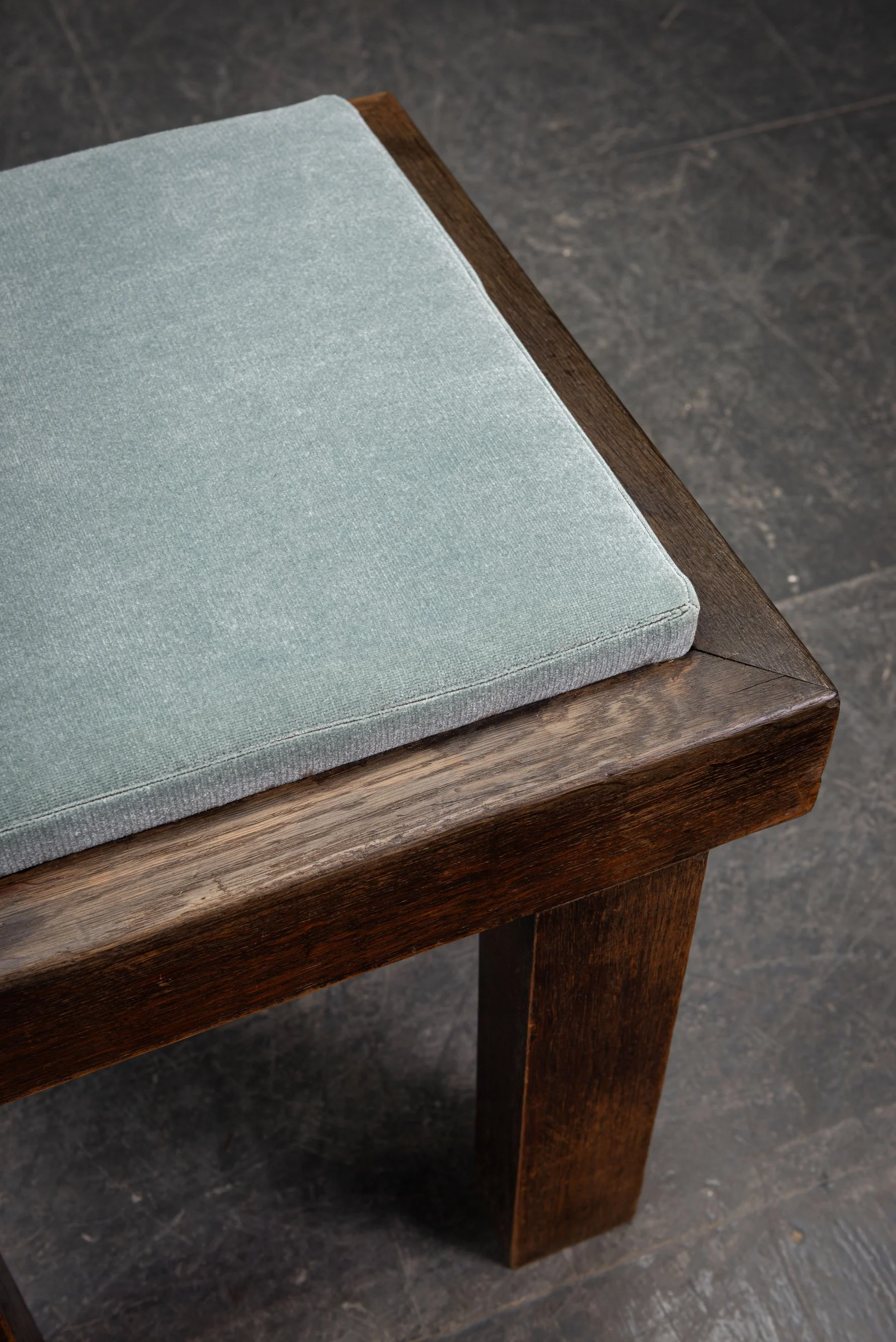
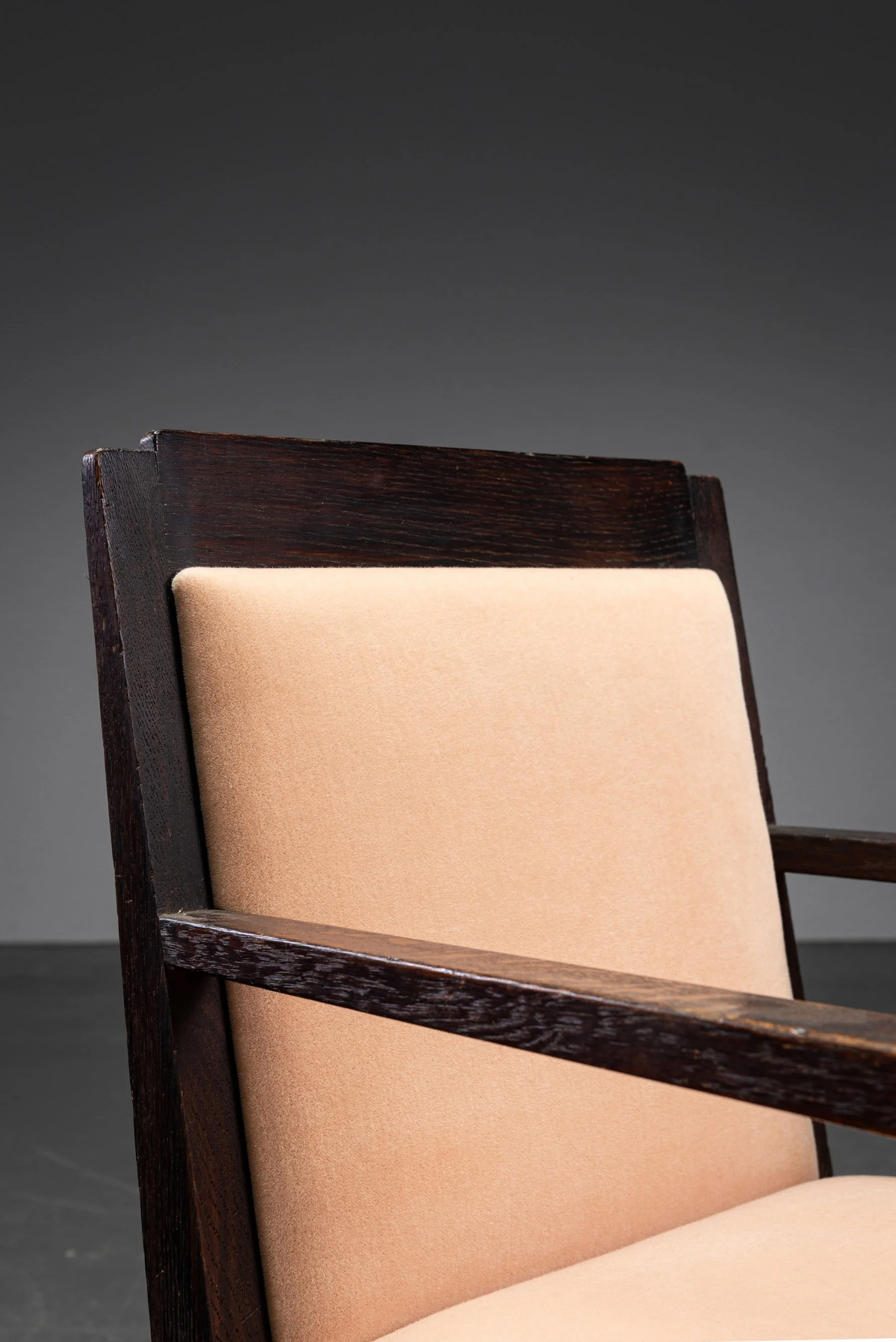
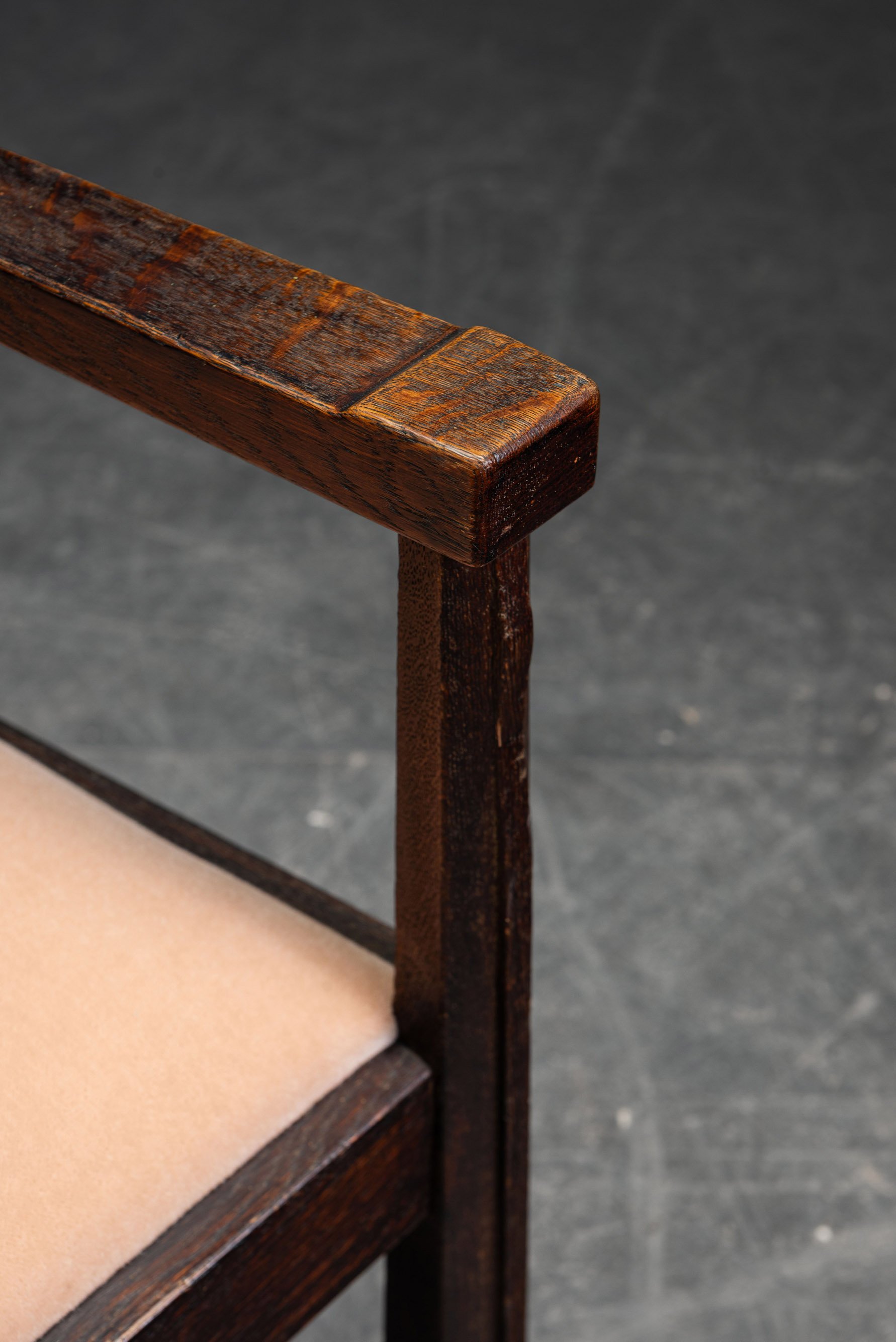
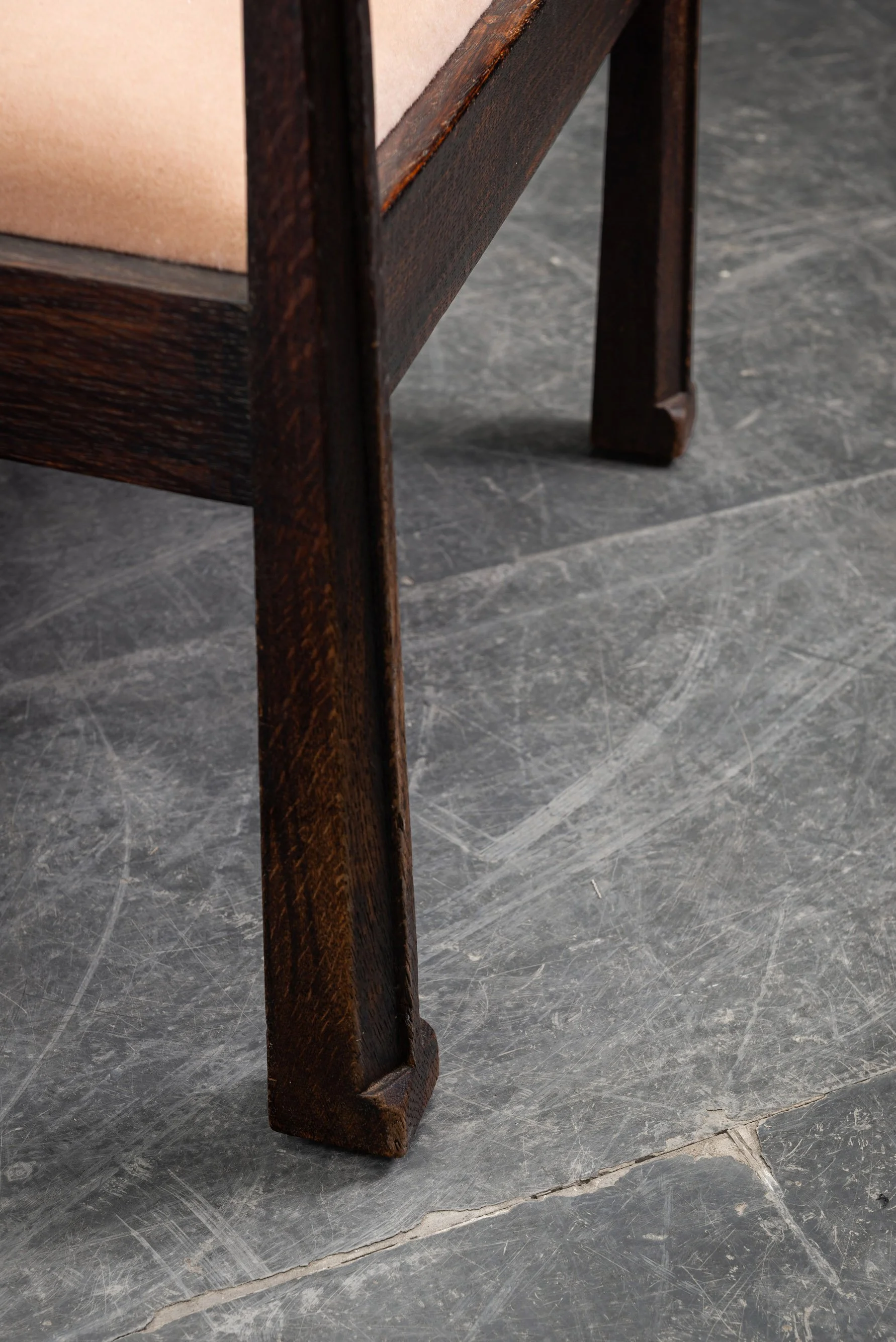
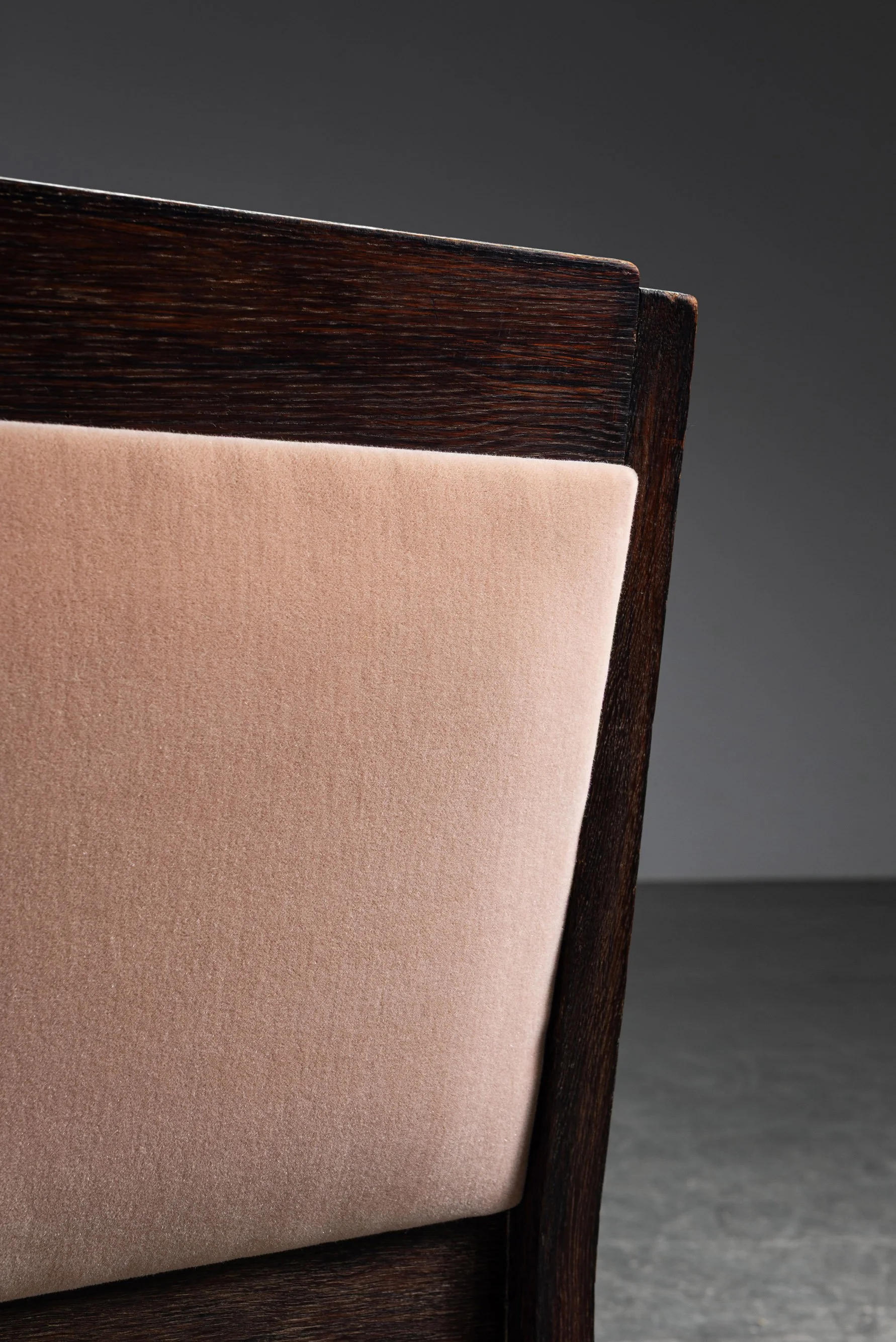
material: faux leather, wood
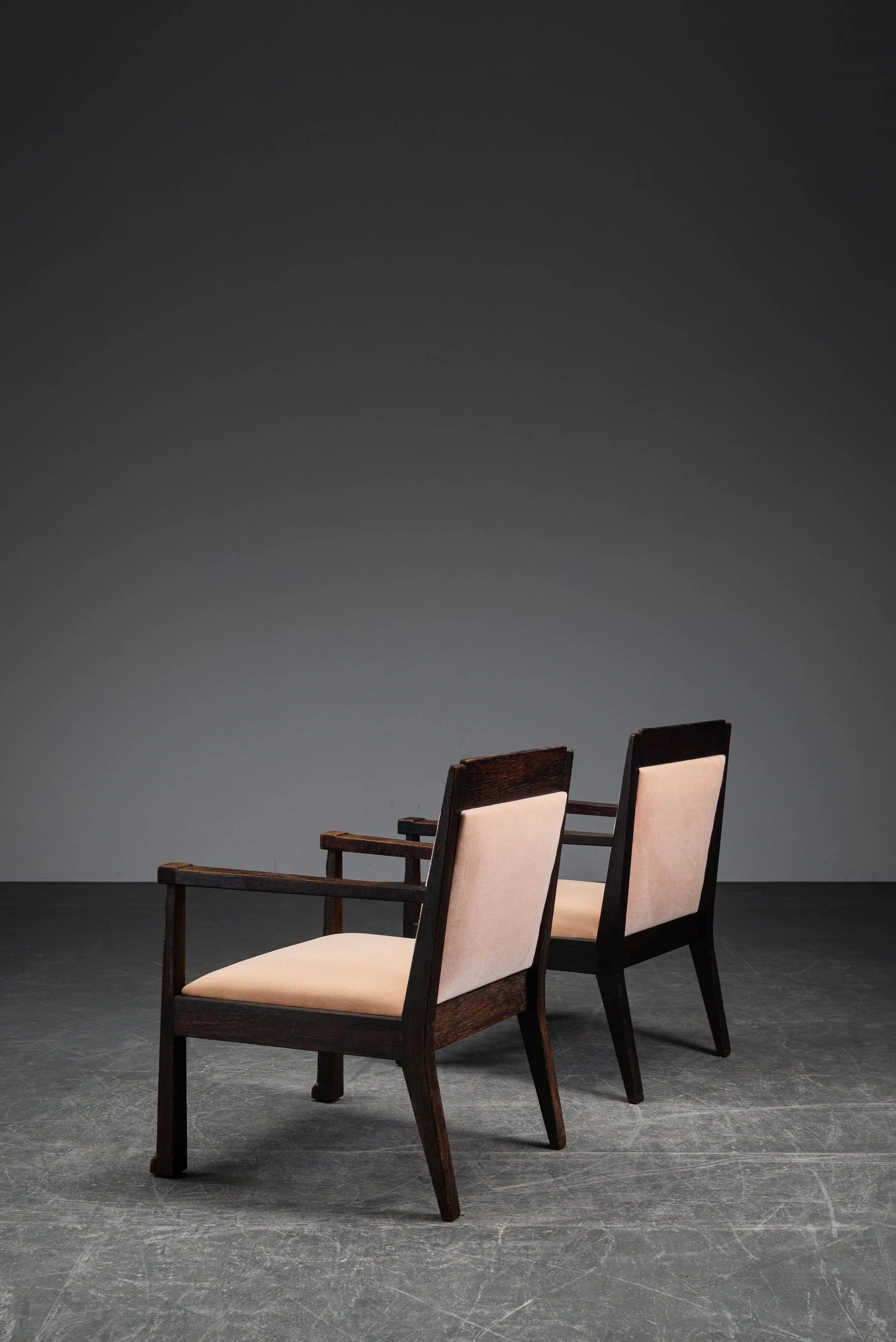
Two accent chairs available. Price per piece.
Highly collectible pieces by the most renowned duo of the Amsterdam School movement. Very hard to come by.
Eibink and Snellebrand were among the formative figures of the Amsterdamse School, playing an instrumental role—both organisationally and artistically—within Architectura et Amicitia, a renowned society for emerging architects, urban planners, and landscape architects. Their furniture designs are distinguished by a bold expressiveness, often enriched with sculptural ornamentation, which over time gave way to quieter, more functional forms inspired by vernacular traditions.
Their architectural work mirrors this evolution. Early projects reflect the expressionist spirit of the Amsterdamse School, characterised by brick construction, thatched roofs, and organically shaped floor plans. From the 1920s onwards, their focus shifted towards a more sober and structured design language, favouring rectilinear forms that often appear subtly interlocked. In this development, they joined fellow Amsterdamse School designers such as Piet Kramer and Henk Wijdeveld, alongside figures including Alons, Dudok, Spanjaard, and Wouda, in moving towards a more international Art Deco idiom.
Architects A. Eibink (1893-1975) & J.A. Snellebrand (1891-1963)
period: 1910s
origin: The Netherlands
dimensions (cm): h91 x w48 x d47 cm (sh48 cm)
dimensions (inch): h35,83 x w18,9 x d18,5 in (sh18,90 in)
material: faux leather, wood
Two accent chairs available. Price per piece.
Highly collectible pieces by the most renowned duo of the Amsterdam School movement. Very hard to come by.
Eibink and Snellebrand were among the formative figures of the Amsterdamse School, playing an instrumental role—both organisationally and artistically—within Architectura et Amicitia, a renowned society for emerging architects, urban planners, and landscape architects. Their furniture designs are distinguished by a bold expressiveness, often enriched with sculptural ornamentation, which over time gave way to quieter, more functional forms inspired by vernacular traditions.
Their architectural work mirrors this evolution. Early projects reflect the expressionist spirit of the Amsterdamse School, characterised by brick construction, thatched roofs, and organically shaped floor plans. From the 1920s onwards, their focus shifted towards a more sober and structured design language, favouring rectilinear forms that often appear subtly interlocked. In this development, they joined fellow Amsterdamse School designers such as Piet Kramer and Henk Wijdeveld, alongside figures including Alons, Dudok, Spanjaard, and Wouda, in moving towards a more international Art Deco idiom.

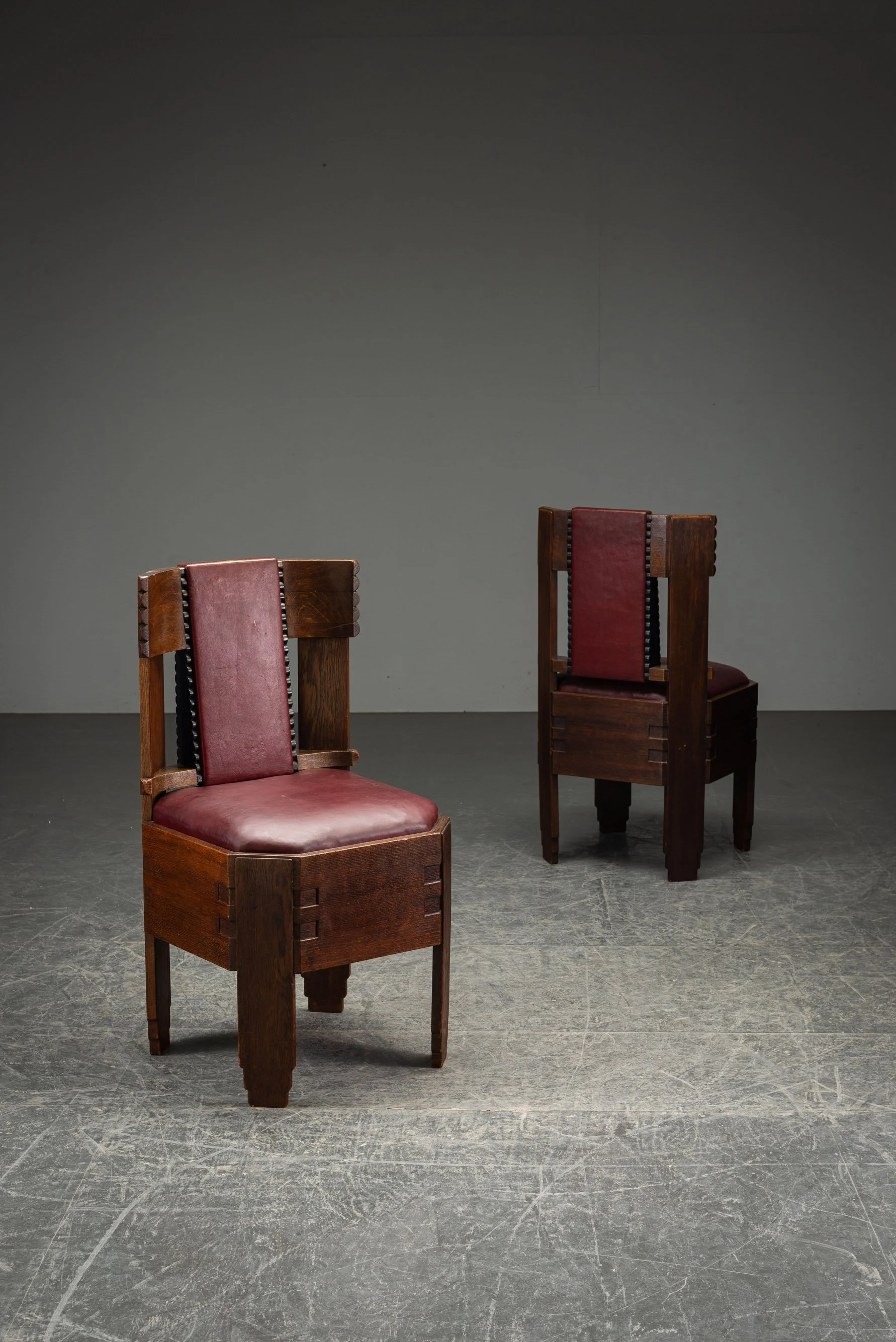 Image 1 of 14
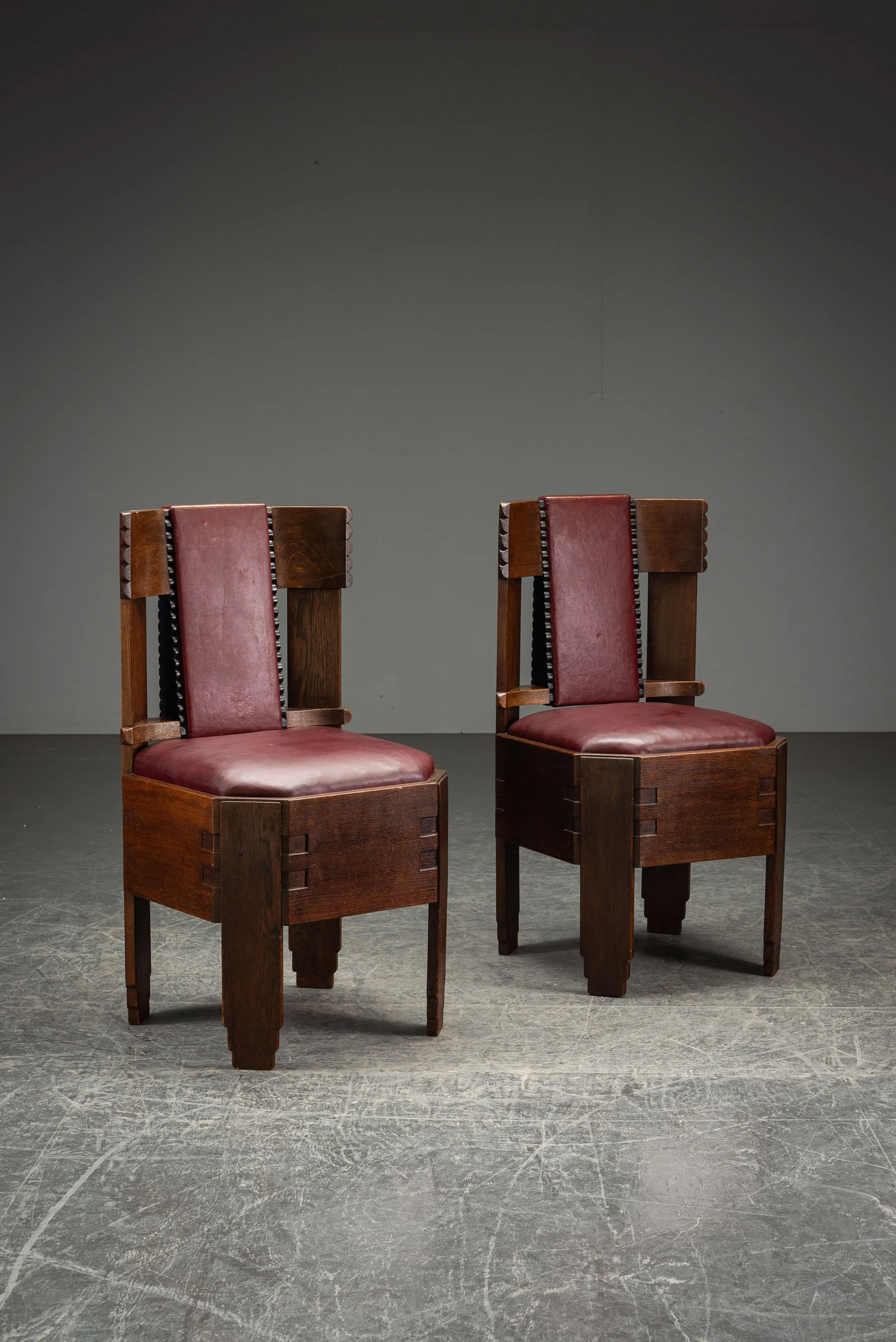 Image 2 of 14
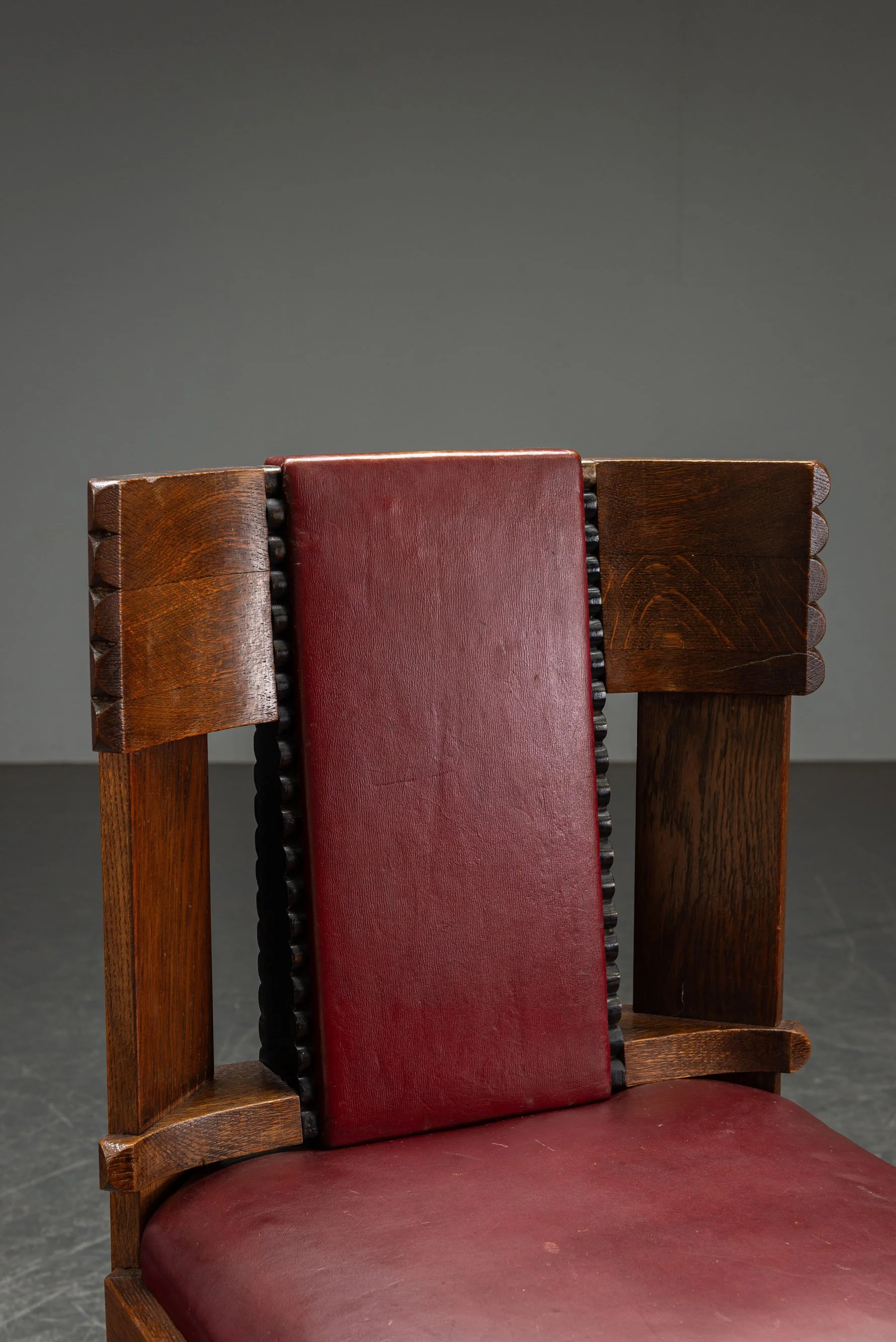 Image 3 of 14
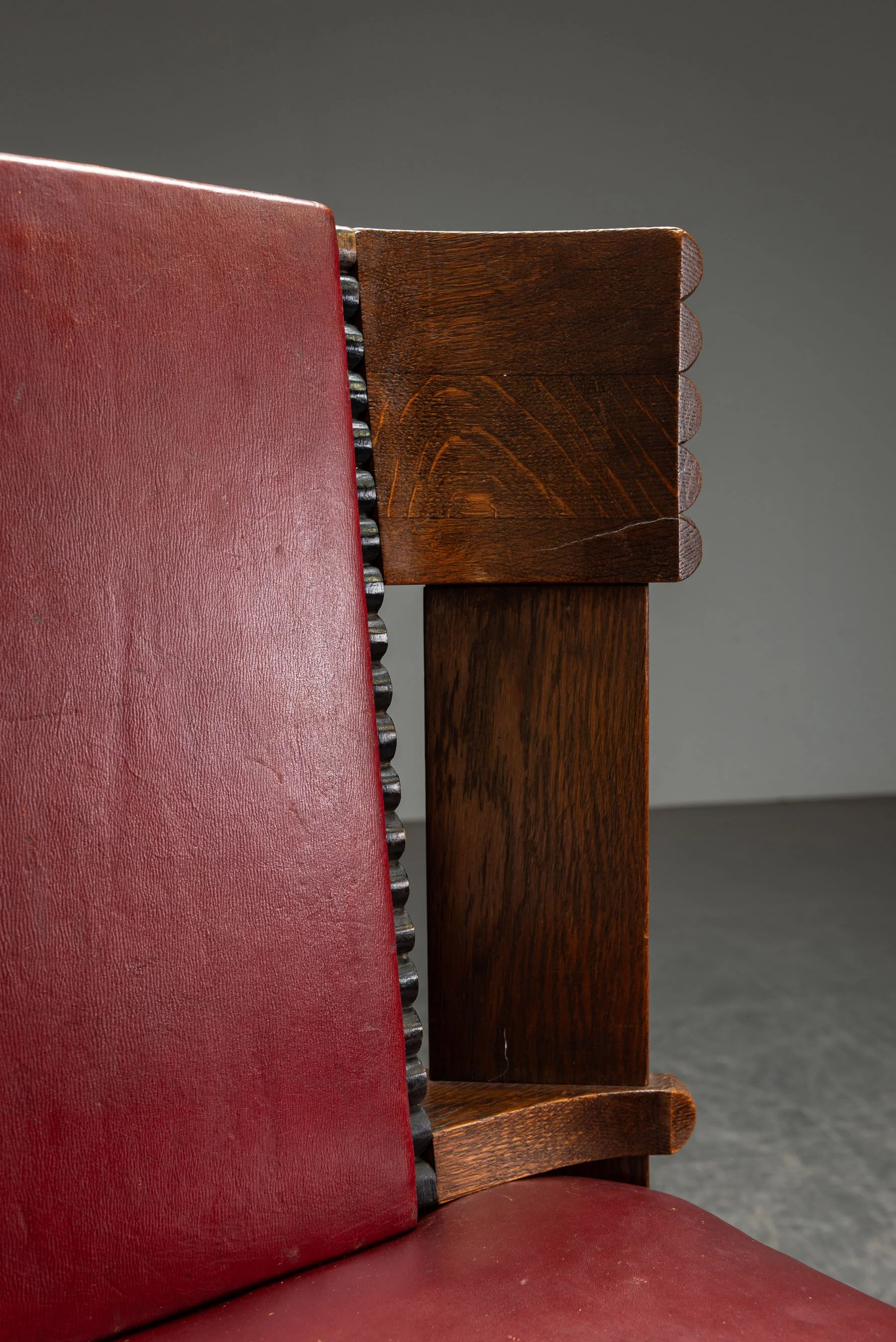 Image 4 of 14
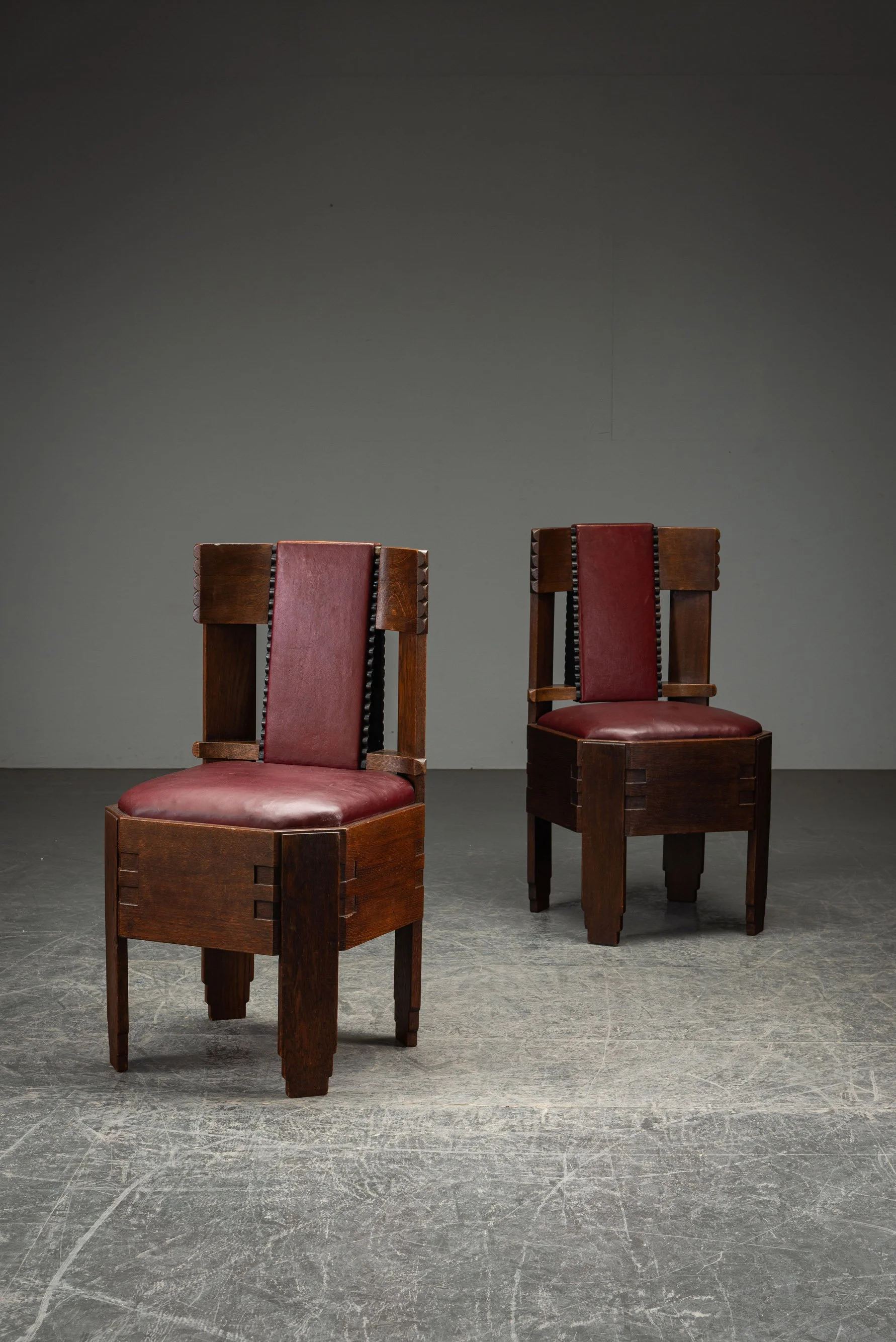 Image 5 of 14
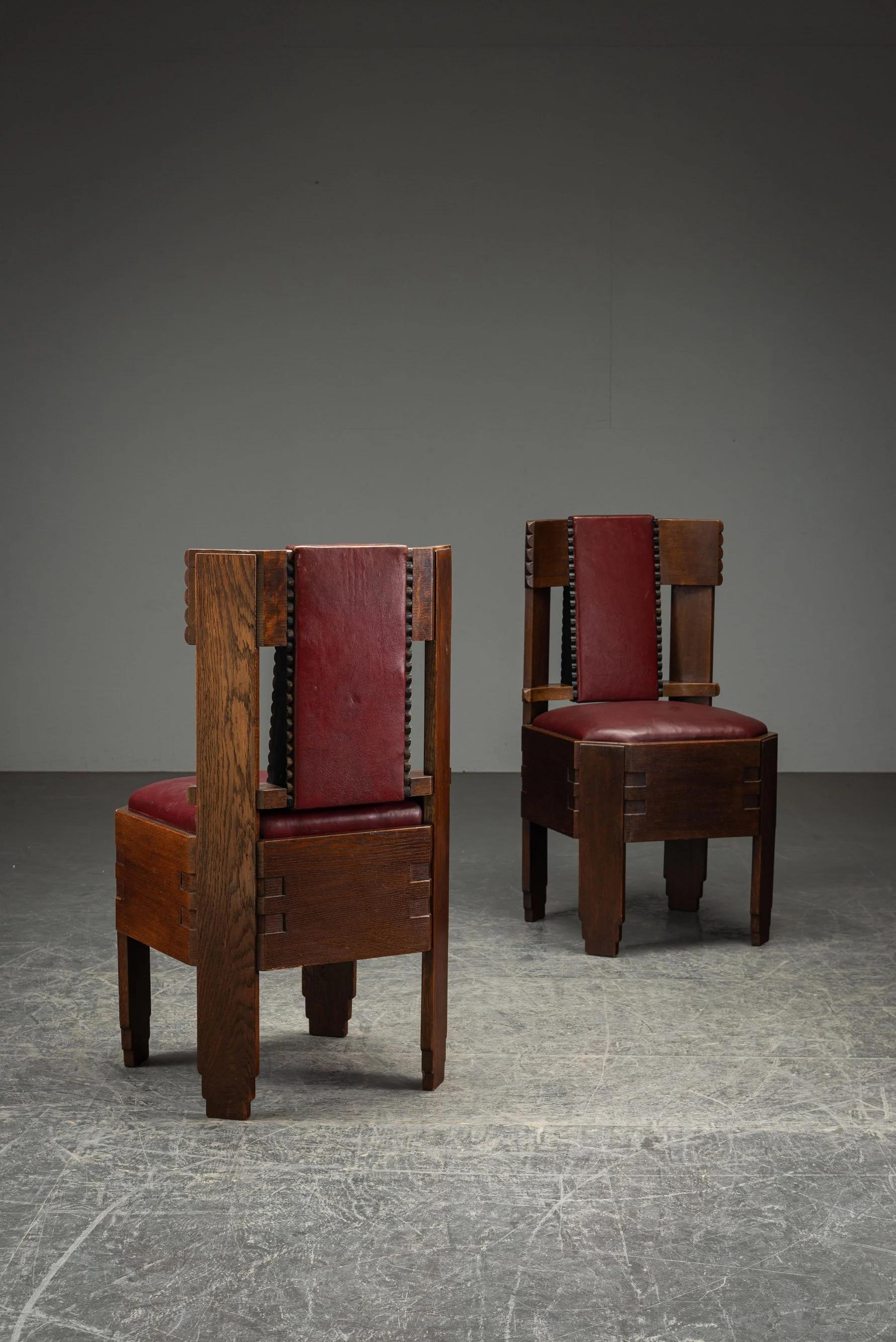 Image 6 of 14
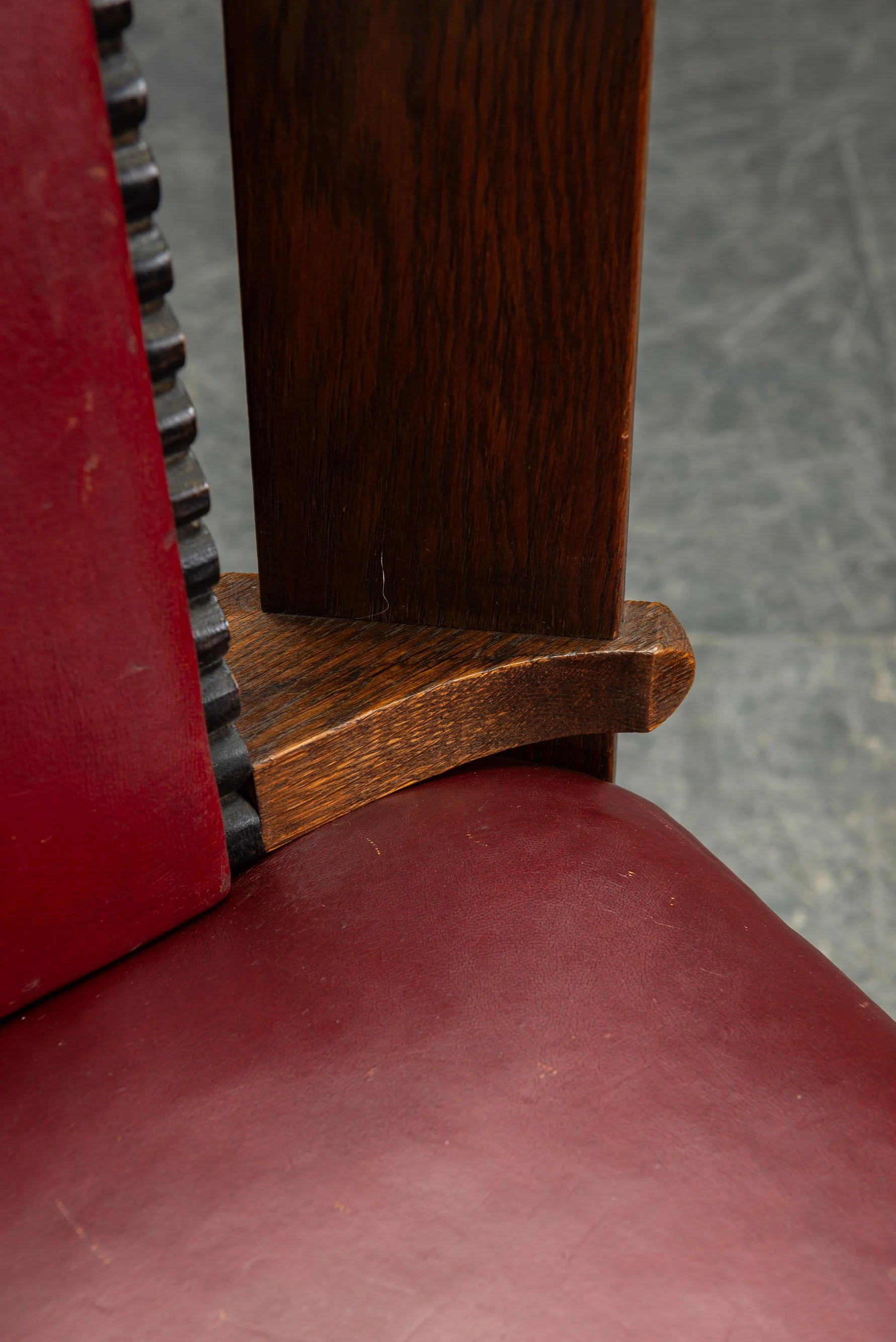 Image 7 of 14
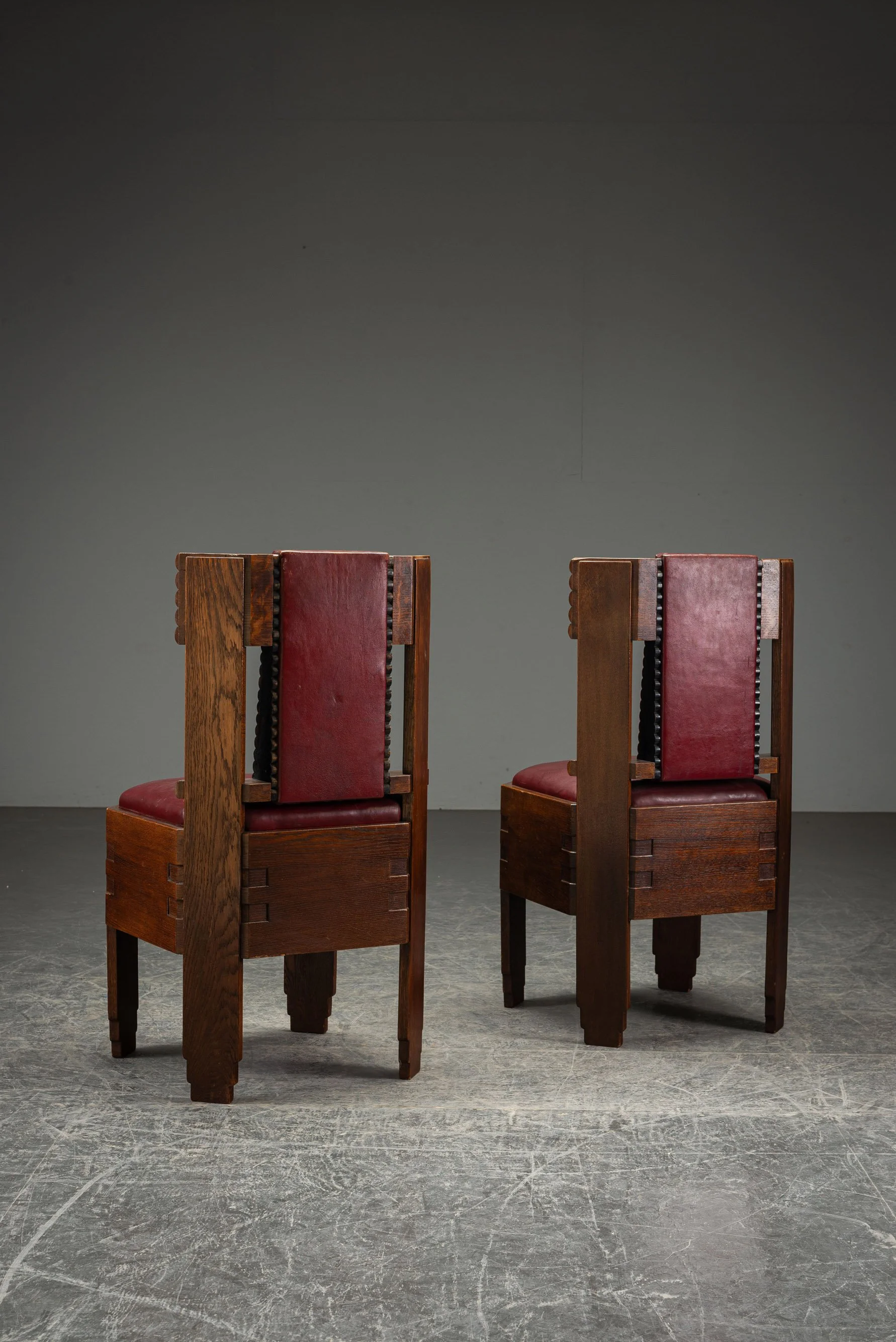 Image 8 of 14
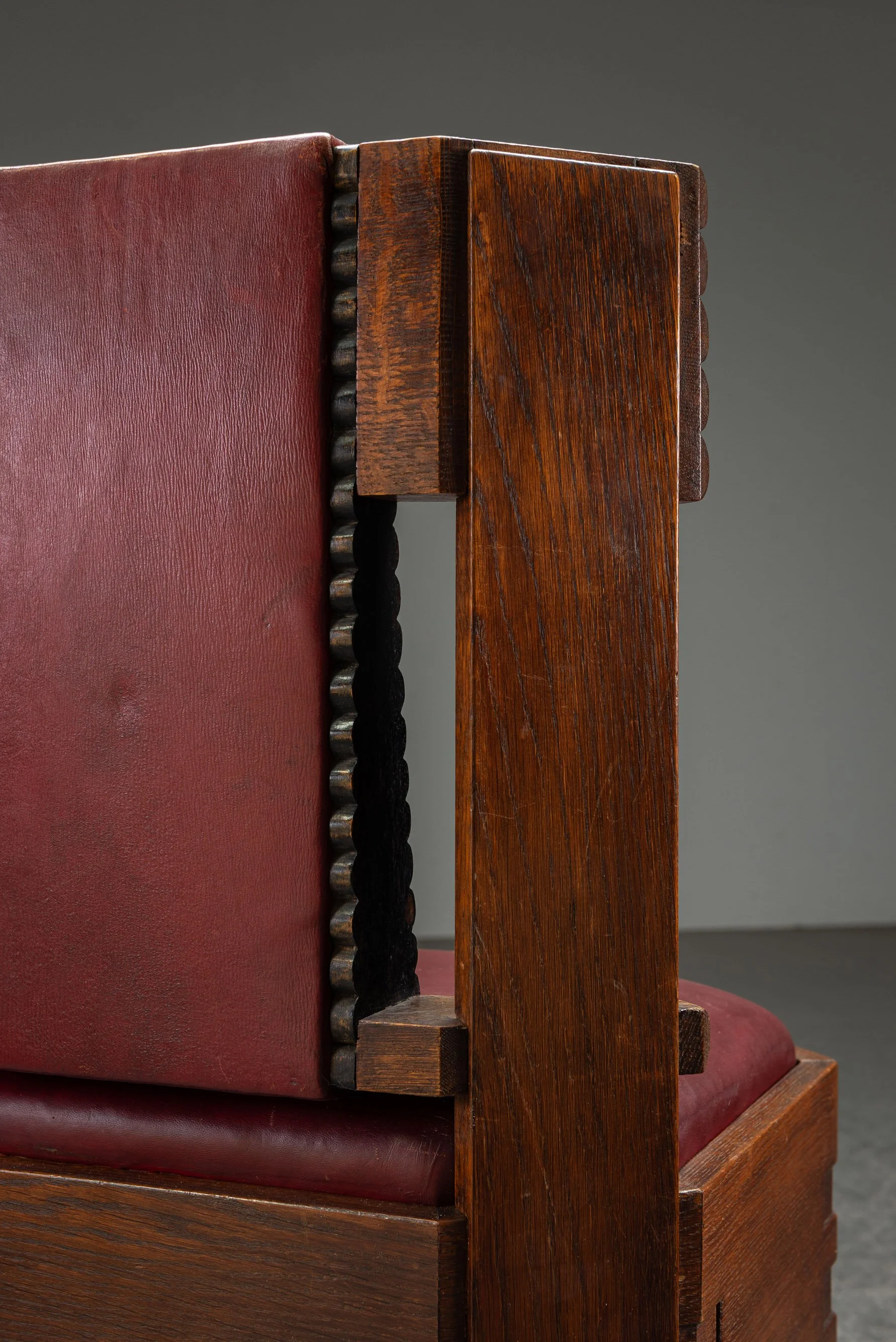 Image 9 of 14
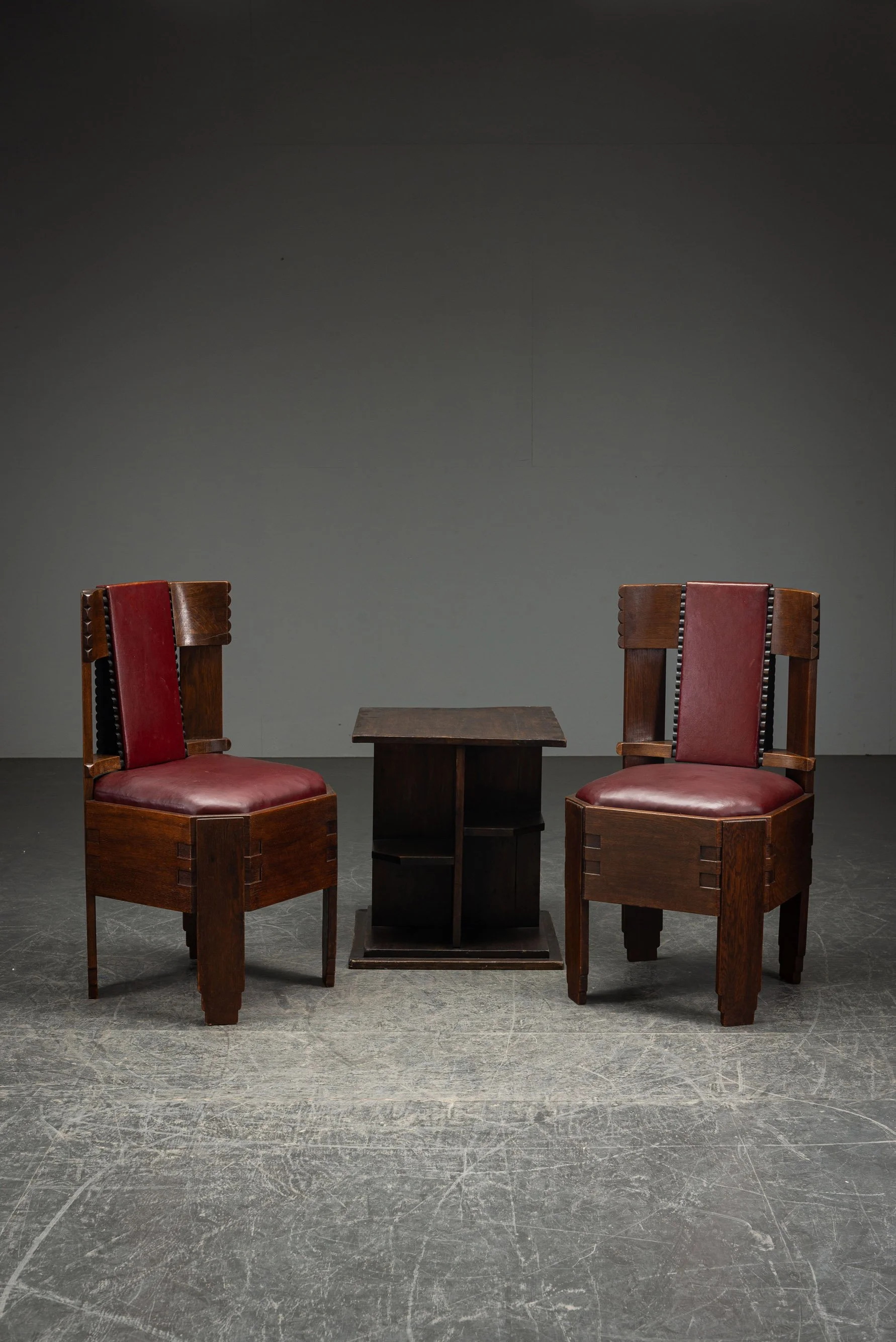 Image 10 of 14
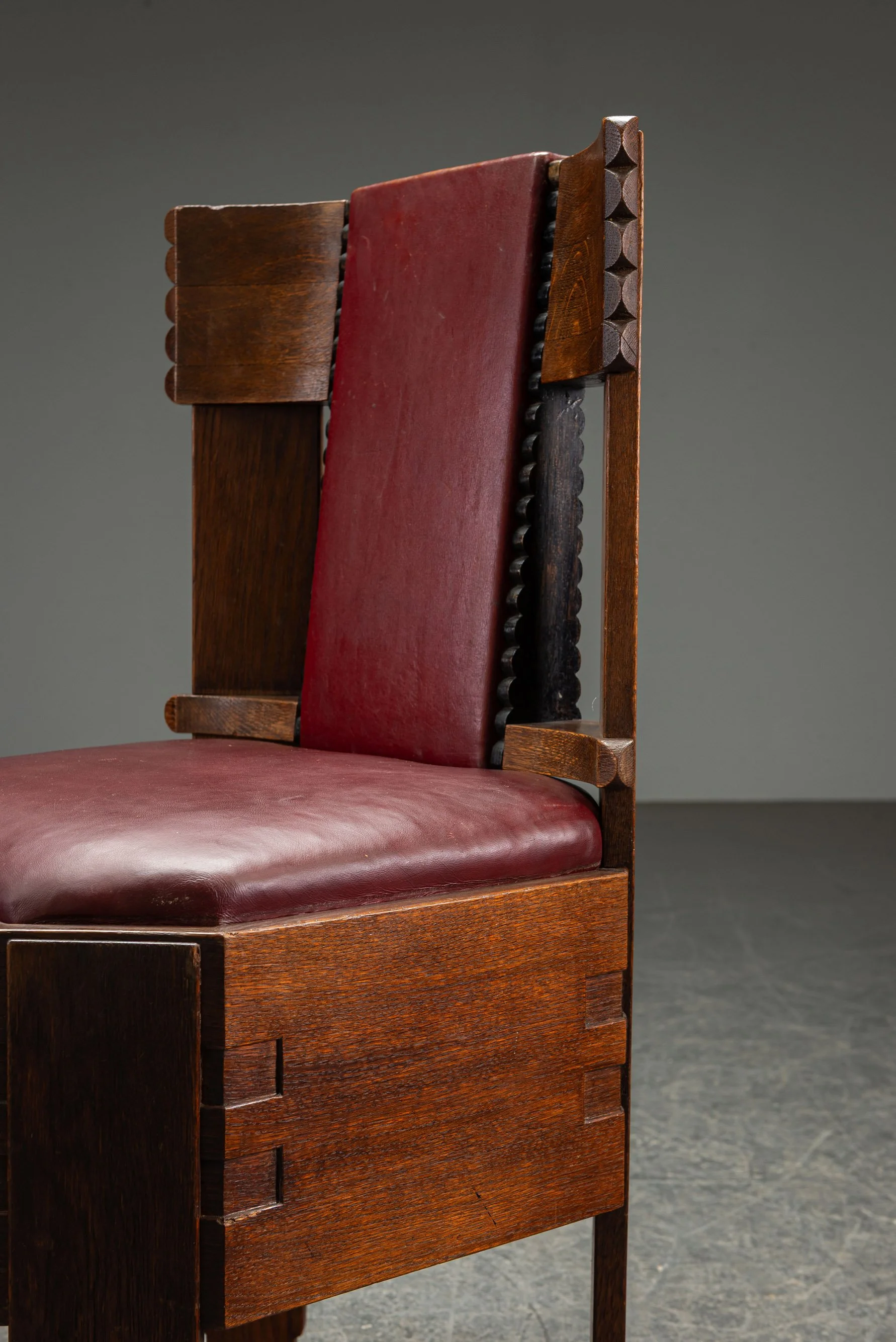 Image 11 of 14
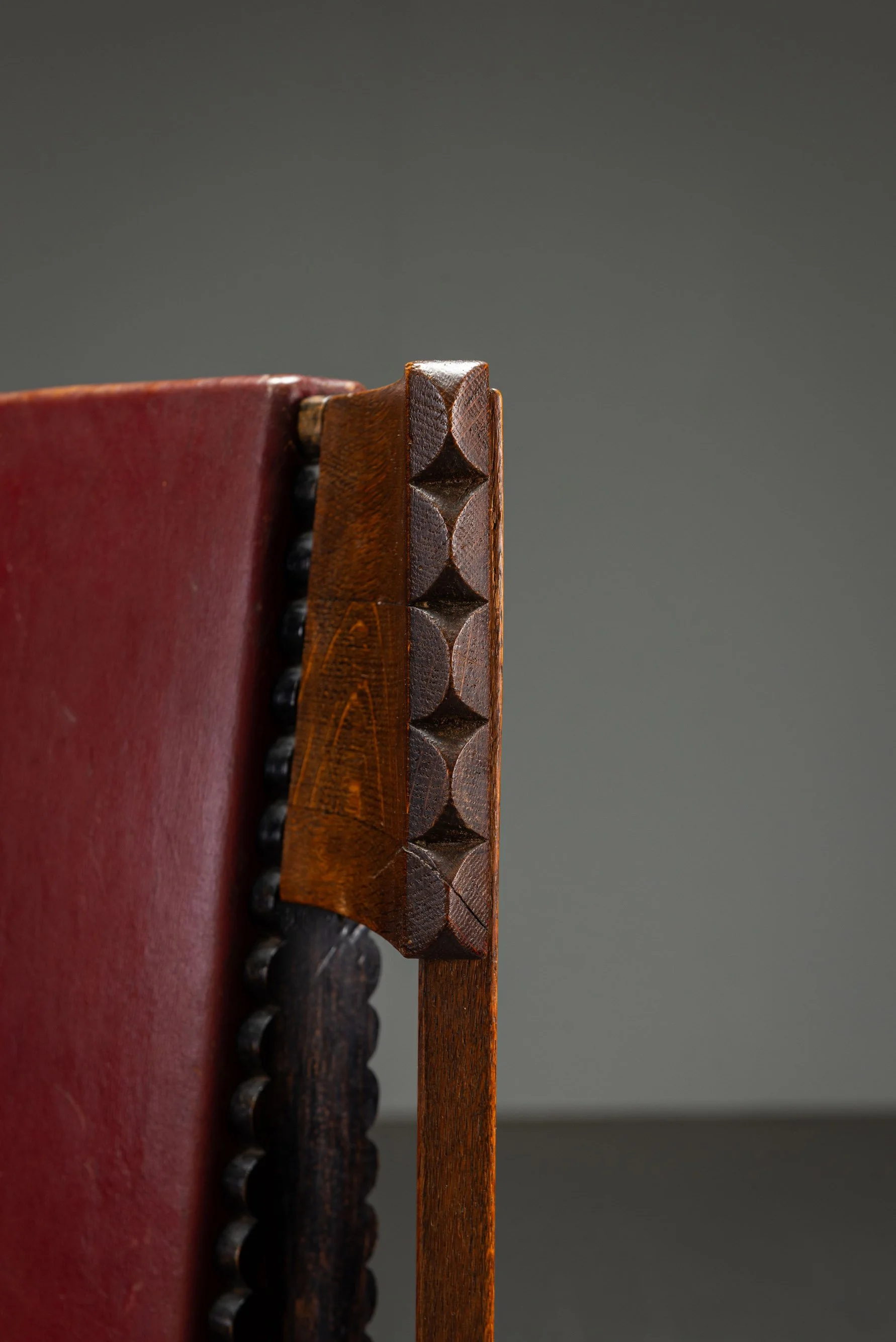 Image 12 of 14
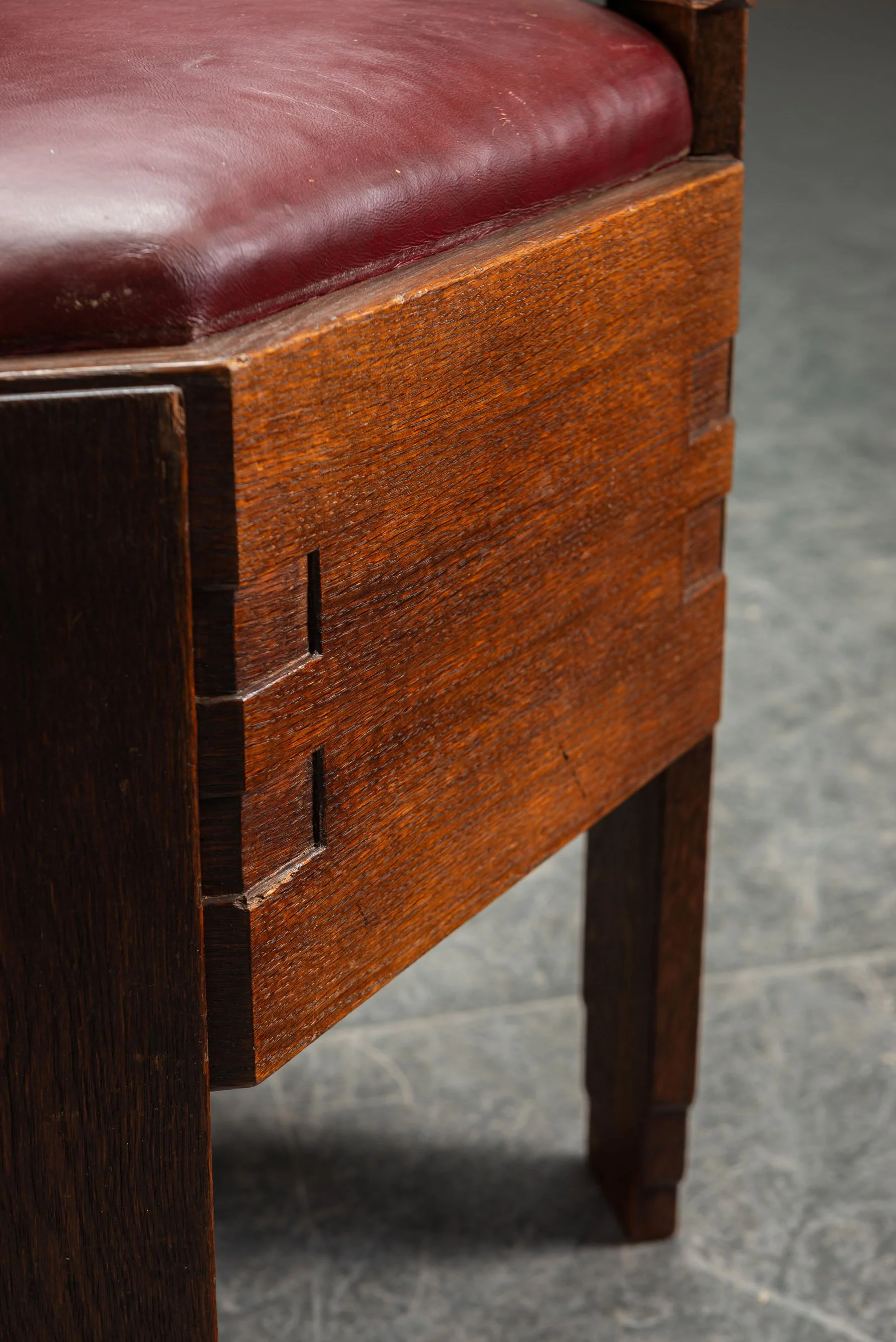 Image 13 of 14
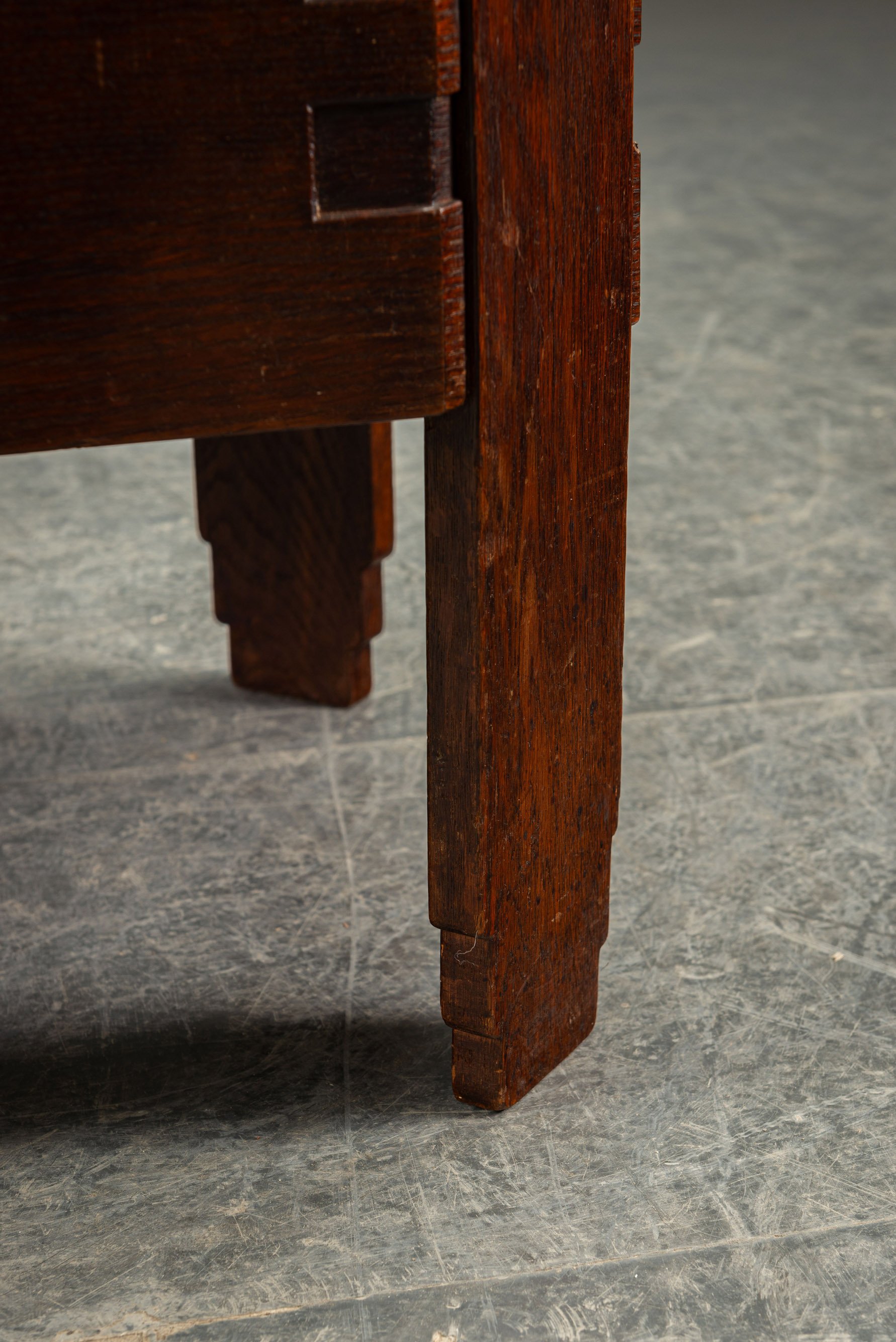 Image 14 of 14